

https://mdoec.in/

12 Amazing Christmas Experiences You Can Enjoy While Studying Abroad

A complete, student-friendly guide to celebrating Christmas away from home — from festive markets and food to volunteering, travel ideas, and ways MDOEC can support your study-abroad journey.

Studying abroad opens the door to countless new experiences — and celebrating Christmas in a foreign country is one of the most unforgettable ones. Whether you are surrounded by snowy winter streets in Europe or enjoying a warm, sunny December in Australia, Christmas abroad blends nostalgia, adventure, and cultural discovery.

For international students, the season offers the perfect chance to explore traditions, meet new people, and create memories that last a lifetime. Here is your complete 2025 guide to enjoying Christmas while studying abroad, featuring 12 amazing experiences that will make your festive season truly magical.

1. Immerse Yourself in Local Christmas Markets and Festivals

Christmas markets are a highlight of the holiday season across many countries. From sparkling lights to festive music, these markets are a gateway into the heart of local culture.

  • Wander wooden stalls filled with handmade crafts and seasonal souvenirs.
  • Sample regional delicacies and warm beverages like hot chocolate or spice drinks.
  • Enjoy street performances, carol groups, and festive lights.

Christmas markets let you soak in the holiday spirit, explore local art, and collect memorable souvenirs while feeling part of the community.

2. Decorate Your Space to Create a ‘Home Away From Home’

No matter how exciting your host country is, holidays can sometimes make you miss home. Decorating your room is a powerful way to bring warmth and familiarity to your space. Small touches make a big difference:

  • A mini Christmas tree or tabletop decorations.
  • Fairy lights and handmade paper ornaments.
  • A photo corner featuring family and past holiday memories.

Turn decorating into a fun activity with roommates — play music, exchange small decorations, and enjoy snacks while you deck the halls.

3. Host a Multicultural Christmas Potluck Party

A potluck is one of the best ways to celebrate with friends from different cultures. Each person brings a favorite dish from home to create a global festive spread. Potlucks are social, affordable, and packed with variety.

  • Include small activities such as Secret Santa, holiday quizzes, or a photo booth.
  • Ask guests to prepare a short story about the dish they bring — it’s a great conversation starter.

4. Attend Christmas Concerts, Carol Nights & Community Celebrations

Music and community events are central to many holiday celebrations. Universities and local organizations host candlelight concerts, choir shows, and multicultural festivals that are open to students.

These gatherings are a warm, welcoming way to experience the cultural and musical side of the season, even if you don’t observe the religious aspects.

5. Share Joy Through Volunteering and Holiday Service

Volunteering during the holidays is deeply rewarding. Many students join local initiatives to help those in need. Popular volunteering options include:

  • Serving meals at community kitchens or shelters.
  • Donating clothes, toys, or essentials to winter drives.
  • Visiting care homes to spend time with the elderly or helping at children’s events.

Volunteering creates meaningful connections with the local community, offers a fresh perspective on the holiday season, and leaves a positive impact that lasts beyond the break.

6. Take a Christmas Trip to Iconic Festive Destinations

If your academic schedule offers a winter break, Christmas is the perfect time to explore new places. Students often travel to nearby cities or countries to enjoy seasonal festivities.

Popular destinations include:

  • London with its spectacular lights and massive holiday fairs

  • Paris with elegant decorations and enchanting Christmas villages

  • New York City, famous for its glowing Rockefeller Center tree and holiday shows

  • Dubai, offering luxury Christmas markets and global celebrations

  • Melbourne or Sydney, where Christmas is celebrated in warm weather with outdoor events

  • Tokyo, known for its stunning winter illuminations

Travelling during Christmas lets you experience a global holiday atmosphere — and creates memories you’ll cherish forever.

7. Experience Unique Christmas Traditions Around the World

One of the best parts of studying abroad is discovering how different cultures celebrate Christmas. Each country has unique rituals that make the season special.

You may encounter traditions like:

  • Pre-Christmas gatherings

  • Cultural parades

  • Special holiday foods

  • Local myths and stories

  • Fireworks and city-wide celebrations

Participating in these customs helps you understand and appreciate your host country’s cultural rhythms. It’s an educational and emotionally enriching experience wrapped in festive joy.

8. Enjoy a Cozy Christmas Movie, Game, or Activity Night

Not every celebration has to be grand — sometimes the simplest nights become the most memorable.

Host a warm, cozy holiday evening with:

  • Christmas classics like Home Alone, Elf, The Grinch, Love Actually

  • Board games and card games

  • Karaoke or Christmas carol singing

  • Baking cookies or decorating gingerbread houses

  • DIY ornament-making sessions

These small gatherings bring warmth, fun, and bonding — especially when you’re celebrating far from home.

9. Learn Local Recipes & Share Your Own Holiday Cuisine

Food is a major part of Christmas across cultures. Learning how your host country celebrates through its cuisine can be a delightful experience.

Students often enjoy:

  • Learning to bake traditional desserts

  • Trying regional Christmas dishes

  • Hosting cooking nights

  • Sharing recipes from home

  • Exploring local bakeries and cafés

Cooking together breaks down cultural barriers, builds friendships, and adds a delicious touch to your holiday experience abroad.

10. Reflect and Reset: Personal Growth During the Holidays

Christmas abroad gives you the gift of perspective. For many students, it becomes a time for:

  • Deep reflection

  • Gratitude

  • Journaling

  • Setting future goals

  • Appreciating independence

  • Planning the next academic year

You can create a reflective journal, digital memory book, or even a “year in review” video. This practice helps you acknowledge your growth, understand your challenges, and celebrate your achievements.

11. Celebrate Virtually With Loved Ones Back Home

Distance doesn’t have to stop you from feeling connected during Christmas. Plan virtual celebrations such as:

  • Family video calls

  • Online gift-opening

  • Virtual dinner

  • Photo exchanges

  • Surprise video messages

These digital celebrations bring comfort and warmth, helping you balance your global adventures with emotional closeness to home.

12. Create New Traditions With New Friends

The most meaningful part of Christmas abroad is creating new traditions with the friends you’ve made. You might start:

  • A yearly Christmas trip

  • A cultural food exchange

  • A themed gift exchange

  • A holiday photo tradition

  • A handwritten letter swap

These small traditions add emotional richness to your time abroad and become memories you’ll cherish long after your studies end.

Practical Tips for a Memorable Christmas Abroad

  • Plan Early: Book travel and event tickets in advance — the holiday season is busy.
  • Mix Traditions: Blend the comforts of home with local customs for a richer celebration.
  • Budget Wisely: Set aside funds for travel, markets, and small gifts.
  • Stay Safe & Warm: Check local weather and event guidelines for outdoor activities.
  • Capture Memories: Take photos, keep a journal, or create a digital scrapbook.

Planning to Study Abroad? MDOEC Can Help.

MDOEC Study Abroad Consultant provides expert, end-to-end guidance: country & course selection, exam preparation, personalised counselling, application support, and visa assistance. With MDOEC, your study-abroad dream becomes easier, clearer, and stress-free.

Make this Christmas the start of your global journey — let MDOEC guide you every step of the way.
© 2025 MDOEC Study Abroad Consultant. All rights reserved.

Top 7 Countries to Study Data Science & Analytics for International Students (2026 Complete Guide)

A detailed blog for students planning to build a global career in Data Science, AI, Machine Learning & Analytics

The world is rapidly becoming data-driven. Every industry — from technology and healthcare to finance, retail, logistics, and manufacturing — now relies heavily on data for decision-making. This has made Data Science and Analytics some of the most in-demand, highest-paying, and future-proof career domains.Whether you want to become a Data Scientist, Machine Learning Engineer, Data Analyst, Business Intelligence Specialist, or AI Engineer, graduating from a globally recognised university in a leading tech country can dramatically boost your career.

In this guide we explore the Top 7 Countries to study Data Science & Analytics abroad, with in-depth insights on education quality, job opportunities, tuition fees, visa policies, and more.

🇺🇸 1. United States — The Global Leader in Data Science Innovation

The United States is undoubtedly the world’s most advanced country for technology, AI, machine learning, and data analytics. Home to Silicon Valley and some of the greatest research universities, the U.S. offers unmatched exposure.

Why Study Data Science in the USA?

  • Home to MIT, Stanford, Carnegie Mellon, UC Berkeley, Harvard, and more
  • The world’s highest number of tech companies and AI startups
  • Extensive research labs and industry collaborations
  • 3-year stay-back (STEM OPT) for international students
  • Most advanced specialization options in AI, ML, robotics, and deep learning
  • High-paying internships and job placements

Top Universities

  1. Massachusetts Institute of Technology (MIT)
  2. Stanford University
  3. Carnegie Mellon University
  4. University of California, Berkeley
  5. Columbia University
  6. Georgia Institute of Technology

Tuition Fees: $30,000 – $70,000 per year

Job Opportunities: Data Scientists in the USA earn between $95,000 – $140,000 annually at the entry level.

Best Suited For: Students who want to work in top-tier tech companies like Google, Microsoft, Meta, Amazon, and who want research-intensive programs.

🇨🇦 2. Canada — Affordable, Safe, and Best for PR Seekers

Canada has become the favourite destination for international students thanks to its combination of affordability, safety, strong tech industry, and clear immigration pathways.

Why Study Data Science in Canada?

  • Easy immigration + High PR acceptance rates
  • Affordable tuition fees compared to the USA
  • Tech hubs: Toronto, Montreal, Vancouver, Calgary
  • Excellent post-study work options (3-year PGWP)
  • High demand for Data Analysts, Data Scientists, Cloud Engineers, and Business Analysts
  • Supportive environment for international students

Top Universities

  1. University of Toronto
  2. McGill University
  3. University of British Columbia
  4. University of Waterloo
  5. Simon Fraser University

Tuition Fees: CAD 18,000 – 45,000 per year

Job Opportunities: Data Science salaries range from CAD 65,000 – 110,000 annually.

Best Suited For: Students looking for quality education at moderate cost + long-term PR plans.

🇬🇧 3. United Kingdom — World-Class Education with 1-Year Master’s Programs

The UK is known for its rich academic heritage and globally respected universities. One of the biggest advantages is the 1-year Master’s program, which saves time and money.

Why Study Data Science in the UK?

  • 1-year fast-track Master’s
  • Strong hiring demand in London’s fintech and business sectors
  • Numerous opportunities for internships and placements
  • 2-year Graduate Route post-study work visa
  • Globally recognised programs and curriculum

Top Universities

  1. University College London (UCL)
  2. Imperial College London
  3. University of Edinburgh
  4. University of Manchester
  5. King’s College London

Tuition Fees: £15,000 – £40,000

Job Opportunities: Starting salaries range between £45,000 – £75,000 per year.

Best Suited For: Students who want high-value degrees and shorter study duration.

🇮🇪 4. Ireland — Europe’s Growing Tech and AI Capital

Ireland is the European headquarters for many global tech giants including Google, Meta, Microsoft, Amazon, LinkedIn, and Apple. This makes it a powerful destination for Data Science students.

Why Study Data Science in Ireland?

  • Strong industry links with multinational tech companies
  • English-speaking country
  • High-paying jobs in AI, machine learning, and analytics
  • 2-year stay-back for international graduates
  • Great opportunities in Dublin, Cork, and Galway

Top Universities

  1. Trinity College Dublin
  2. University College Dublin
  3. Dublin City University
  4. National University of Ireland, Galway

Tuition Fees: €12,000 – €35,000 per year

Job Opportunities: Entry-level salaries range from €45,000 – €80,000.

Best Suited For: Students who want European exposure with strong industry opportunities.

🇦🇺 5. Australia — High Demand + Best Work-Life Balance

Australia has become a hotspot for Data Science programs due to its booming tech sector and high quality of life.

Why Study Data Science in Australia?

  • Top-ranked universities for analytics, cloud, AI, and innovation
  • 2–4 years of post-study work rights
  • Melbourne and Sydney ranked among the world’s best student cities
  • Job demand rising in banking, healthcare, telecommunications, and retail
  • Strong PR pathways

Top Universities

  1. University of Melbourne
  2. University of Sydney
  3. Monash University
  4. University of Queensland
  5. Australian National University (ANU)

Tuition Fees: AUD 28,000 – 55,000 per year

Job Opportunities: Fresh graduates earn between AUD 75,000 – 120,000.

Best Suited For: Students wanting high-quality education + excellent lifestyle + strong job market.

🇳🇿 6. New Zealand — Peaceful Nation with High-Quality Education

New Zealand offers a safe, calm, and student-friendly environment with globally recognised universities and rising tech job markets.

Why Study Data Science in New Zealand?

  • High safety and student support
  • 1–3 year post-study work visa
  • Growing demand for Data Analysts, Data Scientists, Cloud Specialists
  • Excellent research quality
  • Lower living costs compared to Australia

Top Universities

  1. University of Auckland
  2. Victoria University of Wellington
  3. University of Otago

Tuition Fees: NZD 27,000 – 45,000 per year

Job Opportunities: Starting salaries: NZD 60,000 – 100,000

Best Suited For: Students who prefer a peaceful life with modern educational standards.

🇩🇪 7. Germany — Best for Low-Cost Education & Strong Research

Germany is one of the best destinations for Data Science, especially for students who want affordable or free education.

Why Study Data Science in Germany?

  • Extremely low or zero tuition fees in public universities
  • Strong focus on AI, data engineering, robotics, and ML
  • 18-month job seeker visa after graduation
  • Excellent work opportunities in tech, automotive, manufacturing, and finance
  • High-quality research infrastructure

Top Universities

  1. Technical University of Munich (TUM)
  2. University of Mannheim
  3. RWTH Aachen University
  4. Ludwig Maximilian University (LMU) Munich

Tuition Fees: €0 – €3,000 per year (public universities) — €8,000 – €20,000 (private universities)

Job Opportunities: Entry-level salary range: €45,000 – €70,000

Best Suited For: Students seeking top-quality education at extremely low cost.

📊 Comparison Table: Best Countries for Data Science (2025–26)

Country Tuition Fees Stay-Back/Work Visa Job Market PR Opportunities
USA $30k–70k 3 years (STEM OPT) ⭐⭐⭐⭐⭐ ⭐⭐⭐
Canada CAD 18k–45k 3 years (PGWP) ⭐⭐⭐⭐⭐ ⭐⭐⭐⭐⭐
UK £15k–40k 2 years ⭐⭐⭐⭐ ⭐⭐
Ireland €12k–35k 2 years ⭐⭐⭐⭐ ⭐⭐⭐
Australia AUD 28k–55k 2–4 years ⭐⭐⭐⭐⭐ ⭐⭐⭐⭐⭐
New Zealand NZD 27k–45k 1–3 years ⭐⭐⭐ ⭐⭐⭐⭐⭐
Germany €0–20k 18 months ⭐⭐⭐⭐ ⭐⭐⭐

🎯 How to Choose the Right Country for Data Science?

When selecting the right destination, consider:

  • Budget & Tuition Fees — Germany, Canada, and New Zealand are more affordable; the USA is the most expensive.
  • Career Goals & Job Market — USA, Canada, Australia, and Ireland have booming tech sectors.
  • Preferred Lifestyle — Australia and New Zealand offer exceptional work-life balance.
  • Length of Stay & PR Options — Canada and Australia are best for long-term settlement.
  • Course Duration — UK offers 1-year Master’s programs, saving time and cost.
  • Specializations You Want — AI, ML, Cloud, Big Data, Business Analytics, Deep Learning, etc.

🎓 Popular Data Science Specializations in 2025–26

  • Artificial Intelligence & Machine Learning
  • Business Analytics
  • Data Engineering
  • Big Data Technologies
  • Cloud & DevOps Analytics
  • Statistical Modelling
  • Predictive & Prescriptive Analytics
  • Deep Learning
  • Applied Data Science
  • Data Visualization & BI Tools

🚀 Final Thoughts

Choosing the right country to study Data Science abroad can transform your career. Each country on this list offers unique strengths in terms of job market, tuition fees, education quality, and stay-back options.

If you’re aiming for high salaries and cutting-edge research, the USA and UK are excellent choices. If you want affordable education and PR, Canada, Australia, Germany, and New Zealand are ideal. If you want European opportunities with tech exposure, Ireland is a strong contender.

⭐ Looking for Guidance?
If you need personalised help choosing the best country, university, or course, consider consulting MDOEC, a trusted overseas education advisor offering professional counselling, university shortlisting, application support, exam prep, visa guidance, and scholarship assistance.

Frequently Asked Questions (FAQs)

1. Which country is best for studying Data Science for international students?
The best country depends on your goals, budget, and career plans. The USA offers the strongest job market, Germany provides affordable education, while Australia and Canada are known for excellent post-study work opportunities.
2. Is Data Science a good career for the future?
Yes. Data Science is one of the fastest-growing fields globally, with demand across IT, finance, healthcare, e-commerce, manufacturing, cybersecurity, and government.
3. What is the average salary for a Data Scientist abroad?
Salaries vary by country: USA: $120,000–$160,000; Canada: CAD 80,000–120,000; UK: £45,000–70,000; Australia: AUD 90,000–140,000; Germany: €55,000–85,000; Ireland: €50,000–75,000; Singapore: SGD 70,000–110,000.
4. Do I need coding skills to study Data Science?
Basic programming knowledge (Python or R) is highly recommended. Many universities prefer applicants who have some background in math, statistics, or computer science.
5. Can I study Data Science without a technical background?
Yes, many universities accept students from business, commerce, humanities, and other fields, provided they complete foundation modules or bridging courses.
6. What are the entry requirements for Data Science courses abroad?
General requirements include: Bachelor’s degree (50–60% minimum), IELTS/PTE/TOEFL scores, Statement of Purpose (SOP), academic transcripts, resume, and occasionally GRE (USA-specific).
7. Which country provides the best post-study work opportunities in Data Science?
Top countries for PSW opportunities: Australia (up to 6 years), Canada (up to 3 years PGWP), Germany (up to 18 months), UK (2 years Graduate Route), Ireland (2 years).
8. Is studying Data Science abroad expensive?
It depends on the country. The USA and UK are the most expensive, while Germany and Ireland are comparatively affordable. Scholarships are widely available across all countries.

Complete Roadmap to Study in Australia: Exams, Scores, Visa Requirements (2026 Edition)

Studying in Australia has become a dream for millions of international students because of its world-class universities, post-study work opportunities, safe environment, and multicultural exposure. Every year, more than 700,000 international students choose Australia — and the number continues to grow.

Why Are Exams Required to Study in Australia?

Before applying for admission to an Australian university in 2026 or beyond, understanding the mandatory and optional exams for eligibility is extremely important. These exams help institutions assess your language skills, academic preparation, reasoning abilities, and professional understanding based on the program you choose.

This Ultimate 2026 Guide will help you understand:

  • Which exams are required to study in Australia
  • Which test is the best for you? (IELTS, PTE, TOEFL, Duolingo)
  • Minimum scores for top universities
  • Exams for undergraduate, master’s, MBA, and medical programs
  • Alternative options — Can I study in Australia without IELTS or Entrance Exams?
  • Step-by-step timeline for exam preparation

Australian institutions want to ensure that international students:

  • Can communicate confidently in English
  • Understand professional terminology in their domain
  • Handle the coursework and live independently
  • Have the technical knowledge for advanced degrees

These exams are generally divided into two major categories:

Category Type of Exams
English Language Tests IELTS, PTE, TOEFL, Duolingo, OET
Academic & Competitive Exams GRE, GMAT, UCAT, GAMSAT, LSAT

2026 Updated List of Exams Required to Study in Australia

Exam Name Required For Compulsory?
IELTS Bachelor’s, Master’s, MBA, Diploma, PR Pathway Yes (or alternative test)
PTE All programs including VET Accepted
TOEFL iBT UG, PG, Research Accepted
Duolingo Many universities Partially accepted
OET Healthcare programs Required
GRE STEM & research masters Optional
GMAT MBA & Business masters Common requirement
GAMSAT Medical programs (Graduate) Required
UCAT Undergraduate medicine Required
LSAT Law programs Required in some universities

1️⃣ English Language Exams Required to Study in Australia

English language proficiency is mandatory for all international students.

📌 English Test Comparison Table (2026 Updated)

Exam Test Type Score Validity Accepted By
IELTS Paper / Computer 2 years Universities + Immigration
PTE Academic Computer 2 years Universities + Immigration
TOEFL Computer 2 years Universities
Duolingo Online at Home 2 years Some universities
OET Paper / Computer 2 years Healthcare councils

IELTS – International English Language Testing System

Why take it? Most widely accepted test for admissions and visa processing.
Format: Listening, Reading, Writing, Speaking
Band Scale: 0–9

Minimum IELTS Score Requirement

Program Minimum Band
Diploma & Vocational 5.5
Bachelor’s 6.0
Master’s 6.5
Healthcare Programs 7.0+

PTE Academic – Pearson Test of English

Growing rapidly in popularity because it is computer-based and gives faster results.

  • Advantages: Combination of AI and Human evaluation
  • Result in 2–3 days
  • Accepted by Australian immigration

Minimum Score Requirement (PTE)

Course Minimum Score
Bachelor’s 50–58
Master’s 58–65
Medicine/Nursing 65–79

TOEFL iBT

Trusted worldwide; accepted by many universities. Ideal for students comfortable with U.S.-accent listening and academic-style writing.

Minimum Score: 70–100 depending on institution.

Duolingo English Test

The fastest, lowest-cost test — can be taken from home. Some universities accept admission with Duolingo but may require IELTS/PTE for visa later.

Minimum Score Range: 90–120

OET (Occupational English Test) – For Healthcare Professionals

Mandatory or highly recommended for healthcare fields including Nursing, Medicine, Dentistry, Physiotherapy, Radiography, Pharmacy. Focuses on medical-context language, not general English.

2️⃣ Academic & Competitive Exams for Australia

GRE – Graduate Record Examination

Required for: Master’s and PhD in Engineering, Science, IT, and Research-based programs.
Who should take the GRE? Students applying to competitive universities or research programs.

Scoring: Verbal: 130–170 | Quantitative: 130–170 | Analytical Writing: 0–6

GMAT – Graduate Management Admission Test

Required for: MBA, Master of Finance, Master of Business Analytics. Ideal Score: 600+ (Top universities prefer 650–700).

UCAT – University Clinical Aptitude Test

For Undergraduate Medicine / Dentistry. Tests problem-solving, logical reasoning, abstract thinking and situational judgment. Taken by students immediately after high school.

GAMSAT – Graduate Medical School Admissions Test

For postgraduate medicine & healthcare. Difficulty: High. Tests writing, humanities, and biological sciences.

LSAT – Law School Admission Test

Required for LLB and JD programs in some universities. Tests analytical reasoning, logical reasoning and reading comprehension.

Exams Required to Study in Australia Based on Course Type

Level English Test Other Exams
Diploma / VET IELTS / PTE None
Bachelor’s IELTS / PTE UCAT (Medicine), LSAT (Law)
Master’s IELTS / PTE GRE/GMAT (Optional but recommended)
MBA IELTS / PTE GMAT
Medicine UG IELTS + UCAT Required
Medicine PG IELTS + GAMSAT Required
Nursing IELTS/OET Sometimes interview

Can You Study in Australia Without IELTS in 2026?

Yes — You may be exempt from IELTS if:

  • ✔ You studied in an English-medium school
  • ✔ You completed previous education in UK/US/Canada/NZ
  • ✔ The university offers internal English placement tests
  • ✔ You choose PTE, TOEFL, Duolingo as alternatives

Important: For VISA, English proof may still be required even if the university grants an exemption.

Which Exam Should You Choose? (Fastest Decision Guide)

Situation Best Test
Need fast results PTE
Want easy speaking module PTE
Prefer face-to-face speaking IELTS
Applying for MBA GMAT
Applying for Medicine PG GAMSAT
Nursing / Healthcare OET
Study from home Duolingo
Research & STEM GRE

Exam Fees (Approximate in INR)

Exam Fee
IELTS 18,000 INR
PTE 18,000 INR
TOEFL 17,000–18,000 INR
Duolingo 5,500–6,000 INR
OET 32,000–35,000 INR
GRE 22,000 INR
GMAT 23,000–24,000 INR
UCAT 12,000–20,000 INR
GAMSAT 31,000–37,000 INR
LSAT 3,999–7,999 INR

How Early Should You Start Preparing? (Timeline Guide)

Stage Time Required
English Test Prep 1–3 months
GRE/GMAT 3–6 months
Medicine Entrance 6–12 months
Visa Filing 1–2 months
Total Planning 12–18 months

For 2026 Intake: Begin your tests by mid-2025.

Expert Tips to Score Higher in Exams

  • 🔹 Take weekly mock tests
  • 🔹 Practice writing — most students lose marks here
  • 🔹 Improve English consumption (movies, news, articles)
  • 🔹 Read scientific & business journals if preparing for GRE/GMAT
  • 🔹 Use official preparation books and apps
  • 🔹 Join coaching if you need structured guidance
  • 🔹 Don’t ignore speaking — practice daily

Conclusion: Which Exam Is Best to Study in Australia in 2026?

There is no single best exam — it depends on your goals:

  • IELTS / PTE — For all general programs
  • GMAT — Essential for MBA applicants
  • GRE — Good for STEM & research programs
  • OET / UCAT / GAMSAT — Mandatory for medical fields

Choosing the correct exam improves your chances of admission, scholarship, and visa success. Whether you plan to pursue Engineering, Business, Healthcare, IT, or Law, understanding the exam structure and preparation timeline can make the journey smooth and stress-free.

Post-Study Work Visas in 2026: Countries, Visa Duration, Eligibility & More

Quick links

Introduction

For international students, completing a degree overseas is more than just an academic achievement — it’s a stepping stone toward building a career in a global environment. One of the most important opportunities after graduation is the post-study work visa. These visas allow graduates to remain in the country after completing their studies, gain valuable work experience, and, in many cases, transition toward long-term settlement.

In 2026, the landscape of post-study work visas continues to evolve. Governments are adjusting policies to attract global talent, meet labour market demands, and strike a balance between education and migration. This guide provides a comprehensive look at the post-study work visa opportunities available in 2026, including the countries offering them, visa durations, eligibility requirements, and additional details that can help graduates plan their next steps with confidence.

Why Post-Study Work Visas Matter

  • Practical Work Experience: Graduates can apply their academic knowledge in real-world settings, gaining skills highly valued by employers.
  • Financial Benefits: Students often recover part of their education costs by working after graduation.
  • Pathways to Residency: In many countries, post-study work experience counts toward permanent residency or other long-term visas.
  • Career Exploration: These visas give time to explore industries, roles, and regions before committing to a long-term career track.

With competition in the global job market increasing, these opportunities give graduates a vital edge.

Focus Countries in 2026

  • Canada
  • Australia
  • United Kingdom
  • Germany
  • New Zealand
  • Ireland
  • Netherlands
  • France
  • Sweden
  • United States

Each country has its own system, requirements, and advantages. Some focus on long-term settlement pathways, while others provide short-term opportunities for professional experience.

Visa Durations Across Countries

Visa duration is one of the most critical considerations for graduates. The length of stay often determines whether someone can secure meaningful employment and plan for long-term settlement. Below is an overview of typical durations in 2026:

Country Typical Duration (2026) Notes
Canada Up to 3 years (PGWP) Duration linked to program length; capped at three years.
Australia 2–4 years ~2 years (Bachelor’s), ~3 years (Master’s), up to 4 years (PhD). Regional study may add benefits.
United Kingdom 2–3 years Graduate Route: 2 years (Bachelor’s/Master’s), 3 years (PhD).
Germany 18 months Residence permit to seek employment relevant to the degree.
New Zealand 1–3 years Depends on qualification level and study location.
Ireland 1–2 years Third Level Graduate Scheme: 1 year (Bachelor’s), up to 2 years (Master’s).
Netherlands 1 year “Orientation Year” permit for job search or entrepreneurship.
France ~12 months Often renewable for certain graduates, especially Master’s.
Sweden ~12 months To look for work or start a business.
United States 1–3 years OPT: 12 months + 24-month STEM extension (total up to 36 months).

Note: Canada and Australia generally provide longer windows that can be advantageous for those targeting permanent residency.

Eligibility Criteria

General Requirements

  • Completion of a Recognised Qualification: Approved degree or diploma from a recognised institution.
  • Minimum Study Duration: Many countries require full-time study for at least one year (some require two or more).
  • Valid Student Visa Status: Must have maintained valid status throughout studies.
  • Eligible Institutions: Typically government-recognised or approved providers.
  • Application Timing: Apply within set windows after graduation (often 60 days to 6 months).
  • Language, Health & Character: May include language proficiency, health insurance, and police checks.

Country-Specific Highlights

Canada

Study at a designated learning institution; programs of at least 8 months.

Australia

CRICOS-registered programs; usually a minimum of two academic years. Health insurance and English requirements may apply.

United Kingdom

Graduate from a recognised UK higher education provider with a Bachelor’s or higher.

Germany

German-recognised qualification and proof of financial support during job-seeking.

New Zealand

Qualifications must meet minimum levels; standard character and health checks.

Ireland

Graduates from eligible Irish institutions; apply while you still have legal residency.

Netherlands

Graduates from Dutch institutions or top-ranked global universities can apply within three years of graduation.

France

Typically for Master’s graduates; some Bachelor’s may qualify in specific cases.

Sweden

Available to graduates of Swedish universities; proof of financial support required.

United States

F-1 status; employment must relate to the field of study. STEM extension requires approved employers.

Additional Information and Practical Insights

Work Rights

  • Some visas are open (e.g., Canada’s PGWP), allowing work for any employer.
  • Others restrict employment to related fields or sponsoring employers.

Pathways to Permanent Residency

  • Canada: PGWP experience can count toward Express Entry.
  • Australia: Temporary Graduate visa time supports skilled migration points.
  • United Kingdom: Possible switch from Graduate Route to Skilled Worker with eligible employment.
  • Germany & Netherlands: Post-study work may lead to longer work permits or residence status.

Application Tips

  • Start Early: Prepare documentation before graduation to meet deadlines.
  • Maintain Valid Status: Keep your student visa valid until you submit your application.
  • Gather Documents: Transcripts, certificates, financial proof, health insurance, ID, etc.
  • Stay Updated: Rules can change annually; check official portals.

Challenges and Limitations

  • Non-Renewable Visas: Many cannot be extended — plan transitions early.
  • Job Market Competition: A visa doesn’t guarantee employment.
  • Policy Shifts: Durations/criteria may tighten or loosen with economic/political changes.
  • Non-STEM Constraints (US): Shorter windows for non-STEM compared to STEM graduates.
Important: Immigration settings can change. Always verify the latest criteria, fees and timelines on official government websites before applying.

Case Studies and Scenarios

  • Canada: A student completes a three-year master’s and secures a three-year PGWP, gains experience, and applies for PR via Express Entry.
  • Australia: A master’s graduate in Sydney obtains a three-year visa, then transitions to skilled migration.
  • United Kingdom: A PhD graduate uses the three-year Graduate Route, then moves to Skilled Worker for longer-term stability.
  • Germany: A graduate uses the 18-month job-seeking permit to find engineering work, then converts to a residence permit.
  • Netherlands: A Dutch-university graduate uses the one-year orientation visa to launch a start-up, later moving to self-employment status.

Tips for Students Planning for 2026

  • Choose Your Country Strategically: If PR is a goal, consider Canada or Australia.
  • Plan Courses Wisely: Higher-level qualifications often bring longer work rights.
  • Develop Employable Skills: STEM, healthcare, IT and business skills are in demand.
  • Leverage Internships: Placements improve employability during the post-study period.
  • Stay Flexible: Keep backup options like skilled migration or further study.
  • Invest in Language Skills: Local language proficiency boosts prospects in non-English speaking countries.

Frequently Asked Questions (FAQs) on Post-Study Work Visas in 2026

1) What is a post-study work visa?

A temporary permit allowing international graduates to remain after graduation to gain experience, seek employment, or transition to longer-term visas such as work permits or permanent residency.

2) Which countries offer the longest post-study work visas in 2026?

Canada and Australia remain among the most generous: Canada’s PGWP can last up to three years; Australia’s Temporary Graduate Visa ranges roughly two to four years depending on qualification level and study location.

3) Can I work in any job on a post-study work visa?

Often yes. Many post-study visas grant open work rights. However, if you plan to pursue PR, your experience may need to align with eligible occupations, salary thresholds, or sponsorship requirements.

4) Do diploma or short courses qualify for post-study work visas?
  • Canada: From 2025, only diploma programs in approved shortage-linked fields qualify.
  • Australia: Typically requires at least two academic years in a CRICOS-registered course.
  • UK & Ireland: Generally require degree-level qualifications.

Always confirm your program’s eligibility.

5) Can I apply if my student visa has expired?

No. Most countries require you to apply while your student visa is still valid. Some, like Australia, may grant a bridging visa during processing if you apply in time.

6) Is a post-study work visa a pathway to permanent residency?

Yes, in many countries. For example, Canada’s PGWP supports Express Entry; Australia’s skilled migration system values local work experience.

7) Can I bring my family?

Often yes, but rules vary. Canada and Australia generally allow eligible dependants; some European countries have stricter criteria.

8) Are there language or financial requirements?

Some countries require proof of English or local language proficiency, health insurance, and/or sufficient funds (e.g., Germany during job-seeking).

9) What if I can’t find a job before my visa expires?

You may need to depart when your visa ends or consider options like further study, a job-seeker extension (where available), or applying later under a skilled worker route.

10) Can I switch employers?

Usually yes. Most post-study visas aren’t tied to a single employer. Restrictions can apply once you move to sponsored or skilled visas.

Conclusion & How MDOEC Can Help

Post-study work visas in 2026 remain one of the most valuable opportunities for international graduates. They allow students to extend their stay, gain professional experience, and often form the foundation for permanent residency. While details vary by country, preparation and planning make all the difference.

By understanding durations, eligibility, and long-term pathways, graduates can make informed decisions about where to study and how to build their careers after graduation. Treat your study abroad journey as the beginning of a global career — not just an academic chapter.

At MDOEC, we understand that choosing a study destination is only the first step. Our expert consultants guide students through admissions and into the post-study phase — explaining visa options, eligibility criteria, and long-term planning. From Canada’s PGWP and Australia’s Graduate Visa to Ireland’s flexible pathways and Germany’s job-seeker permit, we provide accurate, up-to-date guidance tailored to your goals.

With MDOEC, move forward with confidence — aligning immediate opportunities with your future ambitions.

© 2026 MDOEC. This content is for general guidance only and does not constitute immigration advice. Always check official government sources for the latest rules before applying.

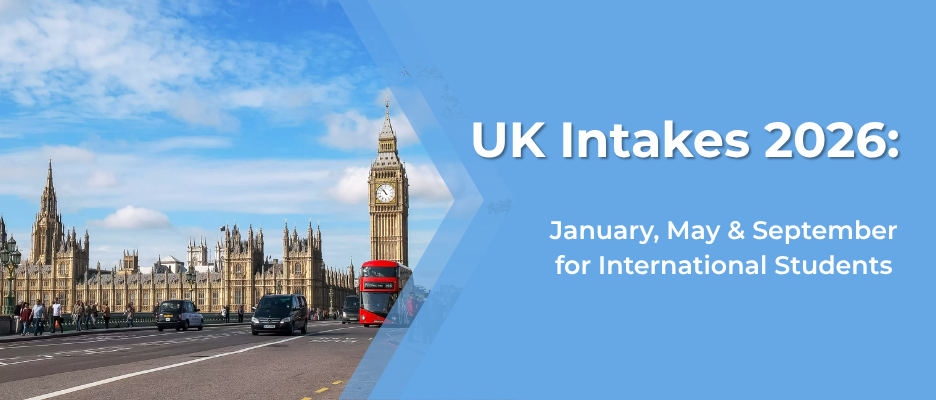
UK Intakes 2026: January, May & September for International Students

If you are planning to study in the UK in , one of the key decisions you’ll make is which intake you should apply for. The UK has three intakes: September (Autumn/Fall), January (Winter), and May (Summer). Each of these comes with different courses offered, deadlines, scholarship opportunities, visa timing, and overall student experience. Choosing the right intake can make a big difference. This guide will walk you through everything about UK Intakes 2026 so you can decide with confidence.

What Are the UK Intakes?

UK universities offer three distinct intakes per academic year:

  • September / Autumn / Fall Intake (usually starts in September–October) – the primary, most popular intake.
  • January / Winter Intake (starts January/February) – a secondary, less populous intake.
  • May / Summer Intake (May/June) – the smallest, most specialised intake.

These intakes differ in many practical ways: what courses are available, how competitive they are, what deadlines apply, what scholarships are offered, visa timing, etc. Understanding these differences is crucial if you’re applying for UK Intakes 2026: January, May & September as an international student.

Comparison of UK Intakes 2026–27

Here is a detailed comparison of the three intakes to help you weigh which might suit you best:

Feature comparison: September, January, May intakes (2026)
Feature September Intake 2026 January Intake 2026 May Intake 2026
Popularity Highest among students; most applications and options. Moderate; fewer applicants than September. Least common; used mostly for niche or pathway programs.
Course Availability Nearly all major courses across disciplines; many undergrad & postgrad options. Many postgraduate courses; fewer undergraduate; limited niche/specialisation slots. Very limited; mainly pathway/pre-sessional, top-ups, specialised courses.
Deadlines / Application Timeline Undergrad via UCAS ~ . Postgrad varies . Start research earlier. Typical deadlines for Jan 2026 intake. Often ; shorter windows.
Competition Level Highest competition due to large applicant volume. Lower than September; fewer applicants may help. Lowest competition but far fewer options.
Scholarship / Financial Aid Maximum opportunities: university & government; merit & need-based. Some scholarships (mostly university-based partial support). Very few options; usually small/departmental bursaries; more self-funding.
Visa & CAS Processing Slower due to peak volumes; start CAS/visa well in advance. Off-peak season → smoother CAS/visa and appointments. Potentially faster, but tighter timeline; less margin for error.
Campus Life & Orientation Full orientation, larger cohorts, active student services. More modest orientation; smaller classes; quieter campus. Minimal orientation; fewer incoming internationals.
Job/Internship Cycle & PSW Best alignment with standard hiring/internship cycles. Off-cycle; some internships/jobs may be trickier; Graduate Route same. Also off-cycle; Graduate Route same.

Which Intake Might Be Best for Indian Students (and Similar Backgrounds)

The September intake is preferred by many because it aligns with exam completion, transcript issuance, English test timelines, and scholarship cycles in India.

If you miss September deadlines, January is a strong backup that gives extra months to prepare documents, improve scores, and organise finances.

May is less common; suited to those who prefer a summer start, have specific programme needs, or are comfortable with smaller pathway/specialised options.

Deadlines & Timeline: How to Plan

September 2026 Intake

  • Now (Sept–late 2025): Shortlist universities & courses; prepare IELTS/TOEFL/PTE, SOP, LORs, transcripts.
  • Oct–Dec 2025: Submit applications (postgrad varies). UCAS undergrad should be in; some programmes close earlier.
  • Jan 2026: Offers arrive; finalise scholarships/aid, accept offers, pay deposits, arrange CAS.
  • Feb–Mar 2026: Visa application, accommodation, travel.
  • Aug–Sept 2026: Arrival, orientation, settling in.

January 2026 Intake

  • Jun–Aug 2025: Research Jan-intake options; compile documents.
  • Aug–Oct 2025: Take English tests; prepare supporting materials.
  • Sep–Nov 2025: Submit applications; monitor course deadlines.
  • Nov–Dec 2025: Offers, scholarships, deposit, CAS.
  • Late Dec–Jan 2026: Visa, travel, start classes.

May 2026 Intake

  • Oct–Nov 2025: Research May-intake offerings; prepare documentation.
  • Nov 2025–Feb 2026: Apply, take language tests, secure funding.
  • Feb–Mar 2026: Offers; prepare for visa & CAS.
  • Apr–May 2026: Visa process, travel, begin studies.

Scholarships & Financial Aid Options by Intake

Financial support is often a deciding factor. Here’s what you can expect depending on which intake you apply for.

  • September Intake: Has the largest number of scholarship opportunities. This includes large government programmes, prestigious international scholarships, university merit-based and need-based awards. This is the intake where you’ll find the most funding options.
  • January Intake: Some scholarships and financial aid are available, but they are more limited. Often partial tuition waivers or smaller grants. Government patronage/funded awards are less common.
  • May Intake: Very few scholarship options. Usually small departmental bursaries or limited external awards. Many students will need to self-fund a significant part of expenses.

Estimated Costs for Studying in the UK ()

Here are the typical cost estimates you’ll need to budget for as an international student under the UK Intakes 2026:

Typical annual cost estimates for international students
Expense Category Estimated Cost (GBP) Approximate Cost in INR*
Undergraduate Tuition Fees £19,000 – £29,000 ~ ₹22.3 lakhs – ₹34 lakhs
Postgraduate Tuition Fees £20,000 – £32,000 ~ ₹23.4 lakhs – ₹37.5 lakhs
Living Expenses £12,000 – £16,000 ~ ₹14 lakhs – ₹18.8 lakhs

Visa Requirements & Application Process

Key Documents & Requirements

  • Valid passport
  • Confirmation of Acceptance for Studies (CAS)
  • Proof of funds (tuition + living costs)
  • English proficiency (IELTS/TOEFL/PTE)
  • Academic transcripts & certificates
  • Health/TB test (if applicable)
  • Any additional documentation required by UKVI

Visa & CAS Timing by Intake

Visa/CAS challenges and advantages by intake
Intake Visa / CAS Considerations
September Peak volume may delay CAS and visa appointments—start early.
January Off-peak; generally smoother processing and easier appointments.
May Shorter lead time between offer and start—less margin for delays.

Additional Visa Notes

  • Graduate Route: After completing a bachelor’s or master’s degree, stay in the UK for 2 years (3 years for PhD) to work or look for work.
  • During studies, students can usually work up to 20 hours/week in term time and full-time during breaks.

Popular Universities & Courses by Intake

While not every university or programme is offered in all intakes, here are examples of well-known universities and popular courses that are known to run in January or May, especially for postgraduate levels. These are useful reference points if you’re planning for UK Intakes 2026.

  • Universities offering January intake include Queen Mary University of London, University of Liverpool, Brunel University London, Kingston University, Edinburgh Napier University, etc.
  • Popular fields in January intake: Business & Management (MBA, International Business, Marketing), Computer Science & IT (Data Science, AI, Cybersecurity), Engineering (Mechanical, Civil, Electrical), Public Health.
  • Universities offering May intake (for 2026): Queen Mary University of London, Brunel University London, University of Kent, Northumbria University, Coventry University, University of East London, Ulster University, University of Greenwich, etc. 

Pros & Cons of Each Intake

September 2026 Intake

Pros:

  • Widest choice of courses and specialisations.
  • Best scholarship & financial aid opportunities.
  • Strong orientation, networking, and campus life.
  • Aligns with standard internship and job cycles.

Cons:

  • High competition; seats fill quickly.
  • Early application deadlines; less room for delays.
  • Possible visa/CAS delays due to peak volume.
  • Higher accommodation demand and costs in peak season.

January 2026 Intake

Pros:

  • Good alternative if September was missed.
  • Less crowded; slightly better odds in some cases.
  • More time to prepare documents and tests.
  • Often smoother visa/CAS processing.

Cons:

  • Fewer universities and courses available.
  • Fewer and smaller scholarships on average.
  • Off-cycle for some internships/recruitment windows.
  • Quieter campus intake with fewer peers.

May 2026 Intake

Pros:

  • Smallest competition; potentially more personal attention.
  • Useful if you need to delay start or prefer summer.
  • Suited to specialised/short/pathway courses.

Cons:

  • Very limited course availability.
  • Minimal scholarship opportunities.
  • Shorter lead times → higher risk of last-minute stress.
  • Less vibrant campus life at summer start.

How to Prepare Well for UK Intakes 2026

Research & Shortlist

  • Identify universities that offer your programme in the intake you prefer (January/May/September).
  • Review curriculum, specialisations, faculty, ranking, and fees.

Prepare Documents

  • Academic transcripts & certificates.
  • English language test scores.
  • Statement of Purpose (SOP) for each application.
  • Letters of Recommendation (LORs).
  • Passport and TB/medical certificates (if required).

Scholarship & Financial Planning

  • Research scholarships early—many have strict deadlines.
  • Confirm which intake supports major or only limited awards.
  • Arrange proof of funds per UKVI (tuition + living).

Visa & CAS

  • After an offer and deposit, obtain your CAS from the university.
  • Plan visa application early—especially for September peaks.

Accommodation & Travel

  • Book housing well in advance (critical for September).
  • Check travel restrictions and arrival windows.

Backup Plan

  • Have a Plan B: consider another intake or university if needed.

Frequently Asked Questions (FAQs)

Can I apply for a Master’s degree in January 2026?

Yes. Many UK universities offer Master’s programmes in the January intake, but not all universities or specialisations do—always check the relevant course pages.

What is the application deadline for January 2026 intake?

Deadlines typically fall between and , depending on the university and programme.

Are there student visa issues if I choose May or January instead of September?

No fundamental differences in visa rights; however, CAS/visa processing speeds and timelines vary. Ensure you meet financial and document requirements and apply on time.

Do I get the same post-study work rights (Graduate Route) regardless of intake?

Yes. Eligible graduates can apply for the Graduate Route (2 years for bachelor’s/master’s; 3 for PhD) irrespective of intake.

Should I wait for September for better scholarships and options?

If timelines allow, September typically provides the widest range of courses and scholarships. If you need to start sooner, January is a solid compromise; May has limited scope.

Final Thoughts: Which UK Intake Should You Choose?

If your documents, English test scores, finances, and transcripts are ready and you want maximum flexibility and options, September 2026 is likely the best choice.

If you’ve missed deadlines or need more time to prepare or improve scores/financials, January 2026 is a strong alternative.

If you prefer a summer start, have specific programme needs that open only in May, or want a lower-pressure start, the May 2026 intake can work—just note the constraints (fewer options, tighter timelines).

Good planning, early preparation, and checking university-specific requirements are essential. Start now so you don’t miss deadlines. Best of luck with your UK study abroad journey in 2026!

© . All rights reserved.

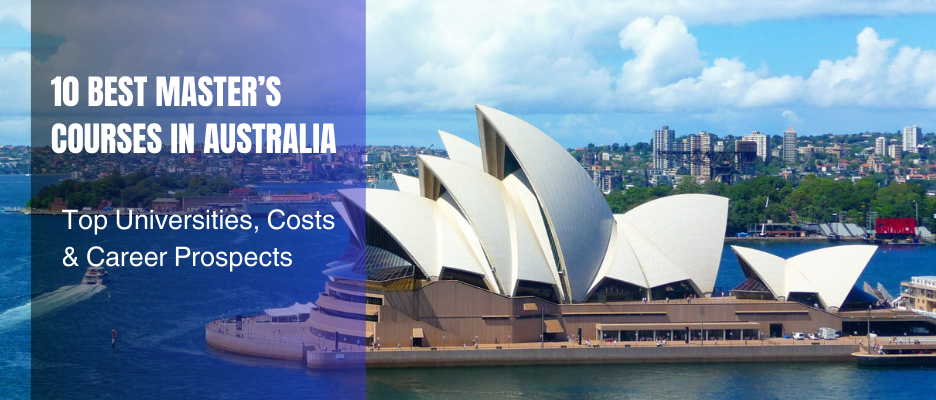
10 Best Master’s Courses in Australia: Top Universities, Costs & Career Prospects

Australia has long been one of the most attractive destinations for higher education, particularly for international students looking to pursue postgraduate degrees.

“Education is the most powerful weapon which you can use to change the world.” — Nelson Mandela

When you study in Australia, that weapon becomes even more powerful—sharpened by world-class universities, a vibrant multicultural environment, and excellent career opportunities in fields where the government is addressing critical labour shortages.

As of 2025, nine Australian universities are ranked among the top 100 globally, underlining the nation’s strong academic standing. Beyond rankings, students are drawn to Australia for its multicultural environment, generous post-study work opportunities, and pathways to permanent residency.

In this blog, we explore the 10 best Master’s courses in Australia, their costs, leading universities offering them, and the career prospects they unlock. Whether you are interested in business, technology, healthcare, or engineering, there is a pathway for every aspiring professional.

Top 10 Master’s Courses in Australia

1. Master of Business Administration (MBA)

Why it’s popular

The MBA is one of the most recognised postgraduate qualifications worldwide, and Australia offers some of the best programs in the Asia-Pacific region. Australian MBAs focus on leadership, strategy, entrepreneurship, and innovation, building analytical skills and strong industry networks.

Top universities

Leading schools include Melbourne Business School, AGSM at UNSW, Monash Business School, UQ Business School, and Macquarie Business School. These programs often feature global exchange options and connections with multinational corporations, giving graduates a competitive edge.

Costs

MBA programs in Australia are on the higher end of the tuition scale, typically ranging between AUD 30,000 and AUD 80,000 for the full degree.

Career prospects

Graduates often move into senior roles such as consultants, managers, strategists, and entrepreneurs. Average salaries for MBA graduates in Australia can exceed AUD 100,000 annually, especially in consulting and financial services.

2. Master of Professional Accounting

Why it’s in demand

With growing global business activity and financial regulations, there is a consistent demand for accounting professionals. A Master of Professional Accounting is a pathway to becoming a Chartered Accountant (CA) or Certified Practising Accountant (CPA) in Australia, credentials that carry international recognition.

Top universities

Well-regarded programs are offered by Monash University, University of Melbourne, UNSW Sydney, and the University of Queensland.

Costs

Fees generally range between AUD 25,000 and AUD 50,000 per year.

Career prospects

Graduates can pursue careers as accountants, auditors, tax advisors, and financial controllers. With experience, they often move into senior finance leadership roles such as Chief Financial Officer.

3. Master of Computer Science / Information Technology / Data Science

Why it’s trending

The digital revolution has transformed every industry, creating unprecedented demand for IT specialists, data scientists, and software engineers. Australia has also set a goal to add over a million new tech workers by 2030, making this field highly secure for international graduates.

Top universities

All Group of Eight universities—Melbourne, Sydney, UNSW, Monash, ANU, UQ, Adelaide, and UWA—offer strong programs in IT and Data Science. Many universities partner with industry leaders like Microsoft, Google, and Amazon, ensuring graduates gain practical exposure.

Costs

Programs typically cost between AUD 25,000 and AUD 50,000 annually.

Career prospects

Graduates are highly sought after as software developers, AI specialists, data analysts, and cybersecurity experts. Salaries are strong, often starting at AUD 80,000 and rising significantly with experience.

4. Master of Social Work

Why it matters

For students driven by purpose and social impact, Social Work is an ideal choice. Australia has a growing demand for qualified social workers to support communities, healthcare systems, and welfare organisations.

Top universities

The University of Sydney, University of Melbourne, UNSW Sydney, and Queensland University of Technology are popular choices.

Costs

Tuition fees range between AUD 25,000 and AUD 45,000 per year.

Career prospects

Graduates can work in NGOs, government agencies, schools, and healthcare institutions. Career pathways include community development officer, mental health practitioner, and child protection worker.

5. Master of Engineering

Why it’s vital

Engineering continues to be a cornerstone of infrastructure, technology, and industrial growth. With major investments in renewable energy, transport, and construction, Australia has a sustained need for engineers across disciplines.

Top universities

Go8 universities, including University of Melbourne, Monash, UNSW, and ANU, offer world-class engineering programs across civil, mechanical, electrical, and software specialisations.

Costs

Tuition generally falls between AUD 30,000 and AUD 55,000 annually.

Career prospects

Graduates work as civil engineers, project managers, mechanical engineers, and electrical engineers. With Australia’s ongoing infrastructure projects, employment opportunities are plentiful. Salaries typically start at AUD 70,000 and rise with seniority.

6. Master of Finance / Applied Finance

Why choose this

For students passionate about numbers, investments, and financial markets, Finance is a natural choice. With Australia’s sophisticated financial services sector, graduates have excellent prospects both locally and internationally.

Top universities

Macquarie Business School’s Master of Applied Finance is globally recognised, along with strong offerings at Melbourne, UNSW, and Monash.

Costs

Annual tuition ranges between AUD 30,000 and AUD 60,000.

Career prospects

Careers include roles as investment bankers, portfolio managers, risk analysts, and corporate finance consultants. Starting salaries are attractive, with professionals often earning above AUD 80,000 in the early stages of their career.

7. Master of Nursing / Healthcare

Why it’s growing

Australia faces a shortage of skilled healthcare workers, and postgraduate nursing degrees provide pathways for advanced practice, leadership, and specialised roles. This makes it a highly employable degree, especially for international students seeking post-study work opportunities.

Top universities

Universities like Queensland, Griffith, Sydney, and Monash are well-known for their healthcare and nursing programs.

Costs

Programs cost between AUD 25,000 and AUD 50,000 per year.

Career prospects

Graduates can become clinical nurse specialists, nurse educators, or healthcare administrators. Nursing professionals in Australia are in high demand, with salaries often starting at AUD 70,000 and rising quickly with experience.

8. Master of Teaching / Education

Why it matters

There is a significant teacher shortage in Australia, creating consistent demand for graduates in this field. Master of Teaching programs prepare students for careers in primary, secondary, or specialized education.

Top universities

Strong programs are available at the University of Sydney, UNSW, and the University of Queensland.

Costs

Fees are generally AUD 25,000 to AUD 40,000 annually.

Career prospects

Graduates can work as teachers, curriculum designers, or education administrators. Career stability is strong, and teaching can also lead to leadership positions such as principal or policy advisor.

9. Master of Architecture / Built Environment

Why it stands out

Architecture and urban planning are increasingly important as cities face challenges of sustainability, climate resilience, and rapid growth. This degree combines creativity with technical expertise.

Top universities

University of Melbourne, UNSW, RMIT, and Queensland University of Technology are popular choices.

Costs

Programs range from AUD 30,000 to AUD 55,000 per year.

Career prospects

Graduates can become architects, project managers, or urban planners. With global demand for sustainable design, career prospects are strong.

10. Master of Medicine / Medical Sciences

Why it’s valued

Healthcare and medical research are global priorities, and Australia offers advanced training in medicine, clinical sciences, and research fields. Entry is competitive but the rewards are significant.

Top universities

The University of Melbourne, Monash University, and University of Sydney are among the top providers.

Costs

Medical programs are among the most expensive, with tuition fees between AUD 40,000 and AUD 65,000 per year or higher.

Career prospects

Clinical practice, research, specialised medical roles; among the highest salaries across professions.

Top Universities in Australia for Master’s Programs

Australia’s Group of Eight (Go8) universities are the most prestigious and research-focused institutions. They consistently rank among the world’s best and have strong connections with industry, government, and global partners.

  • University of Melbourne – Ranked among the world’s top 20, with excellence across business, law, engineering, and medical sciences.
  • UNSW Sydney – Known for business, engineering, and social sciences, with high graduate employability.
  • Australian National University (ANU) – Located in Canberra, specialising in policy, research, and international studies.
  • Monash University – Strong in medicine, engineering, and business.
  • University of Sydney – Broad range of postgraduate programs and renowned research excellence.

University of Queensland, University of Adelaide, and University of Western Australia also feature prominently, offering globally respected master’s degrees.

Costs of Studying a Master’s in Australia

  • Tuition fees: Most programs fall between AUD 25,000 and AUD 50,000 annually, though specialised fields such as MBA or Medicine may cost significantly more.
  • Living expenses: Budget AUD 20,000–27,000 per year for accommodation, food, transport, and personal costs.
  • Scholarships & work: Many universities offer scholarships for international students. Student visas allow up to 48 hours of work per fortnight during study periods and full-time work during breaks.

Career Prospects After a Master’s in Australia

A master’s degree from an Australian university can open doors to both domestic and international careers.

  • Salary range: Graduates typically earn between AUD 70,000 and AUD 100,000 per year, depending on the field. IT, finance, engineering, and healthcare command the highest starting salaries.
  • Post-study work visa: International graduates can stay back and work for two to four years, depending on their qualification and location of study.
  • PR pathways: Many graduates use their qualifications and skilled employment to apply for permanent residency, especially in occupations on Australia’s skilled migration list.

Conclusion: Take the Next Step Towards Your Master’s in Australia

Choosing the right Master’s degree is one of the most important decisions for your career and future. Australia offers a perfect blend of academic excellence, practical exposure, and post-study career opportunities. Whether you’re aiming for a leadership role with an MBA, a high-demand tech job through Computer Science or Data Science, or a rewarding career in healthcare, engineering, or education, there’s a program that aligns with your goals.

With world-class universities, generous work rights, and pathways to permanent residency, studying in Australia is more than just an education—it’s a life-changing investment.

👉 Ready to start your journey? Our expert counsellors at MDOEC can help you shortlist universities, check your eligibility, guide you through scholarships, and ensure a smooth application process.

Don’t wait—secure your place for the upcoming intake and take the first step towards building your dream career in Australia!

Book a Free Counselling Session

FAQs: Master’s in Australia

Q1. What are the basic eligibility requirements for international students?

 To be eligible, students generally need a recognised bachelor’s degree with a strong academic record. Proof of English proficiency—through IELTS, TOEFL, or PTE—is mandatory. Some specialised courses, such as MBA, Nursing, or Medicine, may also require professional work experience or prerequisite subjects.

Q2. Are scholarships available for international students?

Yes. International students have access to several scholarships funded by the Australian Government, universities, and private organisations. Popular options include Australia Awards Scholarships, Destination Australia Scholarships, and merit-based awards from universities. These can reduce tuition fees significantly and, in some cases, also help with living expenses.

Q3. Can international students work part-time while studying?

Absolutely. On a valid student visa, international students can work up to 48 hours per fortnight during academic terms and full-time during scheduled breaks. Part-time work not only helps cover living costs but also provides valuable Australian work experience.

Q4. How does studying a Master’s support PR opportunities?

 Many master’s programs in Australia align with occupations listed on the Skilled Occupation List (SOL). Graduates in high-demand fields—such as Nursing, IT, Engineering, and Accounting—are often well-positioned to apply for post-study work visas, which can lead to permanent residency pathways.

Q5. What is the typical duration of master’s courses?

 Most master’s programs run for 1.5 to 2 years, depending on whether the program is research-based, coursework-based, or a combination of both. Accelerated options may allow students with prior qualifications or experience to finish earlier.

Q6. Is health insurance mandatory for international students?

Yes. All international students must purchase Overseas Student Health Cover (OSHC) for the entire duration of their visa. This provides access to essential healthcare, including doctor visits, hospital care, and prescription medicines, ensuring peace of mind during their stay.

Q7. How much does it cost to study a Master’s in Australia?

Tuition fees for master’s programs usually range between AUD 25,000 and AUD 50,000 per year, depending on the course and university. Professional degrees like MBA or Medicine can be more expensive. Students should also budget an additional AUD 20,000–27,000 annually for living expenses such as housing, food, transport, and personal costs.

Q8. What are the post-study work opportunities?

Graduates are eligible for a Temporary Graduate Visa (subclass 485), which allows them to stay and work in Australia for 2 to 4 years, depending on the qualification and location of study. This provides valuable work experience and, for many, a pathway to permanent residency.

Q9. Which intake is best?

The two major intakes are February (Semester 1) and July (Semester 2). February is the primary intake with the widest range of courses available, while July offers a second chance for students who may have missed the earlier intake. Some universities also offer a smaller November intake for selected programs.

Q10. How do Australian universities rank globally?

Australia is home to several world-class universities. The Group of Eight (Go8)—including the University of Melbourne, ANU, Monash, UNSW, and University of Sydney—regularly feature among the top 100 globally. These institutions are known for strong research output, industry connections, and high graduate employability.

Q11. Can students bring dependents?

Yes. Students can include their spouse or children on their visa application. Dependents are allowed to live in Australia, and spouses may also be permitted to work, depending on the student’s course of study.

Q12. What support services are available?

Australian universities provide extensive support, including orientation programs, academic assistance, career counselling, and mental health services. International student support centres also help with accommodation, legal advice, and integration into campus life, ensuring students feel welcome and supported.

About the Director

Rikhil Nair is the Director of MDOEC, a leading overseas education consultancy helping students achieve their global study dreams with personalised guidance and end-to-end support. Passionate about empowering young talent, Rikhil combines industry expertise with a hands-on approach to simplify the study abroad journey. Outside of work, he enjoys travelling to new countries, exploring different cuisines, and playing cricket. Connect with him on LinkedIn.

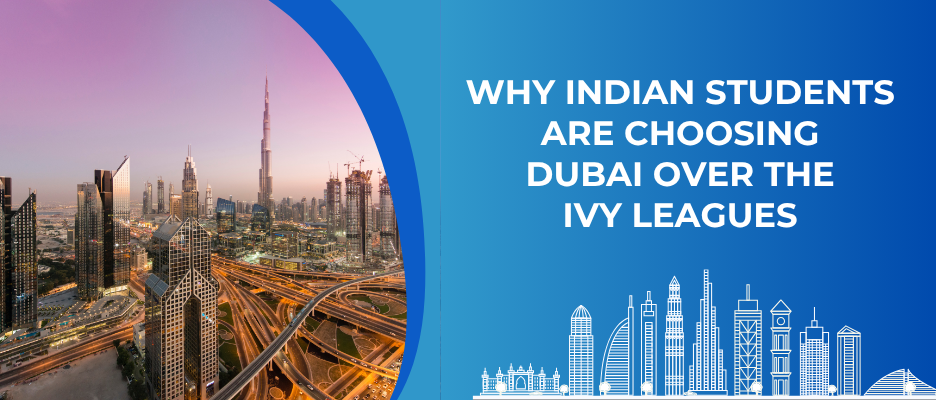
Why Indian Students Are Choosing Dubai Over the Ivy Leagues

Dubai’s evolution from a city of luxury to a centre of learning is reshaping the global education map—and Indian students are at the heart of this transformation.

Once known primarily for its iconic skyline and world-class tourism, Dubai has deliberately invested in becoming an academic powerhouse, attracting leading universities and creating opportunities that rival the West.

Today, the city is home to more than 30 international branch campuses, including institutions from the UK, U.S., India, and Australia. What this means for students is clear: access to globally recognised degrees without the financial or cultural challenges often faced in distant countries.

For Indian students especially, Dubai has shifted from being a weekend holiday destination to a serious academic home. Its location—strategically placed between East and West—makes it not only geographically convenient but also culturally balanced. Students experience the best of both worlds: the comfort of a familiar diaspora and the exposure of studying in a truly global city.

The appeal is evident in the numbers. Over 100,000 Indian students are now enrolled in Dubai’s higher education institutions, making them the largest international student community in the UAE. This surge reflects more than convenience—it highlights a broader shift in priorities. Where once “Ivy League” was the ultimate aspiration, now students are drawn to Dubai’s unique blend of quality, affordability, and career-focused outcomes.

So what makes Dubai stand out? Beyond its modern campuses and multicultural environment, it’s the promise of growth. Students are not only earning degrees; they’re building careers in one of the fastest-growing economies in the world. With flexible visa policies, tax-free part-time work, and pathways to long-term residency, Dubai is crafting a future where education and opportunity are seamlessly connected.

Your study abroad journey deserves more than prestige—it deserves purpose. And for many Indian students, that purpose-driven path is leading to Dubai. In this blog, we’ll explore the reasons behind this shift and the opportunities that make Dubai a destination worth serious consideration.

As MDOEC – Best Overseas Education Consultants, we’ve seen this shift firsthand. Let’s explore what’s driving the trend, and why Dubai is no longer just a city of dreams—it’s a city of degrees.

9 Reasons Dubai Is Winning Over Indian Students

1. International Universities With Global Recognition

One of Dubai’s biggest strengths is its cluster of globally renowned universities. Students can study at branch campuses of top institutions and graduate with the same degree awarded at the home campus abroad. This means the prestige, quality, and global recognition remain intact—without the distance or cost of studying in the U.S. or U.K.

Some of the top international universities in Dubai include:

  • Heriot-Watt University Dubai – strong in engineering, business, and design.
  • University of Birmingham Dubai – a Russell Group university ranked among the world’s top 100.
  • Middlesex University Dubai – globally reputed for law, media, and business programs.
  • American University in Dubai (AUD) – popular for architecture, design, and business.
  • BITS Pilani, Dubai Campus – ideal for engineering and technology aspirants.
  • University of Wollongong Dubai (UOWD) – renowned for business, IT, and innovation.
  • Canadian University Dubai – diverse programs with Canadian curriculum links.
  • Curtin University Dubai – with global ties in Australia.
  • University of Manchester Global MBA Centre – world-ranked MBA without leaving Dubai.
  • Manipal Academy of Higher Education (MAHE) Dubai Campus – strong in health sciences and engineering.

For Indian students, this is a golden opportunity: study in Dubai under world-class faculty, gain an international degree, and still remain just a few hours from home.

2. KHDA and Education Reforms – Raising Standards

Dubai’s Knowledge and Human Development Authority (KHDA) has played a transformative role in building trust in the education system. KHDA regularly inspects, rates, and monitors universities, ensuring high quality and transparency. Families can access ratings and reports before choosing a university.

Additionally, the UAE’s Vision 2030/33 reforms aim to make Dubai one of the world’s leading education hubs by:

  • Expanding scholarships for international students.
  • Simplifying visa processes.
  • Ensuring 90% of graduates are employed within a short time frame.
  • Strengthening partnerships with global industries.

This government-backed commitment to quality and employability is something Ivy League universities—while prestigious—cannot always guarantee, especially for international students.

3. Proximity and Cultural Comfort

For Indian parents, one of the biggest concerns is how far their child will be from home. The U.S. is at least a 20-hour flight away. Dubai? Barely 3–4 hours.

Add to this the 2 million+ Indian diaspora in Dubai, and students find themselves in a city that celebrates Diwali, serves Indian food on every corner, and feels like a home away from home. This cultural familiarity eases the transition and reduces the anxiety parents often feel when sending their children abroad.

4. Cost Advantage – Smarter ROI

An Ivy League degree can cost upwards of INR 60–80 lakhs per year. Compare that with Dubai:

  • Tuition fees are lower.
  • Living costs, while higher than India, are significantly lower than New York or London.
  • Scholarships up to 50% are available.
  • Students can work part-time (up to 15 hours weekly during semesters and 40 hours during breaks) in a tax-free economy.

This makes Dubai not just affordable but a smarter return on investment (ROI). Families save significantly while students still gain international exposure and career opportunities.

5. Simplified Admissions – No Red Tape

The Ivy Leagues are notorious for their hyper-competitive admissions—acceptance rates often below 10%. Dubai, by contrast, offers a streamlined and student-friendly process:

  • Many universities waive IELTS/TOEFL if students have studied in English-medium schools.
  • Multiple intakes (Jan/Feb and Sep/Oct) allow flexibility.
  • Entry requirements are transparent and accessible.

For Indian families, this reduces stress and ensures opportunities are not lost to rigid systems.

6. Career-Ready Education

Unlike many Ivy League universities that are research-heavy, Dubai’s programs are career-focused. Universities in Dubai design curricula in collaboration with industries, ensuring students graduate with job-ready skills.

Key advantages include:

  • Built-in internships with global firms based in Dubai.
  • Exposure to industries like fintech, logistics, healthcare, hospitality, and AI.
  • Networking opportunities in a city that is home to Fortune 500 companies and startups alike.

This practical orientation is why Dubai is increasingly seen as the bridge between education and employment.

7. Visa and Work Opportunities

Another reason Dubai is winning over Indian students: clear post-study pathways.

  • Long-term student visas ensure stability.
  • Golden Visas (10 years) are awarded to top students and professionals.
  • Students can sponsor their families—a rare option in countries like Canada or the UK.
  • Structured employment pathways help graduates quickly find jobs.

Compared to the uncertainties of U.S. H-1B lotteries or the U.K.’s recent restrictions, Dubai feels like a safer bet for long-term career planning.

8. Safety, Lifestyle, and Global Exposure

Dubai consistently ranks among the world’s safest cities. Strict laws, advanced infrastructure, and world-class healthcare give parents peace of mind.

Beyond safety, students experience:

  • A cosmopolitan lifestyle with peers from 200+ nationalities.
  • Advanced transport, smart city infrastructure, and modern housing.
  • A global cultural mix—preparing students for international careers.

While Ivy League universities offer prestige, Dubai offers a balanced lifestyle where education, safety, and exposure come together seamlessly.

9. Challenges Students Should Consider

  • Higher living costs compared to Indian cities.
  • Extreme summer heat, which requires adjustment.
  • Cultural norms are stricter, requiring awareness and respect.

At MDOEC, we guide students honestly, ensuring they understand both opportunities and limitations before committing.

FAQs: Dubai vs Ivy League

1. Why are Indian students choosing Dubai over Ivy League universities?

Because Dubai offers globally recognised education, simpler admissions, lower costs, better career opportunities, and proximity to home—all in a safe, cosmopolitan environment.

2. Are Dubai degrees recognised globally?

Yes. Branch campuses award the same degrees as their parent universities abroad.

3. How does Dubai compare in cost to the Ivy Leagues?

Dubai is significantly more affordable—both tuition and living costs are lower, and students can offset expenses with part-time work.

4. What career opportunities are available after studying in Dubai?

Students gain access to internships and jobs in finance, IT, logistics, hospitality, and emerging fields like AI and renewable energy.

5. Can students stay in Dubai after graduation?

Yes. With Golden Visas and clear work pathways, students can transition from academics to employment smoothly.

6. Is Dubai safe for Indian students?

Absolutely. Dubai ranks among the safest cities in the world and has a large Indian community for added support.

7. How does MDOEC support students aiming for Dubai?

MDOEC provides personalised guidance—shortlisting universities, securing scholarships, handling applications, visa support, and preparing students for life in Dubai.

Final Thoughts

For Indian students, the Ivy League dream isn’t fading—it’s evolving. While the prestige of Harvard or Princeton is undeniable, Dubai offers a smarter, more practical route: world-class universities, affordability, cultural comfort, career-ready education, and secure visa pathways.

At MDOEC – Best Overseas Education Consultants, we believe Dubai is no longer just an alternative; it is the new frontier in global education. For students and families seeking the perfect blend of quality, safety, and opportunity, Dubai is proving to be the smarter choice of the future.

The dream has shifted—from Ivy towers to desert horizons—and for many Indian students, Dubai is where global aspirations meet achievable reality.


Top PR Courses in Australia for International Students

Australia continues to be a global hotspot for international students in Australia 2026. With over half a million international students enrolled annually, the country not only offers excellent academic opportunities but also provides a clear pathway to Permanent Residency (PR). Choosing the right course is crucial because not all degrees lead to PR opportunities. To maximise your chances of securing PR, it’s important to pursue a program that aligns with Australia’s Medium and Long-Term Strategic Skills List (MLTSSL) or the Short-Term Skilled Occupation List (STSOL). This blog explores the top PR courses in Australia for 2026, eligibility details, universities offering these programs, and practical tips to help you align your education with PR goals.

Why Study PR-Friendly Courses in Australia?

Studying PR-eligible courses is more than just an academic choice — it’s a strategic move for your future. When you decide to study in Australia, you’re not only earning a world-class qualification but also opening doors to long-term residency and career opportunities. Here’s why:

  • Better PR Success Rates: If you study in Australia in a field that matches occupations in shortage, your chances of securing PR through points-tested visas like Subclass 189, 190, or 491 increase significantly.
  • Work Opportunities: Employers in Australia prefer graduates from high-demand fields such as healthcare, IT, engineering, and education — all strong pathways to PR.
  • Global Recognition: Degrees earned when you study in Australia are internationally recognised, giving you a competitive edge worldwide while also aligning with PR prospects locally.
  • Post-Study Work Visa (Subclass 485): By completing at least two years of full-time study in Australia, you become eligible for the Post-Study Work stream, which provides valuable work experience before applying for PR.
  • Regional Study Advantage: When you choose to study in Australia’s regional areas — such as Tasmania, Adelaide, or Darwin — you gain extra PR points and enjoy extended post-study work rights, making PR even more attainable.

Top PR Courses in Australia (2026)

1. Engineering

Engineering remains one of the strongest PR pathways. Australia has a consistent shortage of engineers across various fields due to large-scale infrastructure projects, mining, and renewable energy expansion.

Specialisations in demand:

  • Civil Engineering
  • Mechanical Engineering
  • Electrical Engineering
  • Mining and Petroleum Engineering
  • Software Engineering

PR Benefit: Engineers are listed under the MLTSSL, giving students better PR prospects. You’ll need a skills assessment from Engineers Australia after graduation.

Top Universities:

  • University of Sydney
  • Monash University
  • University of Queensland
  • RMIT University

📌 Example: Civil Engineers are particularly in demand due to Australia’s ongoing housing and transport infrastructure projects.

2. Information Technology (IT) & Cybersecurity

As digitalisation accelerates, Australia faces a major skills gap in IT and cybersecurity.

Specialisations in demand:

  • Cybersecurity
  • Artificial Intelligence & Machine Learning
  • Software Development
  • Cloud Computing
  • Data Science

PR Benefit: Roles like Software Engineer, ICT Business Analyst, and Systems Analyst are featured on the MLTSSL. Skills assessments are conducted by ACS (Australian Computer Society).

Top Universities:

  • University of Technology Sydney (UTS)
  • University of Melbourne
  • RMIT University
  • QUT

📌 Fact: The Australian government predicts a shortage of over 100,000 IT professionals by 2030, making IT one of the most secure PR pathways.

3. Nursing and Healthcare

Healthcare is one of the most PR-friendly industries due to ageing populations and increased demand for skilled medical professionals.

Specialisations in demand:

  • Registered Nursing
  • Aged Care & Disability Support
  • Midwifery
  • Physiotherapy
  • Occupational Therapy

PR Benefit: Healthcare graduates must register with AHPRA and can apply for skills assessments. Nurses are consistently listed under the MLTSSL.

Top Universities:

  • Deakin University
  • Griffith University
  • University of Adelaide
  • University of Sydney

📌 Example: Registered Nurses often receive priority invitations for PR applications due to critical shortages.

4. Education and Teaching

Teachers play a vital role in Australia’s skilled migration strategy.

Specialisations in demand:

  • Early Childhood Education
  • Primary Teaching
  • Secondary Teaching (Maths, Science, English)
  • Special Needs Education

PR Benefit: Teaching is listed on the skilled occupation list. Graduates require a skills assessment from AITSL (Australian Institute for Teaching and School Leadership).

Top Universities:

  • University of Queensland
  • Monash University
  • University of Sydney
  • QUT

📌 Tip: Early Childhood Education is particularly PR-friendly, as many regional areas struggle with teacher shortages.

5. Accounting and Finance

Accounting continues to be a popular PR choice, though competition is high.

Specialisations in demand:

  • Professional Accounting
  • Management Accounting
  • Auditing
  • Financial Planning

PR Benefit: Graduates must undergo assessment by CPA, CA ANZ, or IPA. While competitive, strong demand for accountants keeps this course PR-relevant.

Top Universities:

  • UNSW Sydney
  • Deakin University
  • Macquarie University
  • University of South Australia

📌 Note: State nomination often helps accountants secure PR faster.

6. Social Work and Community Services

Social workers are increasingly important in areas such as mental health, aged care, and child welfare.

Specialisations in demand:

  • Social Work
  • Community Development
  • Youth Work
  • Counselling

PR Benefit: The role of Social Worker is on the MLTSSL, and skills assessments are carried out by AASW (Australian Association of Social Workers).

Top Universities:

  • University of Melbourne
  • University of Western Australia
  • Griffith University
  • Flinders University

📌 Example: Social work is particularly valuable in regional migration programs, giving applicants a double advantage.

7. Trade Courses (VET Pathway)

Vocational Education and Training (VET) provides cost-effective PR pathways for students who prefer practical skills.

Specialisations in demand:

  • Carpentry
  • Plumbing
  • Welding & Fabrication
  • Automotive (Mechanics, Diesel Fitting)
  • Building & Construction

PR Benefit: Trades feature heavily on the skilled occupation lists. Students who complete VET programs can apply for state sponsorship or regional visas.

Top Institutions:

  • TAFE (Technical and Further Education) institutes across Australia
  • Melbourne Polytechnic
  • Holmesglen

📌 Fact: Many regional areas of Australia prioritise skilled tradespeople for PR because of labour shortages.

↑ Back to top

Eligibility for PR-Friendly Courses in Australia

To maximise PR opportunities, students must meet these criteria:

Education Requirements

  • Undergraduate: Class 12 or equivalent.
  • Postgraduate: Relevant bachelor’s degree.

Duration

Minimum 2 years (92 weeks) in a CRICOS-registered institution.

English Proficiency

IELTS 6.5+ or equivalent (course-specific).

Visa Pathway

  • Start with Subclass 500 (Student Visa).
  • After completion, apply for Subclass 485 (Temporary Graduate Visa).
  • Gain work experience → PR application.

Skills Assessment

Required for professional occupations like nursing, teaching, engineering, and accounting.

MDOEC – Best Overseas Education Consultants

Choosing the right PR course can be overwhelming — that’s where MDOEC (My Dream Overseas Education Consultants) comes in.

  • Expert Counselling: Guidance on PR-friendly courses, universities, and states.
  • Visa Support: Assistance with Student Visa (Subclass 500), Post-Study Work Visa (Subclass 485), and PR process.
  • University Applications: Tie-ups with top Australian universities.
  • Financial Guidance: Help with education loans, scholarships, and budgeting.
  • End-to-End Support: From profile evaluation to departure briefing.

📌 MDOEC has helped hundreds of students successfully pursue their Australian education and migration dreams.

Top Universities & Institutions Offering PR-Friendly Courses

  • University of Sydney – Engineering, Nursing, PR Communication.
  • University of Melbourne – Social Work, Teaching, Marketing Communications.
  • RMIT University – IT, Engineering, PR, Business.
  • University of Technology Sydney (UTS) – IT, Nursing, Communication.
  • Deakin University – Nursing, Accounting, Public Relations.
  • La Trobe University – Social Work, PR, Education.
  • Monash University – Engineering, Teaching, Healthcare.
  • Flinders University – Community Services, Nursing.
  • TAFE Institutes – Trade & vocational training.

How to Choose the Right PR Course

  • Check if the course is on MLTSSL/STSOL.
  • Ensure the program is CRICOS-approved.
  • Select courses of at least 2 years duration.
  • Consider regional universities for extra PR points.
  • Balance career interest with PR potential.
  • Factor in skills assessments and registration requirements.

FAQs on PR Courses in Australia (2026)

1. What is the best PR course in Australia?

Nursing, IT, Engineering, and Social Work are consistently the strongest PR options.

2. Do trade courses really lead to PR?

Yes — VET trade programs like carpentry and plumbing are highly valued in regional PR pathways.

3. How long should I study to qualify for PR?

At least 2 years full-time in a CRICOS-approved institution.

4. Can I directly apply for PR after study?

No, you must first apply for the Temporary Graduate Visa (Subclass 485), gain work experience, and then transition to PR.

5. Which Australian states are easier for PR?

Regional states such as South Australia, Tasmania, and Northern Territory often provide easier state nominations.

6. Are Public Relations courses eligible for PR?

Not directly. While PR as a communication subject (offered at UTS, RMIT, La Trobe) enhances employability, PR as in permanent residency is better achieved via nursing, IT, trades, and social work.

7. Can I switch courses if I realise my course is not PR-eligible?

Yes, but you must maintain student visa compliance and ensure the new course is CRICOS-registered.

8. Do regional universities really give PR advantages?

Yes, studying in regional areas adds extra PR points and provides extended post-study work visas.

Conclusion

Australia is not just an education destination; it’s a pathway to a secure future. By choosing PR-eligible courses like nursing, IT, engineering, teaching, accounting, social work, and trades, international students can secure both career growth and permanent residency. With expert guidance from MDOEC – Best Overseas Education Consultants, your study abroad journey becomes easier, smarter, and future-focused. Whether it’s selecting the right course, applying to top universities, or navigating PR pathways — MDOEC ensures you’re always a step ahead.

🌏 Study Abroad with MDOEC. Build your future in Australia today!

About the Author Bio

Rikhil Nair is the Director of MDOEC, a leading overseas education consultancy helping students achieve their global study dreams with personalised guidance and end-to-end support. Passionate about empowering young talent, Rikhil combines industry expertise with a hands-on approach to simplify the study abroad journey. Outside of work, he enjoys travelling to new countries, exploring different cuisines, and playing cricket. Connect with him on LinkedIn.

PTE Exam Updates After August 7, 2025: Everything Test Takers Need to Know

The Pearson Test of English (PTE) Academic has undergone important updates starting , designed to bring the test closer to real-world English usage and make assessments fairer and more authentic. If you’re preparing for the PTE, here’s everything you need to know to stay ahead.

Test duration update: The total time is now 2 hours and 30 minutes (previously 2 hours and 15 minutes).

1. Two Brand-New Speaking Tasks Added

Summarize Group Discussion

You’ll listen to a conversation among 3 speakers, then summarize the main ideas in your own words. This task tests your ability to synthesize viewpoints and communicate effectively.

Respond to a Situation

You’re presented with a short audio scenario (20–30 seconds) and a written prompt, and you must respond naturally—like you would in a real-life situation. It’s all about contextually appropriate speech.

These tasks add depth to the test by requiring real-time listening and authentic responses—skills essential for academic life and beyond.

2. Integrated (AI + Human) Marking System

While PTE has historically relied solely on AI scoring, the updated model introduces human review alongside AI, especially for the new speaking tasks.

  • AI remains primary for fluency and pronunciation.
  • Human evaluators now review content for relevance, coherence, and authenticity.

This blended marking approach raises the bar: memorized templates won’t suffice anymore. Your responses must be genuinely composed and contextually relevant.

3. Adjusted Tasks and Renamed Content for Better Clarity

  • Summarize Written Text: 2 tasks (instead of 1 or 2)
  • Essay Writing: Only 1 task (instead of 1–2)
  • Reading & Listening: Certain formats like Multiple-Choice or Highlight Incorrect Words appear frequently.
  • Reading and Writing: Fill in the BlanksDrop Down
  • Reading: Fill in the BlanksDrag and Drop
  • Listening: Fill in the BlanksTypeIn

In essence, the total number of tasks is more focused and fewer—but they’re designed to assess your skills more efficiently.

4. What It Means for You: Key Takeaways

  1. Real-World Relevance > Template Responses

    You’ll face tasks that mirror academic and social scenarios—summarizing group discussions or responding to actual situations. Templates won’t cut it; you must think on your feet.

  2. Efficient Test Structure

    Although tasks like Summarize Written Text and multiple listening formats are reduced, the inclusion of new speaking challenges keeps the exam balanced yet dynamic.

  3. Focused Scoring Criteria

    Human review means evaluators look for originality, clarity, and contextual relevance. Simple, relevant responses often outperform grammatically over-engineered ones.

See Also Mastering language proficiency tests like IELTS and PTE: strategies and resources for success

5. How to Prepare Smartly

Practice the Two New Task Types

  • Summarize Group Discussion: Practice listening to 2–3 person discussions (e.g., student debates, panel talks), take notes, and summarize succinctly.
  • Respond to a Situation: Practice with everyday prompts—complaints, requests, inquiries—and respond spontaneously.

Focus on Active Listening & Note-Taking

You get limited time; effective shorthand notes (keywords, symbols) help you capture essential ideas quickly.

Build Fluency, Not Just Grammar

Speak out loud with confidence—aim for clear, coherent responses, not over-structured speeches.

Use Updated Preparation Resources

Pearson has released new prep materials, including question banks, videos, and webinars to help you practice effectively.

Simulate Test Conditions

Practice under timed conditions with the new UI style and tasks. The updated interface makes navigation and engagement smoother.

6. What Is Unchanged?

  • The overall score is still 90.
  • Standard question types remain; only 2 new speaking tasks are added.
  • Fluency and pronunciation are still marked by AI.

7. Quick Comparison: Before vs. After August 7, 2025

Comparison of PTE features before and after August 7, 2025
Feature Before Aug 7, 2025 After Aug 7, 2025
Speaking Task Types Standard tasks like Retell Lecture only + Summarize Group Discussion, Respond to a Situation
Scoring Method AI-only marking AI + human review for certain tasks
Written Task Variations Multiple summarization, essays, reading formats Streamlined, fewer tasks
Preparation Materials Earlier versions New officially updated materials
Focus of Evaluation Language and structure Realistic context, originality, relevance
Test Time 2 hours 15 minutes 2 hours 30 minutes

8. Final Thoughts – Embrace the Realism

The PTE update from August 7, 2025, is a positive shift—it aligns more closely with how English is used in classrooms, workplaces, and daily life.

  • Authentic communication
  • Adaptive, real-time responses
  • Awareness of context and clarity

As a test taker, focus on understanding, not memorizing. Develop responsiveness, clarity, and coherence. The tasks now mirror what you’d do in a discussion or real-life scenario—and that’s a skill worth sharpening beyond just the exam.

Updated to reflect changes effective .

Your Ultimate Guide to Studying Abroad in 2026


Introduction

In today’s interconnected world, studying abroad is no longer just a dream for a privileged few—it’s an achievable goal for ambitious students everywhere. As 2026 unfolds, more young people are looking beyond borders to seek world-class education, personal growth, and career-boosting experiences. But with so many options, destinations, and pathways, planning your international study journey can feel overwhelming. This comprehensive guide covers everything you need to know—from why you should consider studying abroad, to tips for choosing the right course, preparing for entrance exams, securing funding, and making the most of your experience.

1. Why Study Abroad in 2026?

a. Global Exposure & Personal Growth

Studying in a different country opens your mind to new cultures, languages, and ways of thinking. You’ll build cross-cultural communication skills, adapt to new environments, and develop the confidence that comes from navigating unfamiliar situations. These are life skills that set you apart in any career.

b. World-Class Academics and Research

Many countries offer state-of-the-art facilities, innovative teaching methods, and hands-on research opportunities. Whether your interests lie in engineering, business, life sciences, or digital arts, you’ll find specialised programs designed to keep pace with rapid technological and social change.

c. Better Career Prospects

Employers around the world value international experience. Graduates with global exposure often command higher starting salaries and are seen as more adaptable, independent, and innovative. The connections you make overseas—friends, professors, industry professionals—can open doors for internships, jobs, and collaborations.

d. Learning Life Skills

Beyond academics, studying abroad teaches self-reliance, problem-solving, and adaptability. Managing your own finances, travel, and studies in a new environment is a fast-track to maturity.

2. Entrance Exams: What You Need to Know

Competitive exams remain a cornerstone of the admissions process for most top universities. Here are the key tests and what they assess:

GRE (Graduate Record Examination)
Widely required for master’s and doctoral programs, particularly in the US and Canada. GRE Tests analytical writing, quantitative reasoning, and verbal reasoning.
GMAT (Graduate Management Admission Test)
Essential for MBA and business-related master’s degrees. Focuses on problem-solving, data analysis, and critical reasoning.
SAT/ACT
Mainly required for undergraduate admissions in the US. They evaluate math, reading, and writing skills.
TOEFL/IELTS
Proof of English proficiency is a must for most non-English-speaking countries. These exams comprehensively assess your ability to understand and use English in an academic setting, ensuring you can succeed in lectures, assignments, group discussions, and day-to-day university life. Both TOEFL and IELTS test your reading, writing, listening, and speaking abilities, but they differ in format—TOEFL is primarily internet-based and widely accepted in the US and Canada, while IELTS is often preferred in the UK, Australia, and New Zealand, and offers both paper-based and computer-based options. A strong score in these exams not only fulfills university requirements but also boosts your confidence and communication skills for your life abroad. Preparing well for these tests demonstrates your commitment and readiness for an international academic environment.
PTE (Pearson Test of English)
An increasingly popular English proficiency test accepted by many universities in countries like Australia, New Zealand, the UK, and the US. PTE assesses speaking, writing, reading, and listening skills, and is valued for its fast results and computer-based format.
Duolingo English Test
A newer, flexible, and affordable English language test accepted by thousands of universities worldwide. Duolingo can be taken online from home and assesses reading, writing, speaking, and listening skills in a quick, adaptive test format.

Tip: Start your preparation early and take advantage of online resources, coaching, and mock tests. High scores not only strengthen your application but can also qualify you for scholarships.

3. Choosing Your Destination: Top Study Abroad Countries for 2026

United States

Home to hundreds of globally ranked universities, the US is known for innovation and research across all fields. Flexible course structures, generous campus life, and opportunities for internships and practical training make it a favourite.

Canada

With its welcoming immigration policies, multicultural cities, and excellent work opportunities, Canada has become a top pick for students seeking long-term prospects. Canadian degrees are globally recognised, especially in technology, healthcare, and business.

United Kingdom

The UK’s universities combine tradition with innovation. It offers one-year master’s programs and two-year post-study work visas, making it cost- and time-efficient. London, Manchester, and Edinburgh are magnets for global talent.

Australia

Australia shines with its quality education, vibrant student life, and relaxed lifestyle. It’s particularly strong in engineering, environmental sciences, and health sciences. Students can work part-time and are eligible for post-study work visas.

Germany

Germany offers low or no tuition fees at many public universities, high-quality education, and strong job markets, especially in engineering, technology, and automotive fields. Most programs require some knowledge of German, though English-taught courses are rising.

Emerging Destinations

Countries like Singapore, Ireland, New Zealand, and the Netherlands are gaining traction for their niche programs, innovation hubs, and high standards of living.

4. Tuition Fees and Living Costs: A Snapshot

Understanding costs is crucial. Here’s a rough annual estimate for tuition (in local currencies):

Country Tuition (Annual) Notes
USA $20,000–$45,000 (UG/PG)  
UK £10,000–£25,000  
Canada CAD 13,000–25,000  
Australia AUD 20,000–40,000  
Germany Often no tuition Semester fees around €300–€700

Living Expenses: Vary widely by city and lifestyle. Budget for housing, food, transport, books, and health insurance. Part-time work can offset some costs.

5. Funding Your Study Abroad Dreams

Scholarships and Grants

Many universities and governments offer scholarships based on academic merit, sports, arts, or leadership. Some are need-based, while others target students from specific regions or backgrounds. Begin researching and applying early; deadlines often come before university application deadlines.

Education Loans

Banks and financial institutions in your home country can help cover tuition and living expenses. Research interest rates, repayment terms, and eligibility criteria.

Part-Time Work

Most study destinations allow students to work part-time during semesters and full-time during holidays, helping you earn extra money and gain valuable work experience.

6. How to Select the Right University and Course

  • Field of Interest: Choose a program aligned with your passion and career goals.
  • University Reputation: Check rankings, but also look at department-specific strengths and alumni outcomes.
  • Course Content: Read the curriculum—does it offer the electives, internships, or research options you want?
  • Location: Consider climate, lifestyle, job market, and proximity to industry hubs.
  • Student Support: Strong international student services make a huge difference in settling in.

7. Application Roadmap

  1. Self-Assessment: Review your grades, skills, and goals.
  2. Test Preparation: Schedule and prepare for required exams.
  3. Shortlisting: Make a balanced list—dream, match, and safety options.
  4. Document Preparation: Draft a compelling Statement of Purpose (SOP), polish your resume, and gather recommendation letters.
  5. Application Submission: Apply before deadlines and double-check all details.
  6. Visa Process: Collect required documents, attend interviews if needed, and prove your financial stability.
  7. Pre-Departure Planning: Book accommodation, flights, insurance, and join orientation sessions.

8. Succeeding as an International Student

Embrace Campus Life

Get involved in clubs, societies, and community events. It’s the best way to build friendships, combat homesickness, and develop soft skills.

Network and Intern

Use career centres, job fairs, and alumni networks to find internships or part-time jobs. This not only boosts your resume but can lead to full-time roles post-graduation.

Focus on Wellbeing

Moving to a new country can be stressful. Seek support from university counselors and connect with other international students to share experiences.

10. FAQs

How do I choose the best country to study abroad in 2026?

Think about your career goals, preferred lifestyle, budget, and language comfort. Research each country’s education system, post-study work rights, and job market to find the right match for your ambitions.

What are the top courses for international students in 2026?

Fields like data science, healthcare, renewable energy, business analytics, and computer science are in high demand globally. Choose a course that aligns with your strengths and offers good employment prospects in your target country.

How much does it cost to study abroad in 2026?

Costs vary widely by country and course—tuition can range from $10,000 to $50,000+ per year, with living expenses on top. Factor in scholarships, part-time work opportunities, and exchange rates to get a realistic budget.

What scholarships are available for international students in 2026?

Many governments, universities, and private organisations offer merit- or need-based scholarships. Applying early and tailoring your application to each scholarship’s criteria will boost your chances.

Can I work while studying abroad in 2026?

Most countries allow international students to work part-time during studies and full-time during breaks. Check visa regulations carefully, as work-hour limits and job restrictions vary.

What documents do I need to apply to study abroad?

Common requirements include academic transcripts, English proficiency test scores, a statement of purpose, letters of recommendation, and a valid passport. Some programs may also require a portfolio or entrance exam results.

How can I prepare for life in a new country as a student?

Learn about the culture, climate, and cost of living before you move. Joining online student communities can help you settle in faster and feel connected from day one.

What are the post-study work opportunities in 2026?

Many study destinations offer post-study work visas to help graduates gain local experience. The duration and eligibility vary, so research your chosen country’s policies before applying.

Conclusion

Studying abroad in 2026 is more accessible and rewarding than ever before. With early planning, strong preparation, and an open mind, you can unlock new worlds of learning, adventure, and career opportunity. Remember, every journey is unique—be proactive, stay curious, and never stop exploring.

If you want expert guidance at every step, connect with MDOEC—Best Overseas Education Consultants. Whether you need help choosing the right country, preparing your documents, or navigating the visa process, MDOEC’s dedicated team makes your global dreams achievable and stress-free.

Study Abroad with MDOEC—your partner for a brighter, global future. Your journey begins here!

About the Author

Rikhil Nair is the Director of MDOEC, a leading overseas education consultancy helping students achieve their global study dreams with personalised guidance and end-to-end support. Passionate about empowering young talent, Rikhil combines industry expertise with a hands-on approach to simplify the study abroad journey. Outside of work, he enjoys travelling to new countries, exploring different cuisines, and playing cricket. Connect with him on LinkedIn.