

https://mdoec.in/

Best Scholarships in Europe for International Students: Coverage, Eligibility & More

Europe has become one of the most preferred study destinations for international students due to its world-class universities, multicultural environment, affordable education, and globally recognized degrees. However, tuition fees and living expenses can still be a challenge for many students.

The good news is that Europe offers hundreds of scholarships funded by governments, universities, and international organizations. These scholarships help students reduce or even eliminate the cost of studying abroad.

Whether you’re planning to pursue a Bachelor’s, Master’s, PhD, or research program, this comprehensive guide covers everything you need to know about the best scholarships in Europe for international students, including eligibility, benefits, coverage, application process, and tips to improve your chances.


Why Study in Europe?

Before exploring scholarships, let’s understand why thousands of international students choose Europe every year.

1. World-Class Universities

Europe is home to some of the world’s highest-ranked universities, including institutions in Germany, France, Netherlands, Sweden, Italy, Switzerland, Ireland, Belgium, Finland, and Denmark.

2. Affordable Education

Several European countries offer low-cost or tuition-free education for international students.

3. International Recognition

Degrees earned from European universities are recognized worldwide by employers and higher education institutions.

4. Research Opportunities

Europe invests heavily in research and innovation, making it ideal for postgraduate students.

5. Diverse Culture

Students experience multiple cultures, languages, cuisines, and travel opportunities within the Schengen region.

6. Career Opportunities

Many European countries offer post-study work permits allowing graduates to gain international work experience.


Types of Scholarships Available in Europe

Students can apply for various scholarship categories.

Government Scholarships

Offered by national governments to attract international talent.

Examples include:

  • DAAD (Germany)
  • Eiffel Excellence Scholarship (France)
  • Irish Government Scholarship
  • Swedish Institute Scholarship

University Scholarships

Individual universities provide merit-based or need-based scholarships.

Examples include:

  • University of Bologna Scholarships
  • Leiden University Excellence Scholarship
  • Maastricht University Scholarships

Erasmus Scholarships

One of Europe’s largest scholarship programs supporting mobility between countries.


Research Scholarships

Available for Master’s by Research, PhD, and Postdoctoral programs.


Private Foundation Scholarships

Funded by charitable organizations and educational foundations.

Examples include:

  • Gates Cambridge
  • Wellcome Trust
  • Rotary Foundation

Fully Funded vs Partially Funded Scholarships

Fully Funded Scholarships

These usually include:

  • Full tuition fees
  • Monthly stipend
  • Accommodation allowance
  • Health insurance
  • Airfare
  • Visa support
  • Travel allowance
  • Research grant (for PhD students)

Partially Funded Scholarships

These may include:

  • Tuition fee waiver
  • Living allowance
  • Accommodation subsidy
  • One-time grant
  • Research support

Top Scholarships in Europe for International Students

1. Erasmus Mundus Joint Masters Scholarship

One of the most prestigious scholarships in Europe.

Coverage

  • Full tuition fees
  • Monthly stipend
  • Travel costs
  • Installation allowance
  • Insurance

Eligibility

  • International students
  • Bachelor’s degree
  • Excellent academic record
  • English language proficiency

Programs

  • Joint Master’s Degrees
  • Multiple European universities
  • Study in two or more countries

Best For:

Students looking for an international learning experience.


2. DAAD Scholarship (Germany)

Germany’s DAAD scholarship is among the world’s largest funding programs.

Coverage

  • Tuition support
  • Monthly stipend
  • Travel allowance
  • Health insurance
  • Research grants

Eligibility

  • Master’s
  • PhD
  • Researchers
  • Strong academic performance

Popular Fields

  • Engineering
  • Computer Science
  • Environmental Sciences
  • Economics
  • Social Sciences

3. Eiffel Excellence Scholarship (France)

Funded by the French Ministry for Europe and Foreign Affairs.

Coverage

  • Monthly allowance
  • Travel expenses
  • Health insurance
  • Cultural activities

Eligibility

  • Master’s students
  • PhD students
  • Outstanding academic profile

Preferred Subjects

  • Engineering
  • Economics
  • Law
  • Political Science

4. Swedish Institute Scholarships

Available for talented international students studying in Sweden.

Coverage

  • Full tuition
  • Monthly stipend
  • Travel grant
  • Insurance

Eligibility

  • Leadership experience
  • Academic excellence
  • Eligible countries

5. Holland Scholarship (Netherlands)

Designed for students from outside the European Economic Area.

Coverage

  • One-time grant
  • Financial support for first year

Eligibility

  • Non-EEA students
  • Bachelor’s
  • Master’s

6. Government of Ireland International Education Scholarship

Coverage

  • €10,000 stipend
  • Full tuition fee waiver

Eligibility

  • Outstanding international students
  • Full-time study
  • Eligible Irish institutions

7. Swiss Government Excellence Scholarships

Ideal for postgraduate researchers.

Coverage

  • Monthly stipend
  • Tuition support
  • Accommodation assistance
  • Insurance

Eligibility

  • Master’s graduates
  • PhD candidates
  • Researchers

8. University of Bologna Scholarships (Italy)

Coverage

  • Tuition fee waiver
  • Annual allowance

Eligibility

  • International applicants
  • Academic merit

9. Finland Government Scholarships

Coverage

  • Tuition waiver
  • Relocation support

Eligibility

  • Master’s students
  • Selected universities

10. Danish Government Scholarships

Coverage

  • Tuition fee waiver
  • Living expense support

Eligibility

  • High-performing international students

Suggested Blog: Study Abroad Consultancy in Ahmedabad: A Complete Student Guide (2026)

Scholarships by Country

Germany

Popular Scholarships

  • DAAD
  • Heinrich Böll Foundation
  • Konrad Adenauer Foundation

Average Coverage

  • Tuition
  • Living expenses
  • Travel

France

Popular Scholarships

  • Eiffel Excellence
  • Emile Boutmy
  • ENS Scholarships

Netherlands

Popular Scholarships

  • Holland Scholarship
  • Orange Tulip Scholarship
  • Leiden Excellence Scholarship

Sweden

Popular Scholarships

  • Swedish Institute
  • University Scholarships

Ireland

Popular Scholarships

  • Government of Ireland Scholarship
  • Trinity College Scholarships

Italy

Popular Scholarships

  • Bologna Scholarship
  • DSU Regional Scholarships
  • Politecnico Scholarships

Belgium

Popular Scholarships

  • VLIR-UOS
  • ARES Scholarships

Finland

Popular Scholarships

  • University of Helsinki Scholarships
  • Tampere Scholarships

Denmark

Popular Scholarships

  • Danish Government Scholarship
  • University of Copenhagen Scholarships

Eligibility Criteria

Although each scholarship differs, common eligibility requirements include:

Academic Excellence

Most scholarships require:

  • High GPA
  • Strong academic record
  • Consistent performance

English Language Proficiency

Accepted tests include:

  • IELTS
  • TOEFL
  • PTE
  • Duolingo (selected universities)

Some universities accept MOI (Medium of Instruction).


Statement of Purpose

A compelling SOP significantly improves scholarship chances.

Include:

  • Academic goals
  • Career aspirations
  • Why this university
  • Why Europe
  • Research interests

Letters of Recommendation

Usually 2–3 recommendation letters from professors or employers.


Work Experience

Some scholarships prefer applicants with:

  • Internship experience
  • Professional work
  • Leadership activities
  • Volunteer work

Documents Required

Prepare these documents before applying:

  • Passport
  • Academic transcripts
  • Degree certificates
  • Resume/CV
  • Statement of Purpose
  • Recommendation letters
  • English proficiency score
  • Research proposal (PhD)
  • Portfolio (Design/Architecture)
  • Financial documents (if applicable)

Scholarship Application Timeline

12–15 Months Before Intake

  • Research universities
  • Shortlist scholarships

10–12 Months Before

  • Prepare SOP
  • Collect recommendation letters

8–10 Months Before

  • Take IELTS/PTE/TOEFL

6–8 Months Before

  • Apply for universities

4–6 Months Before

  • Apply for scholarships

2–4 Months Before

  • Receive offer letters
  • Apply for visa

Suggested Blog: How to Choose an Study Education Consultant in Ahmedabad: A Complete Guide for Students

Tips to Increase Your Scholarship Chances

Maintain Strong Academics

Higher grades increase competitiveness.


Build an Impressive Profile

Include:

  • Research papers
  • Projects
  • Internships
  • Certifications
  • Leadership roles

Write a Powerful SOP

Avoid generic statements. Explain your goals clearly and connect them to the scholarship and your chosen program.


Apply Early

Many scholarships have limited seats.


Customize Every Application

Tailor your SOP, CV, and recommendation letters to each scholarship rather than using the same documents for all applications.


Highlight Leadership and Community Impact

Scholarship committees often value applicants who have demonstrated leadership, social responsibility, volunteering, or extracurricular achievements.


Prepare for Interviews

Some prestigious scholarships include an interview round. Practice discussing your academic background, career plans, and reasons for choosing Europe.


Common Reasons Scholarship Applications Get Rejected

Avoid these common mistakes:

  • Missing application deadlines
  • Incomplete documentation
  • Weak or generic Statement of Purpose
  • Low academic performance
  • Not meeting language requirements
  • Applying without checking eligibility
  • Poorly formatted CV or resume
  • Submitting copied or AI-generated content without personalization

Carefully review each scholarship’s guidelines before applying to maximize your chances of success.


Cost of Studying in Europe Without a Scholarship

Understanding the average costs can help you appreciate the value of scholarships.

ExpenseEstimated Annual Cost
Tuition Fees€3,000–€25,000 (varies by country and program)
Accommodation€3,000–€10,000
Food€2,000–€4,000
Transportation€300–€1,000
Health Insurance€300–€1,200
Miscellaneous€1,000–€3,000

A fully funded scholarship can significantly reduce or completely cover these expenses, making higher education in Europe much more accessible.


Frequently Asked Questions (FAQs)

Can international students get fully funded scholarships in Europe?

Yes. Programs like Erasmus Mundus, DAAD, Swedish Institute Scholarships, and Swiss Government Excellence Scholarships provide comprehensive funding, including tuition, living expenses, insurance, and travel in many cases.

Which European country offers the most scholarships?

Germany, France, Sweden, the Netherlands, Ireland, Italy, and Finland are among the leading countries offering scholarships for international students.

Is IELTS mandatory for European scholarships?

Not always. Some universities accept alternative English proficiency tests such as TOEFL, PTE, or Duolingo, while others may accept a Medium of Instruction (MOI) certificate. Requirements vary by institution and scholarship.

Can I work while studying in Europe?

Yes. Most European countries allow international students to work part-time during their studies, subject to local regulations.

Can I apply for multiple scholarships?

Absolutely. Applying for multiple scholarships increases your chances of receiving financial support, provided you meet the eligibility requirements for each.

Are scholarships available for undergraduate students?

Yes. While many prestigious scholarships focus on Master’s and PhD programs, numerous universities and governments also offer scholarships for Bachelor’s degree students.


Final Thoughts

Europe continues to be one of the most attractive destinations for international students thanks to its exceptional education system, innovative research opportunities, cultural diversity, and excellent career prospects. Scholarships make studying in Europe more affordable by reducing or eliminating tuition fees and supporting living expenses.

Whether you’re aiming for an Erasmus Mundus Joint Master’s, a DAAD Scholarship in Germany, a Swedish Institute Scholarship, or country-specific funding in France, Ireland, Italy, Finland, or the Netherlands, careful planning and a strong application can significantly improve your chances of success.

Start researching your preferred universities and scholarship opportunities well in advance, prepare compelling application documents, and submit your applications before the deadlines. With the right preparation, you can turn your dream of studying in Europe into reality without placing a heavy financial burden on yourself.

If you’re looking for expert assistance throughout your study abroad journey, MDOEC is one of the best study abroad consultants in Ahmedabad, offering end-to-end support for students aspiring to study in Europe and other leading destinations. From personalised career counselling and university selection to scholarship guidance, application assistance, visa support, and pre-departure services, MDOEC helps simplify every step of the admission process. Their experienced counsellors work closely with students to identify suitable scholarship opportunities and maximize their chances of studying at top international universities.

Whether you’re planning to pursue a Bachelor’s, Master’s, or PhD in Europe, the right guidance can make all the difference. Book a free counselling session with MDOEC and take the first step toward building a successful global career with confidence.


Study in Switzerland: Perks, Universities, Courses, Cost & Career Prospects

Switzerland doesn’t market itself the way some study-abroad destinations do. It doesn’t need to. Between the Alps, a currency that has held its value for decades, and universities that regularly turn up in the world’s top 20, the country has quietly become one of the most respected — and most expensive — places on earth to get a degree. If you’re weighing Switzerland against the UK, Germany, or the US, this guide walks through what actually matters: the perks, the institutions, the courses worth choosing, the real cost of living there, and what happens to your career once you graduate.

Why Switzerland, Specifically?

Switzerland punches far above its size. With a population smaller than New York City’s metro area, it hosts ETH Zurich, EPFL, the University of Geneva, and the University of Zurich — all fixtures in global top-100 rankings. It’s also home to the headquarters of the UN’s European office, the WHO, the WTO, the Red Cross, and hundreds of multinational corporations from Nestlé to Novartis to Roche. For students in international relations, life sciences, finance, or hospitality, that’s not a coincidence — it’s proximity to the exact organizations they’ll eventually want to work for.

A few things set the country apart from the usual study-abroad shortlist:

Academic prestige without the price tag you’d expect. Public university tuition in Switzerland is startlingly low for the quality on offer — often a fraction of what you’d pay for a comparable degree in the UK, US, or Australia.

Multilingual by design. German, French, Italian, and Romansh are all official languages, and most universities also run a growing number of English-taught programs, especially at the Master’s and PhD level.

Research firepower. Switzerland consistently ranks among the world’s most innovative countries, and its universities are magnets for research funding, patents, and Nobel laureates.

A genuinely central location. Milan, Paris, Munich, and Vienna are all a few hours away by train, making Switzerland a natural base for a student who wants to explore Europe on weekends.

Safety and quality of life. Low crime, reliable public transport, clean cities, and stunning nature within arm’s reach of nearly every campus.

None of this comes cheap, and it’s worth being upfront about that before diving into the details — Switzerland rewards careful financial planning far more than it rewards spontaneity.

The Perks of Studying in Switzerland

1. World-Class Reputation on Your Résumé

A degree from ETH Zurich, EPFL, or the University of St. Gallen carries genuine global weight. Recruiters in engineering, finance, and pharma recognize these names immediately, and Swiss degrees are respected across Europe, North America, and Asia alike.

2. Research Opportunities From Day One

Swiss universities pour a substantial share of GDP into research and development, and that investment trickles down to students. Even at the Bachelor’s level, it’s common to find undergraduates working alongside faculty on funded projects, something that’s harder to access in more crowded, less resourced systems.

3. A Multicultural, Multilingual Environment

International students already make up a significant share of enrollment at institutions like ETH Zurich and EPFL. Classrooms mix German, French, Italian, and English speakers, and many programs actively encourage language learning as part of the experience — a practical skill that pays dividends well beyond graduation.

4. Compact Country, Enormous Access

Switzerland’s rail network is famously punctual, and the country is small enough that a weekend trip from Zurich to Geneva, Lucerne, or Lugano is entirely doable. Combine that with Schengen access and you have a base for exploring the rest of Europe without needing to relocate.

5. Strong Industry Links

Switzerland’s economy runs on precision manufacturing, pharmaceuticals, banking, and international diplomacy — and its universities are built around feeding talent into those industries. Many programs, especially at universities of applied sciences (Fachhochschulen), include mandatory internships or close ties to companies like UBS, Credit Suisse’s successor entities, Novartis, ABB, and Nestlé.

Top Universities to Consider

Switzerland’s higher education system is organized into three main categories: research-focused universities, universities of applied sciences and arts, and universities of teacher education. Here are the names that consistently anchor global rankings and international student interest.

ETH Zurich (Swiss Federal Institute of Technology) — Regularly ranked among the top 10 universities worldwide, ETH Zurich is the country’s flagship for engineering, computer science, physics, and architecture. Albert Einstein studied here, and the university has produced more than 20 Nobel laureates.

EPFL (École Polytechnique Fédérale de Lausanne) — ETH Zurich’s French-speaking counterpart, EPFL is a powerhouse in engineering, life sciences, and computer science, with a sprawling, tech-forward campus on Lake Geneva.

University of Zurich — Switzerland’s largest university, strong across medicine, law, economics, and the humanities, with deep ties to Zurich’s financial sector.

University of Geneva — A hub for international relations, law, and political science, unsurprising given Geneva’s role as a diplomatic capital. It’s also strong in the sciences.

University of Basel — Switzerland’s oldest university, particularly known for life sciences and pharmaceutical research, aided by its location near the headquarters of Novartis and Roche.

University of Bern — Broad and research-intensive, with particular strength in space science (Bernese researchers have contributed to major space missions) and medicine.

University of Lausanne — Strong in social sciences, law, and — through its partnership with EPFL — life sciences and biotechnology.

University of St. Gallen (HSG) — One of Europe’s top business schools, producing a large share of Switzerland’s business and finance leadership. Its management, economics, and law programs are highly regarded.

Universities of Applied Sciences (Fachhochschulen) — Institutions like ZHAW (Zurich University of Applied Sciences) and Lucerne University of Applied Sciences and Arts focus on practice-oriented learning with strong industry placement, ideal for students who want hands-on training over pure theory.

Popular Courses and Fields of Study

Switzerland’s academic strengths map closely onto its economic ones. If you’re deciding what to study, these are the fields where the country genuinely excels — and where a Swiss degree carries the most weight.

  • Hospitality and Hotel Management — Switzerland essentially invented the modern hospitality education model, and schools like the École hôtelière de Lausanne (EHL) and Glion Institute of Higher Education are considered global gold standards.
  • Engineering and Computer Science — ETH Zurich and EPFL lead here, with particular strength in robotics, AI, mechanical engineering, and civil engineering.
  • Finance, Banking, and Economics — Given Zurich and Geneva’s status as banking centers, finance and economics degrees (especially at the University of Zurich and University of St. Gallen) come with direct pipelines into major financial institutions.
  • Life Sciences and Pharmaceuticals — Basel’s concentration of pharma giants makes biotechnology, pharmaceutical sciences, and biomedical research especially strong fields.
  • International Relations and Political Science — Geneva’s diplomatic ecosystem (UN, WHO, WTO, Red Cross) makes it one of the best places in the world to study international affairs.
  • Business Administration and Management — St. Gallen, in particular, has an outsized reputation in European business education.
  • Architecture and Design — ETH Zurich’s architecture program is consistently ranked among the world’s best.

Most Bachelor’s programs are taught in German, French, or Italian depending on the region, while Master’s and PhD programs increasingly offer full English-language tracks — Study.eu’s database lists more than 200 English-taught Master’s programs across Swiss universities.

The Real Cost of Studying in Switzerland

Here’s the paradox that catches a lot of students off guard: Switzerland’s tuition is remarkably affordable, but its cost of living is among the highest on the planet. Budgeting for one without the other gives you a badly wrong picture.

Tuition Fees

Public university tuition in Switzerland is set by each individual institution and is low by international standards, even for non-EU/EFTA students:

  • ETH Zurich charges CHF 730 per semester (CHF 1,460 per year) for all students, regardless of nationality — remarkable for a university ranked in the global top 10.
  • The University of Geneva charges CHF 435 per semester for both Swiss and international students, while the University of Lausanne charges CHF 500 per semester.
  • The University of Basel charges CHF 850 per semester regardless of nationality.
  • Across public universities generally, tuition ranges between roughly CHF 500 and CHF 5,000 per year.
  • Universities of applied sciences (Fachhochschulen) typically charge CHF 700–1,000 per semester, with some charging up to CHF 1,500 per semester for international students.
  • Private institutions and specialized programs are a different story entirely — MBA and medicine programs at private institutions can run CHF 30,000–90,000 annually, and private business schools or hospitality institutes commonly charge CHF 15,000 to CHF 30,000 per year.
  • PhD study is often the best financial deal of all: doctoral programs are frequently tuition-free or very low-cost at public universities, with funded positions widely available.

Living Costs

This is where the budget really gets tested. Most students should expect to spend around CHF 1,800–2,800 per month on accommodation, food, transportation, health insurance, study materials, and leisure, with significant variation by city. Accommodation is usually the single biggest monthly expense, particularly in Geneva and Zurich where housing demand is very high, typically running CHF 800–1,700 per month depending on the city and housing type.

For visa purposes, non-EU/EFTA students need to show proof of roughly CHF 21,000 per year in available funds, plus mandatory health insurance running around CHF 300–400 per month at student rates. Put together, most independent estimates land on a similar figure: a year at a Swiss public university, tuition and living costs combined, typically costs CHF 22,000–35,000, depending heavily on the city you choose. As one detailed breakdown puts it, tuition is the small part of the equation — living costs are where the real money goes.

Practical budgeting tip: Zurich and Geneva are the most expensive cities to study in; Lausanne, Bern, and Basel offer a somewhat gentler cost of living without sacrificing academic quality. Student housing is limited and competitive everywhere, so applying for accommodation the moment you receive an admission offer is genuinely important — waitlists in Zurich and Geneva can stretch for months.

Scholarships

Government-funded scholarships for international students are more limited in Switzerland than in some other European countries, but they do exist — through the Swiss Government Excellence Scholarships program, individual university funds, and canton-level grants. Given the relatively low tuition fees to begin with, many students find it more realistic to focus fundraising energy on covering living costs rather than tuition.

Visa and Residence Permit Requirements

Switzerland’s immigration process for students depends heavily on where you’re from.

EU/EFTA nationals have it easiest: they register with the local residents’ registration office within 14 days of arrival and receive a residence permit automatically, with no financial proof required beyond showing university enrollment.

Non-EU/EFTA students — including applicants from India, China, the US, and most of the rest of the world — must apply for a residence permit for education (a “B” permit) before entering the country, since Switzerland doesn’t issue a traditional student visa in the conventional sense. Applications go through the local cantonal migration office rather than a central federal agency, and require proof of roughly CHF 21,000 per year in funds, mandatory health insurance, and confirmed university admission; processing typically takes 8–12 weeks.

One requirement worth knowing about upfront: Swiss authorities generally expect students to demonstrate a credible intention to return home after their studies, unless they later qualify for a post-study work or residence option. This is a standard feature of Swiss immigration policy rather than a Switzerland-specific hurdle, but it’s worth having your paperwork and narrative in order.

Working while studying: Students can begin working up to 15 hours per week after their first six months in the country, which helps offset some living costs, though it won’t cover the full budget on its own.

Career Prospects After Graduation

This is arguably where Switzerland makes its strongest case. The country’s unemployment rate is consistently among the lowest in Europe, its salaries are correspondingly high, and its economy runs on exactly the sectors — finance, pharma, engineering, hospitality, and international governance — where its universities specialize.

Post-study job search window. Graduates are generally permitted to stay in the country for a defined period after completing their degree specifically to search for work, after which employment sanctions the transition to a work permit. If you secure a job offer, your employer typically initiates the work permit application on your behalf.

Strong average earnings. Swiss workers earn an average of roughly CHF 6,502 (about USD 7,140) per month, among the highest in the OECD — a meaningful data point when you’re weighing the return on an expensive year of living costs against future earning potential.

Industry demand plays to Swiss academic strengths. Engineers and computer scientists graduating from ETH Zurich or EPFL are recruited directly into companies like Google (which has a major engineering hub in Zurich), ABB, and Logitech. Finance and business graduates from St. Gallen or Zurich move into UBS, Julius Baer, and international banking and consulting. Life sciences graduates from Basel step directly into Novartis, Roche, and a dense cluster of biotech firms. International relations graduates from Geneva have a genuinely rare advantage: the UN, WHO, WTO, and Red Cross are literally down the street.

A springboard into the rest of Europe. Even for graduates who don’t stay in Switzerland long-term, a Swiss degree and the professional network that comes with it travel well — Swiss institutions are respected employers-of-record across the EU, the UK, and North America.

Is Switzerland Worth the Investment?

The honest answer is: it depends on what you study and how deliberately you plan your finances. If you’re pursuing engineering, finance, life sciences, hospitality, or international affairs — the fields Switzerland has built its economy and its universities around — the combination of low tuition, elite academic reputation, and direct pipelines into high-paying employers makes for one of the strongest returns on investment available anywhere in the world. The living costs are real and need to be budgeted for honestly, but they’re offset by tuition fees that are a fraction of what comparable UK or US institutions charge, and by a job market that rewards graduates with some of the highest average salaries on the continent.

For students willing to do the financial planning upfront — securing housing early, budgeting realistically for a CHF 1,800–2,800 monthly cost of living, and choosing a field where Swiss universities genuinely lead — Switzerland offers something rare: elite, internationally respected education, delivered in one of the safest and most naturally beautiful countries on earth, with a career payoff to match.

Conclusion

Switzerland isn’t the cheapest place to study, but it may well be one of the smartest. Low tuition at world-ranked institutions, a stable and multilingual environment, and direct access to some of the highest-paying job markets in Europe combine to make it a genuinely strong long-term investment — provided you go in with a realistic budget and a clear sense of the field you want to build a career in. The application process, from choosing the right university to navigating visa paperwork and financial proof requirements, can feel overwhelming to manage alone. This is where working with an experienced study-abroad partner like MDOEC makes a real difference — from shortlisting universities and courses that match your profile, to guiding you through visa documentation, financial planning, and scholarship applications, so that your move to Switzerland is as smooth as the country’s train timetables. With the right preparation and the right guidance, a Swiss degree can be one of the best decisions you make for your future.

Frequently Asked Questions (FAQs)

1. Is Switzerland expensive to study in? Tuition at public universities is actually quite low by international standards — often between CHF 500 and CHF 5,000 per year. The real expense is the cost of living, which typically runs CHF 1,800–2,800 per month depending on the city.

2. Do I need to know German or French to study in Switzerland? Not necessarily. While most Bachelor’s programs are taught in German, French, or Italian depending on the region, Master’s and PhD programs increasingly offer full English-taught tracks — over 200 English-taught Master’s programs are currently available across Swiss universities.

3. Which are the best universities in Switzerland? ETH Zurich and EPFL consistently rank among the top 10-20 universities in the world, particularly for engineering and sciences. The University of Zurich, University of Geneva, University of Basel, University of Bern, and the University of St. Gallen (for business) are also highly regarded.

4. How much money do I need to show for a Swiss student visa? Non-EU/EFTA students generally need to demonstrate proof of funds of approximately CHF 21,000 per year, along with confirmed university admission and mandatory health insurance.

5. Can international students work while studying in Switzerland? Yes, but not immediately. Students can typically begin working up to 15 hours per week once they’ve completed their first six months in the country.

6. Are scholarships available for international students in Switzerland? Yes, though they’re more limited compared to some other countries. Options include Swiss Government Excellence Scholarships, university-specific funds, and canton-level grants. Because tuition is already low, most students focus their scholarship search on offsetting living costs.

7. What is the best city in Switzerland for students on a budget? Zurich and Geneva are the most expensive. Lausanne, Bern, and Basel offer a comparatively gentler cost of living while still hosting excellent universities.

8. How long can I stay in Switzerland after graduating to look for a job? Graduates are typically given a defined window after completing their degree specifically to search for employment, after which a job offer allows the transition to a Swiss work permit.

9. What are the most in-demand fields to study in Switzerland? Engineering and computer science, finance and banking, life sciences and pharmaceuticals, hospitality management, and international relations are all fields where Swiss universities have a particularly strong reputation and direct industry pipelines.

10. Is a Swiss degree recognized internationally? Yes. Swiss universities are highly respected globally, and degrees from institutions like ETH Zurich, EPFL, and the University of St. Gallen are recognized and valued by employers across Europe, North America, and Asia.


This is a sensitive-to-change topic — tuition fees, visa rules, and cost-of-living figures shift from year to year and by canton. Always verify current numbers directly with your target university and the relevant Swiss cantonal migration office before finalizing your application and budget.

Top 10 Study Abroad Consultants in Ahmedabad for UK, Australia, Canada & USA (2026 Guide)

Introduction

The dream of studying abroad has become increasingly popular among students in Ahmedabad. Every year, thousands of students aspire to pursue higher education in countries such as the United Kingdom, Australia, Canada, the United States, Ireland, New Zealand, and Europe. International education offers students access to world-class universities, advanced research facilities, global career opportunities, multicultural exposure, and enhanced earning potential.

However, the process of studying abroad is not always straightforward. Students must choose the right country, select an appropriate course, identify suitable universities, prepare application documents, secure scholarships, meet language requirements, apply for student visas, and prepare for relocation. This is where study abroad consultants play a crucial role.

Ahmedabad is home to numerous overseas education consultancies that assist students throughout their international education journey. From university selection to visa approval, these consultants help simplify the process and improve the chances of success.

In this comprehensive guide, we explore the top study abroad consultants in Ahmedabad, their services, strengths, and what students should consider before choosing one.


Why Study Abroad Consultants Are Important

Many students believe that they can manage the admission process independently. While this is possible, professional guidance often provides several advantages.

A study abroad consultant helps students:

  • Choose the right country and course
  • Shortlist universities based on academic profile
  • Prepare strong applications
  • Draft SOPs and recommendation letters
  • Identify scholarship opportunities
  • Assist with student visa applications
  • Provide pre-departure support

Experienced consultants understand changing admission requirements, visa policies, and scholarship opportunities, making the process smoother and more efficient.


Factors to Consider When Choosing a Study Abroad Consultant

Before selecting a consultant, students should evaluate the following:

Experience

An experienced consultancy typically has a better understanding of university admission requirements and visa processes.

University Partnerships

Consultants associated with reputed universities often have access to updated admission information and scholarship opportunities.

Destination Expertise

Some consultants specialize in specific countries such as the UK, Australia, or Canada.

Student Support

Look for consultants that offer end-to-end services, including counseling, applications, visas, and pre-departure support.

Transparency

Choose a consultancy that clearly explains services, timelines, and documentation requirements.

Suggested Blog Australia Scholarships for Indian Students: Complete Guide to Funding Your Study Abroad Dream in 2026


Top 10 Study Abroad Consultants in Ahmedabad

1. MDOEC – Overseas Education Consultant in Ahmedabad

MDOEC (Multi Destination Overseas Education Consultants) has established itself as one of Ahmedabad’s growing overseas education consultancies. The consultancy provides personalized counseling and supports students planning to study in the UK, Australia, Canada, USA, New Zealand, Ireland, and Europe.

MDOEC focuses on understanding each student’s academic background, career goals, and financial preferences before recommending universities and courses.

Key Services

  • Career counseling
  • University selection
  • Application assistance
  • Scholarship guidance
  • Student visa support
  • IELTS, PTE, and Duolingo guidance
  • Pre-departure assistance

Why Students Choose MDOEC

Students often prefer MDOEC because of its personalized approach, transparent process, and destination-specific expertise. The consultancy emphasizes helping students find universities that align with their academic and career objectives rather than simply recommending popular institutions.


2. IDP Education – Study Abroad Consultants in Ahmedabad

IDP is one of the most recognized names in international education. With decades of experience in overseas education counseling, IDP assists students interested in studying in countries such as Australia, the UK, Canada, Ireland, New Zealand, and the USA.

Key Services

  • Personalized counseling
  • University applications
  • Visa assistance
  • Scholarship support
  • Education loan guidance
  • Accommodation assistance

Why Students Consider IDP

IDP’s global network and long-standing presence in the overseas education industry make it a preferred choice for many students. The organization offers extensive resources and destination expertise.


KC Overseas Education has become one of India’s leading overseas education consulting organizations. The consultancy provides support for students seeking admission to universities across multiple countries.

3. KC Overseas Education – Best Study Abroad Consultancy

Key Services

  • Country and course selection
  • Application processing
  • Scholarship assistance
  • Education loans
  • Visa support
  • Travel and accommodation guidance

Why Students Choose KC Overseas

KC Overseas is known for its structured approach to admissions and comprehensive student support services. The consultancy helps students throughout the admission journey, from initial counseling to departure preparation.


4. Edwise International

Founded in 1991, Edwise International is one of India’s established overseas education consultancies. The organization offers counseling and admission support for numerous international destinations.

Key Services

  • Personalized counseling
  • University selection
  • SOP and documentation assistance
  • Test preparation
  • Scholarship guidance
  • Visa filing

Why Students Choose Edwise

Edwise has built a reputation through years of experience and a wide range of student support services. Students benefit from guidance across multiple destinations and educational levels.


5. AECC Global

AECC Global offers international education counseling and assists students in applying to universities across the UK, Australia, Canada, USA, Germany, and other destinations.

Key Services

  • University admissions
  • Test preparation
  • Scholarship assistance
  • Visa processing
  • Career counseling

Why Students Consider AECC

AECC is recognized for its end-to-end support model and destination-focused counseling services. Students often appreciate its personalized approach and comprehensive guidance.


6. Global Colliance – Best Student Visa, Study Abroad Education, Foreign Education, Overseas Education Consultants in Ahmedabad

Global Colliance is a well-known overseas education consultancy offering support to students interested in studying abroad.

Key Services

  • Student visa assistance
  • University admissions
  • Career counseling
  • IELTS and PTE support
  • Scholarship guidance

The consultancy focuses on helping students identify suitable academic pathways and prepare successful applications.


7. GeeBee Education

GeeBee Education has assisted students pursuing international education opportunities in destinations including the USA, Canada, UK, Ireland, Germany, and Australia.

Key Services

  • University applications
  • Counseling services
  • Test preparation
  • Visa support
  • Scholarship assistance

Why Students Consider GeeBee

GeeBee is recognized for its destination expertise and systematic guidance process.


8. Global Degrees

Global Degrees provides overseas education counseling and university admission support for students planning international studies.

Key Services

  • Academic counseling
  • University selection
  • Application support
  • Student visa guidance

The consultancy focuses on helping students align educational choices with long-term career goals.


9. Global Opportunities – Study Abroad and Overseas Education Visa Consultants in Ahmedabad

Global Opportunities offers counseling and admission support for students seeking education abroad.

Services Include

  • University admissions
  • Visa assistance
  • Scholarship support
  • Career counseling
  • Documentation guidance

The consultancy supports students pursuing education in the UK, USA, Australia, Canada, and other destinations.


10. Canam Consultants

Canam Consultants is one of India’s established overseas education consulting organizations.

Key Services

  • Course selection
  • University applications
  • Visa assistance
  • Scholarship support
  • Admission counseling

The organization provides access to a large portfolio of universities and programs across multiple countries.


Comparison of Leading Study Abroad Consultants

ConsultantUKAustraliaCanadaUSAVisa SupportScholarship Guidance
MDOEC
IDP
KC Overseas
Edwise
AECC
Global Colliance
GeeBee
Global Degrees
Global Opportunities
Canam

Why More Ahmedabad Students Are Choosing to Study Abroad

The demand for overseas education has increased significantly over the last decade. Students are no longer limiting themselves to local educational opportunities. Instead, they are exploring international universities that offer world-class education, advanced research facilities, practical learning experiences, and global career opportunities.

Some of the major reasons students choose international education include:

Global Recognition

Degrees from reputed international universities are recognized worldwide and often provide better employment opportunities.

Better Career Prospects

Many international universities maintain strong relationships with employers, helping students access internships and graduate employment opportunities.

Advanced Learning Environment

Students gain exposure to cutting-edge technology, research facilities, industry-focused curriculum, and modern teaching methodologies.

International Exposure

Studying abroad allows students to interact with people from different cultures, improving communication skills, confidence, and adaptability.

Post-Study Work Opportunities

Countries such as the UK, Australia, Canada, and New Zealand offer post-study work opportunities that allow students to gain international work experience after graduation.

Suggested Blog: How to Apply for a Student Visa: A Complete Step-by-Step Guide for International Students


Study in the UK: Why It Remains a Top Choice

The United Kingdom continues to be one of the most popular study destinations among Indian students.

Advantages of Studying in the UK

Shorter Course Duration

Many master’s programs in the UK can be completed within one year, helping students save both time and tuition costs.

Globally Ranked Universities

The UK is home to several prestigious institutions known for academic excellence and research innovation.

Graduate Route Visa

Students may be eligible for post-study work opportunities after graduation, allowing them to gain valuable professional experience.

Wide Range of Courses

Universities offer thousands of undergraduate and postgraduate programs across multiple disciplines.

Popular UK Courses

  • Business Management
  • Data Science
  • Artificial Intelligence
  • Cyber Security
  • Finance
  • Marketing
  • Engineering
  • Healthcare
  • Law

Study in Australia: A Growing Destination for Indian Students

Australia continues to attract international students because of its high-quality education system and excellent lifestyle.

Benefits of Studying in Australia

Internationally Recognized Universities

Australian universities consistently rank among the world’s leading educational institutions.

Strong Employment Opportunities

Students often benefit from industry-integrated programs and practical learning experiences.

Multicultural Environment

Australia welcomes students from around the world, creating a diverse and inclusive environment.

Post-Study Work Rights

International graduates may have opportunities to remain and work after completing their studies.

Popular Australian Courses

  • Information Technology
  • Data Analytics
  • Nursing
  • Engineering
  • Accounting
  • Business Administration
  • Construction Management
  • Hospitality Management

Study in Canada: Affordable Education with Immigration Opportunities

Canada remains one of the most preferred destinations for Indian students.

Why Students Choose Canada

Quality Education

Canadian universities and colleges are known for their academic standards and research excellence.

Affordable Tuition

Compared to some other destinations, Canada often offers competitive tuition fees.

Safe Environment

Canada consistently ranks among the safest countries for international students.

Work Opportunities

Students may work during their studies and gain valuable professional experience.

Popular Canadian Programs

  • Computer Science
  • Business Management
  • Supply Chain Management
  • Healthcare
  • Artificial Intelligence
  • Engineering
  • Project Management

Study in the USA: The Global Education Leader

The United States continues to be a dream destination for students worldwide.

Advantages of Studying in the USA

Diverse Academic Options

Students can choose from thousands of universities and programs.

Research Opportunities

The USA offers outstanding facilities for innovation and research.

Industry Connections

Many universities maintain close ties with leading global organizations.

Flexible Education System

Students often have the flexibility to customize their academic journey.

Popular Courses in the USA

  • Computer Science
  • Artificial Intelligence
  • Business Administration
  • Finance
  • Biotechnology
  • Engineering
  • Healthcare
  • Data Science

Scholarships for International Students

One of the biggest concerns students have is funding their education abroad. Fortunately, many universities and governments offer scholarships to international students.

Merit-Based Scholarships

These scholarships are awarded based on academic performance and achievements.

Need-Based Scholarships

Financial assistance is provided to students who demonstrate financial need.

Country-Specific Scholarships

Several countries offer scholarships specifically designed for international students.

University Scholarships

Many universities offer automatic or application-based scholarships to attract talented students.

How Study Abroad Consultants Help with Scholarships

Experienced consultants:

  • Identify suitable scholarship opportunities
  • Review eligibility requirements
  • Assist with applications
  • Help prepare supporting documents
  • Improve chances of securing financial aid

Understanding the Student Visa Process

Obtaining a student visa is one of the most important steps in studying abroad.

Although visa requirements vary by country, the general process includes:

Step 1: Receive Admission Offer

Students must first secure admission from an approved educational institution.

Step 2: Prepare Financial Documents

Applicants need to demonstrate sufficient funds to cover tuition fees and living expenses.

Step 3: Complete Visa Application

The visa application must be submitted accurately with all required documentation.

Step 4: Attend Biometrics or Interviews

Some countries may require biometric verification or interviews.

Step 5: Visa Decision

Once approved, students can proceed with travel arrangements.


Common Mistakes Students Should Avoid

Many students encounter difficulties because of avoidable mistakes.

Choosing a University Based Only on Rankings

Rankings are important, but students should also consider:

  • Course quality
  • Career opportunities
  • Tuition fees
  • Location
  • Industry connections

Missing Application Deadlines

Universities often have strict deadlines. Delayed applications can result in missed opportunities.

Poor Documentation

Incomplete or inaccurate documentation can negatively affect admission and visa decisions.

Ignoring Scholarship Opportunities

Many students fail to explore scholarships that could significantly reduce educational costs.

Delaying Visa Applications

Students should begin visa preparation as soon as they receive admission confirmation.


Why Professional Guidance Makes a Difference

While students can apply independently, professional guidance often improves efficiency and success rates.

Benefits include:

  • Better university selection
  • Stronger applications
  • Reduced errors
  • Scholarship assistance
  • Faster processing
  • Expert visa support
  • Pre-departure preparation

This is why many students choose experienced study abroad consultants to guide them through the process.


How MDOEC Supports Students Throughout the Journey

MDOEC follows a student-focused approach designed to simplify overseas education.

Personalized Counseling

Every student receives guidance tailored to their:

  • Academic background
  • Career aspirations
  • Budget
  • Preferred destination

University Shortlisting

Students receive recommendations based on realistic admission opportunities and future career prospects.

Application Support

MDOEC assists with:

  • Application forms
  • SOP preparation
  • Document review
  • Admission tracking

Scholarship Guidance

Students are informed about available scholarship opportunities and application requirements.

Visa Assistance

Dedicated support is provided for:

  • Financial documentation
  • Visa filing
  • Interview preparation
  • Compliance requirements

Pre-Departure Assistance

Students receive guidance regarding:

  • Accommodation
  • Travel arrangements
  • Health insurance
  • Banking
  • International student life

How to Choose the Best Study Abroad Consultant in Ahmedabad

Before selecting a consultancy, students should ask the following questions:

How many years of experience does the consultancy have?

Experience often reflects industry knowledge and reliability.

Which countries do they specialize in?

Choose a consultant with expertise in your preferred destination.

Do they provide visa support?

Visa assistance is one of the most important services offered by a study abroad consultant.

Are scholarship services available?

Scholarship guidance can significantly reduce educational expenses.

Do they provide personalized counseling?

Every student’s profile is different. Personalized guidance is essential.

What do student reviews indicate?

Reviews often provide insight into the overall student experience.


Future Trends in Overseas Education

The study abroad industry continues to evolve.

Some important trends include:

Increased Demand for STEM Programs

Courses related to technology, engineering, artificial intelligence, and data science continue to grow in popularity.

Hybrid Learning Models

Universities are increasingly integrating online and in-person learning.

Skills-Focused Education

Employers increasingly value practical skills alongside academic qualifications.

Growing Scholarship Opportunities

Universities are expanding scholarship offerings to attract international students.

Expansion of Emerging Destinations

Countries such as Ireland, Germany, and New Zealand are attracting more international students.


Frequently Asked Questions

Which is the best study abroad consultant in Ahmedabad?

The best consultant depends on your academic goals, destination preferences, budget, and required support services. Students should evaluate experience, destination expertise, student reviews, and service offerings before making a decision.

Do study abroad consultants charge fees?

Some consultants provide free counseling while others charge for specialized services such as application processing, SOP writing, and visa support.

Can study abroad consultants guarantee admission?

No consultant can guarantee admission because final decisions are made by universities. However, professional guidance can significantly improve application quality.

Can consultants help with scholarships?

Yes. Most reputable consultants assist students in identifying scholarship opportunities and preparing applications.

Which country is best for Indian students?

The answer depends on individual preferences and goals. The UK, Australia, Canada, and the USA remain among the most popular destinations.

When should I start planning to study abroad?

Ideally, students should begin planning 8 to 12 months before their intended intake.

Is IELTS mandatory?

Not always. Some universities may accept alternatives such as PTE, Duolingo, or Medium of Instruction (MOI), depending on their policies.


Final Thoughts

Studying abroad is one of the most rewarding investments a student can make in their future. It opens doors to international education, global career opportunities, personal development, and lifelong professional networks.

However, navigating university admissions, scholarships, visa requirements, and relocation processes can be overwhelming without expert guidance. This is why choosing the right study abroad consultant is a crucial decision.

Ahmedabad is home to several reputable overseas education consultancies, each offering different strengths and services. Whether your goal is to study in the UK, Australia, Canada, or the USA, taking the time to compare consultants, evaluate their expertise, and understand their support services can help ensure a smoother journey.

Among the many options available, students should focus on finding a consultancy that offers personalized counseling, transparent guidance, destination expertise, and end-to-end support. With the right guidance and preparation, your dream of studying abroad can become a successful reality.

Start planning early, research carefully, explore scholarship opportunities, and seek professional advice whenever necessary. The right consultant can help transform your international education aspirations into a successful global career.

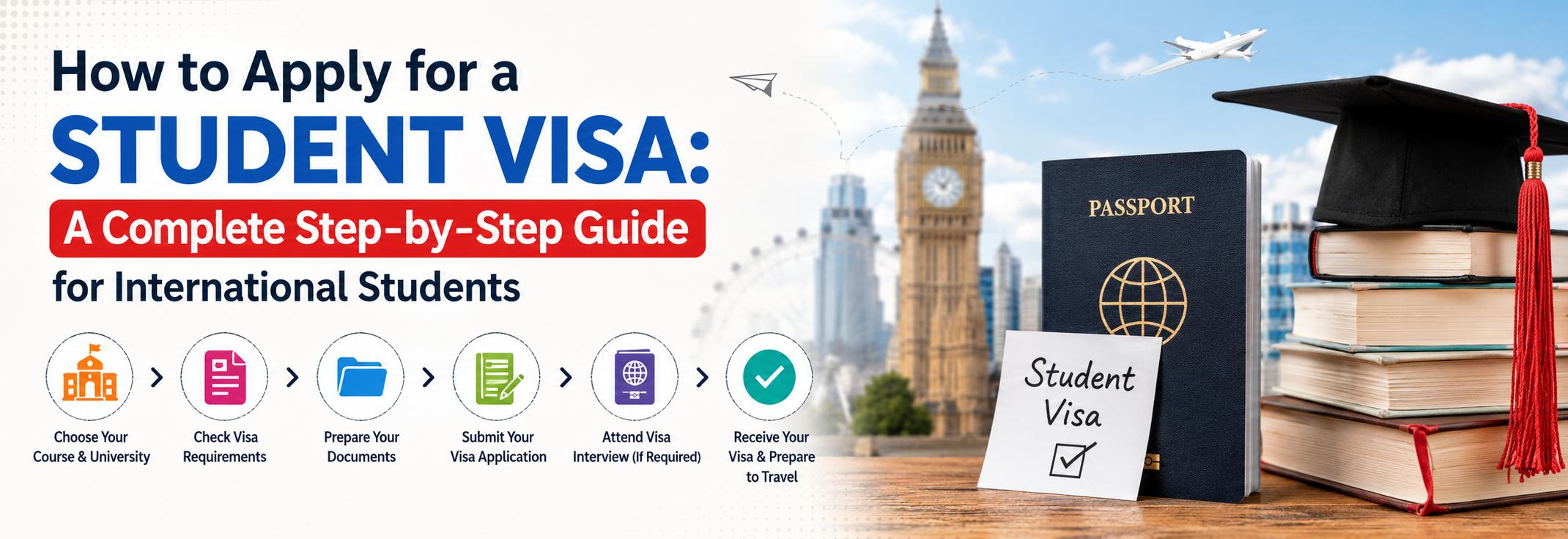
How to Apply for a Student Visa: A Complete Step-by-Step Guide for International Students

Introduction

Studying abroad is a dream for thousands of students who want to access world-class education, gain international exposure, and build successful global careers. Whether you plan to study in the UK, Australia, Canada, the USA, Ireland, New Zealand, or any other popular destination, obtaining a student visa is one of the most important steps in your study abroad journey.

A student visa is an official authorization issued by a country’s immigration department that allows international students to enter, stay, and study legally in that country. While the visa application process may seem complex, proper planning and guidance can make it smooth and stress-free.

In this comprehensive guide, we’ll explain everything you need to know about how to apply for a student visa, including eligibility requirements, documentation, application procedures, interview preparation, common mistakes to avoid, and expert tips to increase your visa approval chances.


What Is a Student Visa?

A student visa is a legal document or endorsement issued by a country’s government that permits foreign nationals to pursue education at an approved institution.

Each country has its own visa category, requirements, and application process. Some common examples include:

  • UK Student Visa
  • Australian Student Visa (Subclass 500)
  • Canada Study Permit
  • USA F-1 Student Visa
  • Ireland Student Visa
  • New Zealand Student Visa

Your visa determines:

  • Duration of stay
  • Work rights during studies
  • Post-study work opportunities
  • Travel permissions
  • Compliance requirements

Why Is a Student Visa Important?

Without a valid student visa, international students cannot legally study abroad.

A student visa allows you to:

  • Enroll in an approved educational institution
  • Enter and stay in the destination country
  • Work part-time (where permitted)
  • Access post-study work opportunities
  • Travel internationally during your studies
  • Comply with immigration laws

Failure to maintain visa conditions may result in visa cancellation or future immigration complications.


Step 1: Choose Your Study Destination

Before applying for a student visa, you must first decide where you want to study.

Popular study destinations include:

United Kingdom

Benefits:

  • Globally recognized universities
  • One-year master’s programs
  • Graduate Route Visa
  • Excellent career opportunities

Australia

Benefits:

  • High-quality education
  • Student-friendly immigration policies
  • Work opportunities during studies
  • Post-study work visas

Canada

Benefits:

  • Affordable education
  • Strong immigration pathways
  • High quality of life
  • Excellent employment opportunities

USA

Benefits:

  • Top-ranked universities
  • Extensive course options
  • Research opportunities
  • Global networking

Ireland

Benefits:

  • Growing job market
  • Strong technology sector
  • Post-study work opportunities

Step 2: Secure Admission from a Recognized Institution

The next step is obtaining admission to a recognized university, college, or educational institution.

You typically need:

  • Academic transcripts
  • English language proficiency scores
  • Statement of Purpose (SOP)
  • Letters of Recommendation (LOR)
  • Resume/CV
  • Passport copy

Once accepted, you’ll receive an offer letter or confirmation of enrollment.

This document is essential for your student visa application.


Step 3: Understand Visa Requirements

Each country has different visa requirements, but most student visa applications require proof of:

  • Admission confirmation
  • Financial capability
  • English language proficiency
  • Health insurance
  • Genuine study intentions
  • Valid passport

Research the specific requirements of your chosen destination carefully.


Step 4: Prepare Financial Documents

One of the most important parts of your visa application is proving that you can financially support yourself.

Immigration authorities want assurance that you can cover:

  • Tuition fees
  • Living expenses
  • Accommodation
  • Travel expenses
  • Health insurance

Common financial documents include:

  • Bank statements
  • Fixed deposits
  • Education loan sanction letters
  • Income tax returns
  • Salary slips
  • Sponsorship letters

Financial requirements vary depending on the country and duration of study.


Step 5: Meet English Language Requirements

Many countries require proof of English proficiency.

Accepted tests often include:

  • IELTS
  • PTE Academic
  • TOEFL
  • Duolingo English Test
  • Cambridge English

Minimum score requirements depend on:

  • Institution
  • Course level
  • Country regulations

Some universities may waive English test requirements under specific conditions.


Step 6: Obtain Health Insurance

Several countries require international students to maintain health insurance.

Examples include:

Australia

Overseas Student Health Cover (OSHC) is mandatory.

Canada

Many provinces require health insurance coverage.

United Kingdom

Students generally pay the Immigration Health Surcharge (IHS).

New Zealand

Health insurance is usually compulsory.

Having adequate health coverage protects students from unexpected medical expenses.


Step 7: Gather Required Documents

Although requirements differ by country, students generally need:

Personal Documents

  • Valid passport
  • Passport-sized photographs
  • Birth certificate (if applicable)

Academic Documents

  • Mark sheets
  • Degree certificates
  • Offer letter
  • Enrollment confirmation

Financial Documents

  • Bank statements
  • Sponsorship documents
  • Loan approvals

English Language Documents

  • IELTS scorecard
  • PTE results
  • TOEFL results

Additional Documents

  • Statement of Purpose
  • Visa application form
  • Health insurance documents
  • Police clearance certificate (if required)

Organize all documents carefully to avoid delays.


Step 8: Complete the Visa Application Form

Most countries now offer online visa applications.

When completing the form:

  • Provide accurate information
  • Match details exactly with your passport
  • Double-check spelling
  • Review all dates carefully

Common information requested includes:

  • Personal details
  • Educational history
  • Family information
  • Travel history
  • Financial information
  • Course details

Even minor mistakes can lead to processing delays.


Step 9: Pay the Visa Application Fee

Every country charges a visa application fee.

The amount varies depending on:

  • Country
  • Visa category
  • Application type

Keep payment receipts safely as they may be required during the process.


Step 10: Schedule Biometrics Appointment

Many countries require biometric verification.

Biometrics may include:

  • Fingerprints
  • Digital photograph
  • Signature

Appointments are usually conducted at authorized visa application centers.

Students should arrive on time and carry all required documents.


Step 11: Attend a Visa Interview (If Required)

Some countries require students to attend visa interviews.

The USA, for example, generally requires an interview at a consulate or embassy.

Common visa interview questions include:

Why do you want to study in this country?

Explain your academic goals and reasons for choosing the destination.

Why did you choose this university?

Demonstrate that you researched the institution and program.

Who is sponsoring your education?

Provide clear financial details.

What are your future career plans?

Show genuine educational and professional intentions.

Do you plan to return to your home country?

Answer honestly while explaining your long-term career goals.


Tips for a Successful Visa Interview

  • Dress professionally
  • Arrive early
  • Speak confidently
  • Maintain eye contact
  • Be honest
  • Provide concise answers
  • Carry supporting documents

Confidence and preparation play a major role in visa interview success.


Step 12: Track Your Application

After submission, most immigration authorities allow students to track application status online.

Possible statuses include:

  • Submitted
  • Under Review
  • Additional Documents Requested
  • Approved
  • Refused

Respond promptly if additional documents are requested.


Step 13: Receive Visa Decision

Once approved, you’ll receive your student visa or visa approval letter.

Verify:

  • Name spelling
  • Passport number
  • Visa validity dates
  • Study conditions

Contact immigration authorities immediately if errors are found.


Common Reasons for Student Visa Rejection

Visa refusals can occur for several reasons.

Common causes include:

Insufficient Financial Evidence

Failure to prove adequate funding is a major reason for rejection.

Incomplete Documentation

Missing documents often delay or negatively impact applications.

False Information

Providing inaccurate information can lead to refusal and future bans.

Weak Statement of Purpose

A poorly written SOP may raise concerns about genuine study intentions.

Poor Visa Interview Performance

Unclear answers can affect approval chances.

Academic Concerns

Large education gaps or weak academic records may require additional explanation.


How to Increase Your Student Visa Approval Chances

Apply Early

Start the process several months before your course begins.

Maintain Accurate Documentation

Ensure consistency across all documents.

Demonstrate Genuine Intentions

Clearly explain your academic and career goals.

Show Strong Financial Support

Provide complete and transparent financial evidence.

Seek Professional Guidance

Working with experienced study abroad consultants can significantly improve your chances of success.


Student Visa Processing Time

Processing times vary by country and season.

Typical processing timelines:

CountryApproximate Processing Time
UK3–8 Weeks
Australia4–12 Weeks
Canada4–12 Weeks
USADepends on interview availability
Ireland4–8 Weeks
New Zealand4–8 Weeks

Students should apply as early as possible to avoid last-minute complications.


After Receiving Your Student Visa

Once your visa is approved:

Book Accommodation

Arrange housing before arrival.

Book Flights

Reserve flights early for better pricing.

Attend Pre-Departure Sessions

Learn about:

  • Immigration procedures
  • Local culture
  • Transportation
  • Banking
  • Healthcare

Prepare Essential Documents

Carry:

  • Passport
  • Visa approval letter
  • Offer letter
  • Financial documents
  • Accommodation details

Why Choose Professional Student Visa Assistance?

Many students struggle with:

  • Documentation
  • SOP preparation
  • Financial requirements
  • Visa interviews
  • Application timelines

Professional consultants help reduce errors and improve approval chances.

Benefits include:

  • Personalized counseling
  • University selection assistance
  • Documentation support
  • Visa filing guidance
  • Interview preparation
  • Pre-departure assistance

Final Thoughts

Applying for a student visa is a crucial step toward achieving your international education goals. While the process may appear challenging, careful planning, accurate documentation, and timely action can make it straightforward and successful.

Whether you plan to study in the UK, Australia, Canada, the USA, Ireland, or New Zealand, understanding the visa process and meeting all requirements will significantly improve your chances of approval.

At MDOEC (Multi Destination Overseas Education Consultants), we provide end-to-end support for university admissions, visa applications, scholarships, education loans, accommodation guidance, and pre-departure assistance. Our experienced counselors help students navigate every stage of their study abroad journey with confidence.

If you’re planning to study abroad, connect with MDOEC today and take the first step toward a successful international education and global career.

FAQs About Student Visa Applications

1. What documents are required to apply for a student visa?
Most student visa applications require a valid passport, university offer letter, proof of financial support, academic transcripts, English language test scores (IELTS, PTE, TOEFL, etc.), passport-sized photographs, and health insurance documents.

2. How much bank balance is required for a student visa?
The required bank balance depends on the country and your course duration. Generally, you must show sufficient funds to cover tuition fees, living expenses, accommodation, and travel costs.

3. How long does it take to process a student visa?
Student visa processing times vary by country. On average, it can take anywhere from 3 to 12 weeks, depending on application volume and document verification requirements.

4. Can I work while studying on a student visa?
Many countries, including the UK, Australia, Canada, and New Zealand, allow international students to work part-time during their studies, subject to visa conditions and work-hour limits.

5. Is an IELTS score mandatory for a student visa?
Not always. Some universities and countries may accept alternative English proficiency tests or offer waivers through a Medium of Instruction (MOI) certificate, depending on eligibility.

6. What are the common reasons for student visa rejection?
Common reasons include insufficient financial proof, incomplete documentation, inaccurate information, weak Statement of Purpose (SOP), poor visa interview performance, and failure to meet visa requirements.

7. Can I apply for a student visa without an admission offer?
No. In most cases, you must first receive an offer letter or confirmation of enrollment from a recognized educational institution before applying for a student visa.

8. What happens if my student visa application is rejected?
If your visa is refused, you may be able to reapply after addressing the reasons for rejection. Some countries also offer an appeal or review process depending on the circumstances.

9. Do I need health insurance for a student visa?
Yes, many countries require international students to have health insurance coverage. Requirements vary by destination, and proof of insurance may be required during the visa application process.

10. When should I apply for my student visa?
It is recommended to apply at least 3–6 months before your course start date to allow enough time for document preparation, processing, biometrics, interviews, and travel arrangements.

Top Universities in Australia for International Students: Rankings, Courses & Admission Guide 2026

Australia continues to be one of the world’s most preferred study destinations for international students. With globally recognized universities, high-quality education, strong research opportunities, multicultural campuses, and excellent post-study work options, Australia attracts hundreds of thousands of students every year.

According to the latest QS World University Rankings 2026, Australia has nine universities among the world’s top 100 institutions, highlighting the country’s academic excellence and global reputation. Australian universities are particularly known for their strengths in Engineering, Information Technology, Business, Healthcare, Artificial Intelligence, Data Science, Environmental Sciences, and Research programs.

For students planning to study abroad in 2026, choosing the right university is one of the most important decisions. This comprehensive guide explores Australia’s top universities, rankings, popular courses, tuition fees, admission requirements, scholarships, and application process.


Why Study in Australia?

Before exploring the universities, let’s understand why Australia remains a top destination for international students.

1. Globally Recognized Universities

Australian universities consistently rank among the world’s best institutions. Universities such as the University of Melbourne, University of Sydney, UNSW Sydney, Australian National University, and Monash University are internationally respected for academic excellence and research output.

2. High Graduate Employability

Australian degrees are recognized worldwide by employers. Universities maintain strong industry partnerships, internship programs, and career support services that help graduates secure employment globally.

3. Post-Study Work Opportunities

International graduates can benefit from post-study work rights, allowing them to gain valuable professional experience after completing their studies.

4. Multicultural Environment

Australia welcomes students from over 190 countries, creating a diverse and inclusive learning environment.

5. Safe and Student-Friendly Cities

Cities such as Melbourne, Sydney, Brisbane, Perth, Adelaide, and Canberra consistently rank among the world’s best student cities.


Top Universities in Australia for International Students (2026)

1. University of Melbourne

University of Melbourne

QS World Ranking 2026

Ranked among the top 20 universities globally and one of Australia’s highest-ranked institutions.

Popular Courses

  • Business & Management
  • Medicine
  • Engineering
  • Law
  • Psychology
  • Data Science
  • Artificial Intelligence

Average Tuition Fees

AUD 40,000 – AUD 55,000 per year

Why Choose Melbourne?

  • Australia’s leading research university
  • Strong employer reputation
  • Excellent industry connections
  • Located in Melbourne, one of the world’s best student cities

Entry Requirements

  • Strong academic record
  • IELTS 6.5–7.0
  • Program-specific requirements

2. University of New South Wales (UNSW Sydney)

University of New South Wales

UNSW has emerged as one of Australia’s top-performing universities and is recognized globally for innovation and research. According to recent QS rankings, UNSW is among Australia’s highest-ranked universities.

Popular Courses

  • Engineering
  • Computer Science
  • Artificial Intelligence
  • Business Analytics
  • Finance
  • Architecture

Average Tuition Fees

AUD 42,000 – AUD 58,000 per year

Highlights

  • Strong employability outcomes
  • Excellent engineering programs
  • Industry-focused curriculum
  • Located in Sydney

3. University of Sydney

University of Sydney

The University of Sydney is one of Australia’s oldest and most prestigious universities and ranks among the world’s top institutions.

Popular Courses

  • Medicine
  • Business
  • Law
  • Nursing
  • Engineering
  • Education

Average Tuition Fees

AUD 42,000 – AUD 60,000 per year

Why Students Choose Sydney

  • World-class campus
  • Strong research facilities
  • Outstanding graduate outcomes
  • Global employer recognition

4. Australian National University (ANU)

Australian National University

ANU is Australia’s national university and is globally respected for research excellence and academic quality.

Popular Courses

  • International Relations
  • Political Science
  • Economics
  • Public Policy
  • Science
  • Engineering

Average Tuition Fees

AUD 38,000 – AUD 52,000 per year

Best For

  • Research-focused students
  • Government and policy careers
  • International relations studies

5. Monash University

Monash University

Monash University is among Australia’s largest and most internationally connected universities. It is particularly renowned for Pharmacy, Business, Medicine, and Engineering.

Popular Courses

  • Pharmacy
  • Medicine
  • Engineering
  • Business
  • Information Technology
  • Public Health

Average Tuition Fees

AUD 38,000 – AUD 55,000 per year

Key Advantages

  • Global campuses
  • Strong research output
  • Excellent student support

6. University of Queensland (UQ)

University of Queensland

UQ is recognized worldwide for scientific research, innovation, and graduate employability.

Popular Courses

  • Biotechnology
  • Environmental Science
  • Engineering
  • Business
  • Agriculture
  • Health Sciences

Average Tuition Fees

AUD 35,000 – AUD 52,000 per year

Why Choose UQ?

  • Leading research institution
  • Beautiful Brisbane campus
  • Strong industry collaborations

7. University of Western Australia (UWA)

University of Western Australia

UWA offers exceptional education and research opportunities and is particularly strong in mining, engineering, and environmental sciences.

Popular Courses

  • Mining Engineering
  • Petroleum Engineering
  • Marine Science
  • Business
  • Agriculture

Average Tuition Fees

AUD 34,000 – AUD 50,000 per year


8. University of Adelaide

University of Adelaide

Known for innovation and research excellence, Adelaide offers excellent value for international students.

Popular Courses

  • Engineering
  • Data Science
  • Artificial Intelligence
  • Health Sciences
  • Business

Average Tuition Fees

AUD 33,000 – AUD 48,000 per year

Benefits

  • Affordable living costs
  • Strong scholarship opportunities
  • Excellent graduate outcomes

9. University of Technology Sydney (UTS)

University of Technology Sydney

UTS is highly regarded for practical learning and industry partnerships.

Popular Courses

  • Information Technology
  • Cyber Security
  • Business Analytics
  • Engineering
  • Design

Average Tuition Fees

AUD 35,000 – AUD 48,000 per year

Ideal For

  • Career-focused students
  • Technology enthusiasts
  • Innovation-driven learners

10. RMIT University

RMIT University

RMIT is internationally recognized for design, architecture, engineering, and technology programs.

Popular Courses

  • Architecture
  • Graphic Design
  • Engineering
  • Business
  • Information Technology

Average Tuition Fees

AUD 33,000 – AUD 48,000 per year


Best Courses to Study in Australia

Australia offers world-class education across various disciplines.

Business and Management

Popular Specializations:

  • MBA
  • Finance
  • Marketing
  • International Business
  • Business Analytics

Engineering

High-demand branches:

  • Civil Engineering
  • Mechanical Engineering
  • Electrical Engineering
  • Software Engineering
  • Mining Engineering

Information Technology

Growing fields:

  • Artificial Intelligence
  • Data Science
  • Cyber Security
  • Cloud Computing
  • Machine Learning

Healthcare and Nursing

Australia faces increasing healthcare demand, creating strong career opportunities.

Hospitality and Tourism

Australia remains a leading destination for hospitality education.


Admission Requirements for International Students

Admission requirements vary by university and course level.

Undergraduate Programs

Academic Requirements

  • Completion of 12th grade
  • Strong academic scores

English Language Requirements

  • IELTS: 6.0–6.5
  • PTE Academic: 50–65
  • TOEFL iBT: 60–90

Postgraduate Programs

Academic Requirements

  • Bachelor’s degree
  • Relevant academic background

Additional Requirements

  • Statement of Purpose (SOP)
  • Letters of Recommendation
  • Resume/CV
  • Portfolio (for design programs)

Scholarships for International Students

Many Australian universities offer scholarships.

Popular Scholarships

Australia Awards Scholarships

Government-funded scholarship covering tuition and living expenses.

University Scholarships

Most leading universities offer:

  • Merit Scholarships
  • International Student Scholarships
  • Research Scholarships
  • Country-specific Scholarships

Scholarship values can range from 10% tuition reduction to full tuition coverage depending on eligibility.


Cost of Studying in Australia

Tuition Fees

Bachelor’s Degree

AUD 25,000 – AUD 55,000 annually

Master’s Degree

AUD 30,000 – AUD 60,000 annually

MBA Programs

AUD 45,000 – AUD 90,000+


Living Expenses

Students should budget approximately:

  • Accommodation: AUD 8,000 – AUD 18,000
  • Food: AUD 4,000 – AUD 8,000
  • Transport: AUD 1,000 – AUD 2,500
  • Personal Expenses: AUD 2,000 – AUD 5,000

Average annual living cost:
AUD 20,000 – AUD 30,000


Australia Student Visa Requirements 2026

International students generally require a Student Visa (Subclass 500).

Typical requirements include:

  • Confirmation of Enrolment (CoE)
  • Genuine Student documentation
  • Financial evidence
  • English proficiency proof
  • Overseas Student Health Cover (OSHC)

Recent policy changes have increased student visa application costs, making careful financial planning essential for international applicants.


How to Apply to Australian Universities

Step 1: Choose Your Course and University

Research:

  • Rankings
  • Location
  • Fees
  • Scholarships
  • Career opportunities

Step 2: Prepare Documents

Common documents:

  • Academic transcripts
  • Passport
  • SOP
  • Resume
  • English test scores

Step 3: Submit Application

Apply directly or through an authorized education consultant.

Step 4: Receive Offer Letter

Universities review applications and issue offer letters.

Step 5: Accept Offer

Pay the required deposit and receive your Confirmation of Enrolment (CoE).

Step 6: Apply for Visa

Submit your visa application and supporting documents.


Which Australian University Is Best for You?

For Engineering

  • UNSW Sydney
  • University of Melbourne
  • Monash University

For Business

  • University of Melbourne
  • University of Sydney
  • Monash University

For IT and Data Science

  • UTS
  • UNSW Sydney
  • RMIT University

For Research

  • ANU
  • University of Melbourne
  • University of Queensland

For Affordable Study

  • University of Adelaide
  • University of Western Australia

Final Thoughts

Australia remains one of the best destinations for international students seeking globally recognized education, excellent career opportunities, and a multicultural learning environment. With nine universities ranked among the world’s top 100 institutions and strong performance across engineering, business, healthcare, technology, and research disciplines, Australia offers outstanding options for students planning their future in 2026.

Whether you dream of studying in Melbourne, Sydney, Brisbane, Perth, Adelaide, or Canberra, selecting the right university can significantly impact your academic and professional success. Evaluate rankings, course offerings, tuition fees, scholarship opportunities, and career outcomes carefully before making your final decision.

Your Australian education journey can open doors to global opportunities, international networks, and a rewarding career for years to come.

At MDOEC (Multi Destination Overseas Education Consultants), we are committed to helping students turn their study abroad dreams into reality. From university selection and application assistance to scholarship guidance, visa support, and pre-departure services, our experienced counselors provide personalized support throughout your study abroad journey.

If you’re planning to study in Australia in 2026, connect with MDOEC today and take the first step toward securing admission to a top Australian university.

Frequently Asked Questions (FAQs)

1. Which are the top universities in Australia for international students in 2026?

Some of the top universities in Australia for international students include the University of Melbourne, UNSW Sydney, University of Sydney, Australian National University (ANU), Monash University, University of Queensland (UQ), University of Western Australia (UWA), University of Adelaide, University of Technology Sydney (UTS), and RMIT University.

2. What are the admission requirements for Australian universities?

Admission requirements vary by university and course. Generally, international students need academic transcripts, proof of English language proficiency (IELTS, PTE, or TOEFL), a valid passport, Statement of Purpose (SOP), and supporting documents such as recommendation letters or a portfolio for specific programs.

3. How much does it cost to study in Australia?

Tuition fees typically range from AUD 25,000 to AUD 60,000 per year depending on the university and course. Living expenses generally range between AUD 20,000 and AUD 30,000 annually.

4. Is IELTS mandatory for studying in Australia?

Not always. Many Australian universities accept alternative English proficiency tests such as PTE Academic, TOEFL iBT, Duolingo English Test, or may offer waivers under specific eligibility criteria. Requirements vary by institution.

5. Can international students get scholarships in Australia?

Yes. Australian universities and the Australian Government offer various scholarships for international students, including merit-based scholarships, research scholarships, and country-specific funding opportunities that can significantly reduce tuition costs.

6. What are the most popular courses in Australia for international students?

Some of the most sought-after courses include Engineering, Information Technology, Data Science, Artificial Intelligence, Business Management, Finance, Nursing, Healthcare, Public Health, Hospitality Management, and Environmental Sciences.

7. Can international students work while studying in Australia?

Yes. International students can work while studying, subject to the conditions of their student visa. This allows students to gain work experience and help cover living expenses during their studies.

8. What student visa is required to study in Australia?

International students typically need the Student Visa (Subclass 500). To apply, students generally require a Confirmation of Enrolment (CoE), financial documents, Overseas Student Health Cover (OSHC), and supporting academic documentation.

9. Which Australian city is best for international students?

Popular student cities include Melbourne, Sydney, Brisbane, Adelaide, Perth, and Canberra. Each city offers excellent universities, student-friendly environments, strong employment opportunities, and high standards of living.

10. How can MDOEC help me study in Australia?

MDOEC provides end-to-end study abroad assistance, including university selection, application processing, scholarship guidance, student visa support, SOP assistance, education loan guidance, accommodation advice, and pre-departure support. Our experienced counselors help students choose the right Australian university based on their academic profile, budget, and career goals.

Best Australia Education Consultants in Ahmedabad: How to Choose the Right One

Introduction

Australia continues to be one of the most preferred study destinations for Indian students. With globally recognized universities, excellent post-study work opportunities, high-quality education, and a multicultural environment, thousands of students choose to study in Australia every year.

However, navigating the university admission process, student visa requirements, scholarship applications, and accommodation arrangements can be overwhelming. This is where experienced Australia education consultants in Ahmedabad can make a significant difference.

If you’re planning to study in Australia from Ahmedabad, choosing the right consultant can save time, reduce stress, and improve your chances of admission and visa success. In this guide, we’ll explain how to select the best Australia education consultant and what factors you should consider before making your decision.

Why Students Choose Australia for Higher Education

Australia has become a leading destination for international students because of:

  • Globally ranked universities
  • Industry-focused courses
  • Post-study work opportunities
  • Strong employment prospects
  • High quality of life
  • Scholarship opportunities for international students
  • Safe and welcoming environment

Popular universities include the University of Melbourne, Monash University, University of Sydney, UNSW Sydney, University of Queensland, and many more.

For students seeking international exposure and career growth, studying in Australia offers a pathway to academic and professional success.

Why Work with Australia Education Consultants in Ahmedabad?

While students can apply independently, working with experienced Australia education consultants Ahmedabad provides several advantages:

Expert University Selection

Consultants assess your academic profile, career goals, and budget to recommend suitable universities and courses.

Admission Guidance

They help prepare applications, Statements of Purpose (SOPs), Letters of Recommendation (LORs), and supporting documents.

Visa Assistance

An experienced Australia student visa consultant Ahmedabad understands the latest visa regulations and helps minimize application errors.

Scholarship Support

Many students miss scholarship opportunities due to lack of information. Consultants help identify eligible scholarships and prepare strong applications.

Pre-Departure Assistance

From accommodation guidance to travel planning, consultants provide support before your departure.

How to Choose the Best Australia Education Consultant in Ahmedabad

Not all overseas education consultants offer the same level of expertise. Consider these factors before making your choice.

1. Check Their Experience

Look for consultants with proven experience in Australia admissions.

Ask questions such as:

  • How many students have they placed in Australian universities?
  • How long have they been operating?
  • Which universities do they work with?

Experienced consultants are better equipped to handle complex cases and changing visa requirements.

2. Verify Success Rate

A reputable Australia student visa consultant Ahmedabad should be transparent about their:

  • Admission success rate
  • Student visa success rate
  • University partnerships

A strong track record indicates reliable guidance and expertise.

3. Evaluate University Options

The best consultants offer a wide range of university choices rather than promoting only a few institutions.

This ensures students receive unbiased recommendations based on their profile and career objectives.

4. Look for Personalized Counseling

Every student’s academic background and aspirations are different.

Choose a consultant who provides:

  • One-on-one counseling
  • Career guidance
  • Course selection support
  • Customized admission strategy

Avoid agencies that push the same universities for every student.

5. Check Scholarship Guidance

Many Australian universities offer scholarships for international students.

A good consultant should help you:

  • Identify scholarship opportunities
  • Understand eligibility criteria
  • Submit scholarship applications
  • Improve your chances of receiving financial assistance

6. Read Student Reviews and Testimonials

Online reviews often provide valuable insights into a consultant’s service quality.

Check:

  • Google Reviews
  • Social media platforms
  • Student testimonials
  • Success stories

Positive feedback from previous students indicates trustworthiness and professionalism.

7. Transparency in Fees

Before signing any agreement, understand:

  • Service charges
  • Application fees
  • Visa processing fees
  • Additional costs

A reliable Australia education consultant Ahmedabad will clearly explain all charges without hidden fees.

Common Services Offered by Australia Education Consultants

Professional study abroad consultants for Australia in Ahmedabad typically provide:

Career Counseling

Helping students choose the right course and university based on career goals.

University Applications

Assistance with documentation, application submission, and communication with universities.

Student Visa Assistance

Complete support for the Australian student visa application process.

Scholarship Guidance

Helping students maximize scholarship opportunities.

Accommodation Support

Guidance for finding safe and affordable housing options.

Education Loan Assistance

Support with financial documentation and education loan applications.

Pre-Departure Briefing

Preparing students for life in Australia.

Questions to Ask Before Choosing an Australia Consultant

Before finalizing an overseas education consultant for Australia Ahmedabad, ask:

  • How many Australian universities do you work with?
  • What is your student visa success rate?
  • Can you provide student references?
  • Do you assist with scholarships?
  • What support is available after admission?
  • Are there any hidden charges?

Their responses can help you determine whether they are the right fit.

Why Ahmedabad Students Are Choosing Australia

The number of students seeking to study in Australia from Ahmedabad has grown significantly in recent years because of:

  • Strong return on investment
  • Post-study work rights
  • Globally recognized qualifications
  • Excellent employment opportunities
  • Availability of scholarships
  • Growing demand for skilled professionals

Students from Ahmedabad are increasingly pursuing programs in:

  • Business and Management
  • Information Technology
  • Data Science
  • Engineering
  • Healthcare
  • Nursing
  • Hospitality
  • Cybersecurity

Signs of a Trusted Australia Education Consultant

The best Australia education consultants Ahmedabad generally have:

  • Experienced counselors
  • Strong university partnerships
  • High visa success rates
  • Transparent processes
  • Positive student reviews
  • Personalized guidance
  • End-to-end support

Choosing a trusted consultant can significantly improve your study abroad journey.

Conclusion

Selecting the right Australia education consultant in Ahmedabad is one of the most important decisions you’ll make when planning your international education journey.

A knowledgeable consultant can simplify university admissions, improve your scholarship opportunities, guide you through the student visa process, and provide ongoing support until you arrive in Australia.

If you’re planning to study in Australia, take the time to research consultants carefully, compare services, and choose a trusted partner who understands your academic goals and long-term career aspirations.

With the right guidance, your dream of studying in Australia can become a successful reality.

At MDOEC – Multi Destination Overseas Education Consultants, we are committed to helping students achieve their dream of studying in Australia. From university selection and application assistance to visa guidance, scholarship support, and pre-departure services, our team provides personalized solutions tailored to your academic and career goals.

If you’re planning to study in Australia from Ahmedabad, connect with MDOEC today and take the first step toward a world-class education and a successful global career.

FAQs: Best Australia Education Consultants in Ahmedabad

1. Why should I use an Australia education consultant in Ahmedabad?
An Australia education consultant can help you choose the right university, prepare applications, apply for scholarships, and guide you through the student visa process, making your study abroad journey smoother and more efficient.

2. How do I choose the best Australia education consultant in Ahmedabad?
Look for consultants with a proven track record, positive student reviews, experienced counselors, transparent fees, and comprehensive services including admission and visa assistance.

3. Can an Australia student visa consultant in Ahmedabad guarantee visa approval?
No consultant can guarantee visa approval. However, experienced consultants can help you prepare a strong application, ensure accurate documentation, and improve your chances of visa success.

4. What services do Australia education consultants typically offer?
Most consultants provide career counseling, university selection, application assistance, student visa guidance, scholarship support, education loan assistance, accommodation advice, and pre-departure services.

5. Is Australia a good destination for Indian students?
Yes. Australia offers globally recognized degrees, excellent post-study work opportunities, high-quality education, strong career prospects, and a welcoming multicultural environment for international students.

6. Can I study in Australia without IELTS?
Some Australian universities may accept alternative English proficiency tests or provide waivers based on academic qualifications. Eligibility varies by university and course.

7. How much does it cost to study in Australia for Indian students?
The cost depends on the university, course, and location. On average, tuition fees range from AUD 20,000 to AUD 50,000 per year, excluding living expenses.

8. Are scholarships available for Indian students in Australia?
Yes. Many Australian universities offer merit-based and need-based scholarships for international students. A qualified consultant can help identify and apply for suitable scholarship opportunities.

9. How long does the Australian student visa process take?
Visa processing times vary depending on the application type and individual circumstances. It is advisable to apply as early as possible after receiving your Confirmation of Enrolment (CoE).

10. Why choose MDOEC for studying in Australia from Ahmedabad?
MDOEC – Multi Destination Overseas Education Consultants provides personalised counselling, university admission assistance, student visa guidance, scholarship support, and end-to-end services to help students achieve their Australian education goals with confidence.

MS in Data Science in Australia: Universities, Specializations, Cost & Career Prospects

Introduction

In today’s data-driven world, organizations rely heavily on data to make informed decisions, optimize operations, and create innovative solutions. As a result, Data Science has emerged as one of the fastest-growing and highest-paying career fields globally. From healthcare and finance to artificial intelligence, cybersecurity, e-commerce, and government sectors, data scientists are helping organizations unlock valuable insights from vast amounts of information.

Australia has become one of the most sought-after destinations for international students pursuing a Master of Science (MS) in Data Science. The country offers world-class universities, industry-focused curricula, cutting-edge research opportunities, and strong employment prospects. With increasing demand for data professionals across industries, studying Data Science in Australia can open doors to exciting global career opportunities.

This comprehensive guide explores everything you need to know about pursuing an MS in Data Science in Australia, including top universities, specializations, eligibility criteria, tuition fees, scholarships, career prospects, and salary expectations.


Why Study MS in Data Science in Australia?

Australia has established itself as a global hub for technology, innovation, and research. The country’s universities consistently rank among the world’s best for Computer Science, Artificial Intelligence, and Data Analytics programs.

Some key reasons to pursue a Master’s in Data Science in Australia include:

1. Globally Recognized Universities

Australian universities are highly regarded worldwide for their academic excellence and industry-driven education. Institutions such as the University of Melbourne, Monash University, University of Queensland, and UNSW offer specialized Data Science programs designed to meet current industry needs.

2. Strong Industry Demand

Data Science professionals are in high demand across Australia. Businesses increasingly rely on analytics, machine learning, cloud computing, and AI technologies, creating excellent job opportunities for graduates.

3. Post-Study Work Opportunities

International students graduating from Australian universities can benefit from post-study work rights, allowing them to gain valuable industry experience after completing their degree.

4. High Earning Potential

Data Science is among Australia’s highest-paying professions. Experienced professionals often earn six-figure salaries, making it a financially rewarding career path.

5. Multicultural Environment

Australia welcomes students from around the world, offering a diverse and inclusive learning environment that enhances personal and professional growth.


What is an MS in Data Science?

A Master of Data Science is a postgraduate degree that combines mathematics, statistics, computer science, machine learning, artificial intelligence, and business intelligence to analyze and interpret complex data.

The program equips students with skills to:

  • Analyze large datasets
  • Build predictive models
  • Develop machine learning algorithms
  • Visualize business insights
  • Work with big data technologies
  • Apply AI-driven solutions
  • Solve real-world business challenges

The duration of most Data Science master’s programs in Australia ranges from 1.5 to 2 years depending on academic background and university requirements.


Top Universities for MS in Data Science in Australia

Australia offers numerous prestigious institutions that provide advanced Data Science programs.

1. University of Melbourne

The University of Melbourne offers one of Australia’s most respected Master of Data Science programs. The course focuses on statistics, machine learning, data analytics, and advanced programming skills. Students also complete a major Data Science project, gaining hands-on experience in solving industry challenges.

Key Highlights:

  • Duration: 2 Years
  • Intake: March
  • Strong research opportunities
  • Industry-focused curriculum

2. Monash University

Monash University is globally recognized for Data Science and Artificial Intelligence education. Its program provides comprehensive training in data analysis, data management, visualization, machine learning, and ethical data practices.

Key Highlights:

  • Duration: 1.5–2 Years
  • Top-ranked Data Science faculty
  • Industry projects
  • ACS-recognized curriculum

3. University of Queensland (UQ)

The University of Queensland offers a highly practical Master of Data Science designed to prepare graduates for careers in technology, consulting, government, and research organizations.

Key Highlights:

  • Data Engineering focus
  • Advanced analytics training
  • Industry-relevant capstone projects

4. University of New South Wales (UNSW)

UNSW’s Master of Data Science and Decisions combines data analytics with business decision-making, making it ideal for students interested in management and strategy alongside technical skills.

Key Highlights:

  • Strong business analytics integration
  • Industry partnerships
  • Research-led teaching

5. RMIT University

RMIT offers a practical and career-oriented Master of Data Science program focusing on data mining, machine learning, visualization, and predictive analytics.

Key Highlights:

  • February and July intakes
  • Industry collaborations
  • Real-world project experience

6. Deakin University

Deakin University emphasizes data organization, analysis, and advanced analytics techniques. The program helps students develop technical expertise while understanding business applications of data.


7. La Trobe University

La Trobe University’s Master of Data Science offers multiple specialization options and focuses on industry-relevant skills highly valued by employers.


Popular Specializations in Data Science

Australian universities allow students to specialize in areas aligned with their career goals.

Machine Learning

Machine Learning focuses on developing algorithms that enable systems to learn from data and make intelligent predictions.

Career Roles:

  • Machine Learning Engineer
  • AI Specialist
  • Data Scientist

Artificial Intelligence

AI specialization explores intelligent systems, deep learning, natural language processing, and computer vision.

Career Roles:

  • AI Engineer
  • NLP Specialist
  • Robotics Developer

Big Data Analytics

Students learn to process and analyze large-scale datasets using technologies such as Hadoop and Spark.

Career Roles:

  • Big Data Analyst
  • Data Architect
  • Analytics Consultant

Business Analytics

This specialization bridges data science and business decision-making.

Career Roles:

  • Business Intelligence Analyst
  • Strategy Consultant
  • Data Analytics Manager

Data Engineering

Focuses on data pipelines, databases, cloud platforms, and infrastructure.

Career Roles:

  • Data Engineer
  • Cloud Data Architect
  • Database Specialist

Statistical Modeling

Students gain advanced knowledge in predictive modeling, probability, and quantitative analysis.

Career Roles:

  • Quantitative Analyst
  • Research Scientist
  • Statistician

Eligibility Requirements for MS in Data Science in Australia

While admission requirements vary by university, most institutions require:

Academic Requirements

  • Bachelor’s degree in:
    • Computer Science
    • Information Technology
    • Mathematics
    • Statistics
    • Engineering
    • Related disciplines

Many universities also consider applicants from non-technical backgrounds if they demonstrate quantitative aptitude.


English Language Requirements

International students typically need:

IELTS

  • Overall Score: 6.5 – 7.0

TOEFL iBT

  • Score: 79 – 100

PTE Academic

  • Score: 58 – 65

Requirements may vary depending on the institution.


Additional Documents

Students generally need:

  • Academic transcripts
  • Degree certificates
  • Statement of Purpose (SOP)
  • Resume/CV
  • Letters of Recommendation
  • Passport copy
  • English proficiency test scores

Cost of Studying MS in Data Science in Australia

Tuition fees vary depending on the university and program structure.

Average Tuition Fees

International students can expect annual tuition fees ranging between AUD 35,000 and AUD 60,000. Many leading universities fall within this range.

UniversityApproximate Annual Tuition Fee (AUD)
University of Melbourne57,000+
University of Queensland58,000+
Monash University55,000+
UNSW Sydney60,000+
RMIT University35,000–45,000
Deakin University44,000+
La Trobe University34,000–44,000

Fees are subject to change by the university.


Cost of Living in Australia

Apart from tuition fees, students should budget for living expenses.

Estimated Annual Living Costs

ExpenseAnnual Cost (AUD)
Accommodation10,000 – 20,000
Food4,000 – 8,000
Transport1,000 – 2,500
Utilities1,500 – 3,000
Personal Expenses2,000 – 5,000

Overall living costs generally range from AUD 20,000 to AUD 30,000 per year depending on location and lifestyle.


Scholarships for International Students

Many Australian universities offer scholarships to high-achieving international students.

Popular scholarship opportunities include:

  • Australia Awards Scholarships
  • Destination Australia Scholarship
  • University-specific merit scholarships
  • Research scholarships
  • International Excellence Scholarships

Students are encouraged to check university websites for the latest scholarship offerings.


Career Opportunities After MS in Data Science

The demand for Data Science professionals continues to grow across Australia and globally.

Graduates can find opportunities in:

  • Banking and Finance
  • Healthcare
  • Telecommunications
  • Government Agencies
  • Artificial Intelligence Companies
  • Consulting Firms
  • E-Commerce Businesses
  • Cybersecurity Organizations
  • Technology Startups

Top Job Roles After Graduation

Data Scientist

Analyzes large datasets to uncover patterns, trends, and business insights.

Average Salary:
AUD 115,000–135,000 annually.


Data Analyst

Interprets business data to support strategic decision-making.

Average Salary:
AUD 80,000–110,000 annually.


Machine Learning Engineer

Builds intelligent systems capable of learning from data.

Average Salary:
AUD 110,000–150,000 annually.


Data Engineer

Designs and maintains data infrastructure and pipelines.

Average Salary:
AUD 125,000–145,000 annually.


Business Intelligence Analyst

Creates dashboards and analytical reports to support business growth.

Average Salary:
AUD 90,000–120,000 annually.


AI Engineer

Develops artificial intelligence solutions and automation systems.

Average Salary:
AUD 120,000+ annually.


Future Scope of Data Science in Australia

Australia’s digital transformation initiatives are creating significant demand for professionals with expertise in:

  • Artificial Intelligence
  • Machine Learning
  • Predictive Analytics
  • Cloud Computing
  • Big Data
  • Cybersecurity Analytics
  • Business Intelligence

Government agencies, multinational corporations, startups, and research institutions continue to invest heavily in data-driven innovation. Industry reports and university career outcomes indicate strong growth and long-term demand for qualified Data Science professionals.

Suggested Blog: Australia Scholarships for Indian Students: Complete Guide to Funding Your Study Abroad Dream in 2026


Why Choose MDOEC for Your Australian Study Journey?

At MDOEC, we help students achieve their international education goals through personalized counselling and end-to-end support.

Our services include:

  • University Selection Guidance
  • Course Selection Assistance
  • Application Processing
  • Scholarship Support
  • SOP and Documentation Assistance
  • Education Loan Guidance
  • Visa Application Support
  • Pre-Departure Assistance

Whether you aspire to study Data Science at a leading Australian university or explore other emerging technology programs, MDOEC is committed to helping you make informed decisions and build a successful global career.


Conclusion

An MS in Data Science in Australia is an excellent investment for students seeking a future-proof career in technology, analytics, and artificial intelligence. With globally recognized universities, industry-oriented programs, strong post-study work opportunities, and attractive salary prospects, Australia remains one of the best destinations for aspiring data professionals.

From machine learning and AI to business analytics and big data engineering, Australian universities provide diverse specialization options that align with the evolving needs of the global job market. By choosing the right university and gaining practical industry experience, graduates can position themselves for rewarding careers in one of the world’s most dynamic and rapidly expanding fields.

If you’re ready to take the next step toward a successful Data Science career, connect with MDOEC today and begin your study abroad journey with confidence.

Frequently Asked Questions (FAQs) About MS in Data Science in Australia

1. Is Australia a good destination for an MS in Data Science?

Yes, Australia is one of the top destinations for studying Data Science due to its globally recognized universities, industry-focused curriculum, strong research opportunities, and excellent career prospects. The country also offers post-study work rights, allowing international students to gain valuable professional experience after graduation.


2. What is the duration of an MS in Data Science in Australia?

The duration of a Master’s in Data Science in Australia typically ranges from 1.5 to 2 years, depending on the university, course structure, and the student’s academic background.


3. What are the eligibility requirements for MS in Data Science in Australia?

Most universities require:

  • A bachelor’s degree in Computer Science, Information Technology, Mathematics, Statistics, Engineering, or a related field.
  • English language proficiency through IELTS, PTE, or TOEFL.
  • Academic transcripts.
  • Statement of Purpose (SOP).
  • Resume/CV.
  • Letters of Recommendation (if required).

Some universities may also accept students from non-technical backgrounds with strong quantitative skills.


4. Which are the top universities for Data Science in Australia?

Some of the leading universities offering MS in Data Science include:

  • University of Melbourne
  • Monash University
  • University of Queensland
  • UNSW Sydney
  • RMIT University
  • Deakin University
  • La Trobe University
  • University of Technology Sydney (UTS)
  • Macquarie University
  • Swinburne University of Technology

These institutions are known for their strong academic reputation, industry partnerships, and graduate employability.


5. How much does an MS in Data Science cost in Australia?

Tuition fees for international students generally range between AUD 35,000 and AUD 60,000 per year, depending on the university and program. Additional living expenses can range from AUD 20,000 to AUD 30,000 annually.


6. Can I study MS in Data Science in Australia without a Computer Science background?

Yes. Several Australian universities accept students from diverse academic backgrounds such as Mathematics, Statistics, Economics, Engineering, Physics, and Business. Some universities may require applicants to complete prerequisite subjects or foundation modules before starting the program.


7. Are scholarships available for international students pursuing Data Science in Australia?

Yes. International students can apply for various scholarships, including:

  • Australia Awards Scholarships
  • Destination Australia Scholarships
  • International Excellence Scholarships
  • University-specific merit scholarships
  • Research and postgraduate scholarships

Scholarship eligibility varies by university and academic performance.


8. What are the career opportunities after completing an MS in Data Science in Australia?

Graduates can pursue a wide range of careers, including:

  • Data Scientist
  • Data Analyst
  • Machine Learning Engineer
  • Data Engineer
  • Artificial Intelligence Engineer
  • Business Intelligence Analyst
  • Big Data Specialist
  • Quantitative Analyst
  • Analytics Consultant
  • Research Scientist

These roles are in demand across sectors such as finance, healthcare, technology, retail, consulting, and government.


9. What is the average salary after an MS in Data Science in Australia?

Salary packages vary based on experience, location, and employer. Typical salary ranges include:

  • Data Analyst: AUD 80,000 – AUD 110,000 per year
  • Data Scientist: AUD 115,000 – AUD 135,000 per year
  • Data Engineer: AUD 125,000 – AUD 145,000 per year
  • Machine Learning Engineer: AUD 110,000 – AUD 150,000 per year
  • AI Engineer: AUD 120,000+ per year

Experienced professionals can earn significantly higher salaries.


10. Can international students stay and work in Australia after completing an MS in Data Science?

Yes. International students may be eligible for Australia’s Post-Study Work Visa, which allows graduates to stay and work in Australia after completing their degree. The duration of post-study work rights depends on the qualification level, study location, and current Australian immigration policies.

This opportunity enables graduates to gain industry experience, build professional networks, and potentially pursue long-term career opportunities in Australia.

A Milestone Achievement: MDOEC’s Partnership with Oxford Brookes University

Introduction

At MDOEC (Multi Destination Overseas Education Consultants), our mission has always been to help students achieve their global education dreams by connecting them with some of the world’s most prestigious universities. We are proud to announce a significant milestone in our journey—our partnership with Oxford Brookes University, one of the UK’s leading modern universities renowned for academic excellence, industry-focused learning, and outstanding student support.

This collaboration marks a new chapter for MDOEC and the thousands of students who aspire to study in the United Kingdom. Through this partnership, we aim to provide students with direct access to quality education, streamlined admission support, scholarship opportunities, and personalized guidance to help them build successful international careers.

Whether you are planning to pursue an undergraduate degree, postgraduate program, MBA, or specialized professional course, our partnership with Oxford Brookes University opens doors to world-class educational opportunities in the UK.


About MDOEC

MDOEC has established itself as a trusted study abroad consultant, helping students navigate every stage of their international education journey. From university selection and application support to visa guidance and pre-departure assistance, we provide comprehensive services designed to make studying abroad accessible and stress-free.

Over the years, MDOEC has assisted thousands of students in securing admissions to leading institutions across countries such as the United Kingdom, Australia, Canada, New Zealand, Ireland, Germany, and the United States.

Our commitment to student success has enabled us to build strong relationships with globally recognized universities, and our partnership with Oxford Brookes University is another step forward in strengthening those connections.


About Oxford Brookes University

Located in the historic city of Oxford, Oxford Brookes University is one of the UK’s most respected modern universities. Known for its innovative teaching methods, strong industry links, and excellent graduate employability outcomes, the university attracts students from more than 140 countries worldwide.

The university offers a wide range of undergraduate, postgraduate, and research programs across disciplines including:

  • Business and Management
  • Accounting and Finance
  • Computer Science
  • Engineering
  • Architecture
  • Health and Life Sciences
  • Hospitality Management
  • Law
  • Psychology
  • Education
  • Social Sciences
  • Creative Arts

Oxford Brookes University has built a reputation for delivering career-focused education that prepares students for success in today’s global job market.


Why This Partnership Matters

The partnership between MDOEC and Oxford Brookes University represents much more than a formal collaboration. It creates a direct pathway for students seeking high-quality UK education while benefiting from expert guidance throughout the admission process.

Enhanced Student Support

Students applying through MDOEC gain access to dedicated counseling and university-specific guidance. Our counselors stay updated with admission requirements, scholarship opportunities, and program details to ensure students receive accurate and timely information.

Streamlined Admission Process

The partnership facilitates smoother communication between applicants and the university, helping students navigate the application process efficiently and confidently.

Scholarship Guidance

One of the key benefits of this collaboration is access to information about available scholarships, financial aid opportunities, and tuition fee support programs that can significantly reduce the cost of studying abroad.

Personalized Career Planning

Students receive assistance in selecting programs aligned with their academic background, interests, and career goals, maximizing their chances of long-term success.


Benefits for Indian Students

Studying abroad is a life-changing decision, and choosing the right university is critical. Oxford Brookes University offers several advantages that make it a popular choice among Indian students.

Internationally Recognized Degrees

Degrees from Oxford Brookes University are respected globally, enabling graduates to pursue career opportunities across multiple countries and industries.

Industry-Focused Curriculum

Programs are designed in collaboration with employers and industry professionals, ensuring students gain practical skills and knowledge relevant to current market demands.

Strong Employability Outcomes

The university emphasizes employability through internships, placements, industry projects, and career development services that help students transition successfully into professional careers.

Multicultural Environment

Students become part of a diverse international community, gaining valuable global exposure and cross-cultural experiences.

Excellent Student Support Services

From academic support and career guidance to mental health resources and accommodation assistance, Oxford Brookes University prioritizes student well-being throughout their educational journey.


Popular Courses at Oxford Brookes University

One of the reasons Oxford Brookes University attracts students from around the world is its extensive range of career-oriented programs.

Business and Management

Business-related programs continue to be among the most sought-after courses. Students gain practical insights into global business operations, leadership, entrepreneurship, marketing, and strategic management.

Accounting and Finance

The university’s accounting and finance programs provide strong foundations for careers in financial services, investment management, banking, and corporate finance.

Computer Science and Technology

With technology transforming industries worldwide, Oxford Brookes offers innovative computing programs that equip students with skills in software development, cybersecurity, artificial intelligence, and data analytics.

Engineering

Engineering programs focus on technical expertise, innovation, and real-world applications, preparing graduates for dynamic careers across multiple engineering disciplines.

Hospitality and Tourism Management

Oxford Brookes is recognized internationally for hospitality education, offering students opportunities to learn from industry experts and gain valuable practical experience.

Health Sciences

Health-related programs provide students with the knowledge and practical skills needed to contribute effectively to healthcare systems and communities.


Studying in Oxford: A Unique Student Experience

One of the major attractions of Oxford Brookes University is its location in the historic city of Oxford.

Oxford is globally recognized as a center of academic excellence, innovation, and research. Students studying here benefit from:

  • Rich academic heritage
  • Safe and welcoming environment
  • Vibrant student community
  • Excellent public transport
  • Access to cultural and historical attractions
  • Proximity to London and other major UK cities

Living in Oxford offers students a unique blend of tradition, modernity, and international exposure.


Career Opportunities After Graduation

A degree from Oxford Brookes University can significantly enhance career prospects.

Graduates pursue successful careers in sectors such as:

  • Business and Consulting
  • Information Technology
  • Engineering
  • Finance and Banking
  • Healthcare
  • Education
  • Hospitality and Tourism
  • Marketing and Communications

The university’s strong employer connections and career services help students develop professional networks and secure employment opportunities.

Additionally, international students may benefit from UK post-study work opportunities that allow them to gain valuable professional experience after completing their studies.


How MDOEC Supports Students Throughout the Journey

At MDOEC, we understand that studying abroad involves numerous decisions and processes. Our dedicated team provides end-to-end support, including:

Career Counseling

We help students identify suitable courses and universities based on their academic qualifications, interests, and future aspirations.

University Selection

Our counselors guide students toward programs that align with their personal and professional goals.

Application Assistance

We support students in preparing strong applications, ensuring all documentation is completed accurately and submitted on time.

Scholarship Guidance

Our experts help students explore available scholarship opportunities and understand eligibility requirements.

Visa Support

We provide assistance with visa documentation, interview preparation, and compliance with immigration requirements.

Pre-Departure Assistance

Students receive guidance on accommodation, travel arrangements, financial planning, and adapting to life in the UK.


A Shared Commitment to Student Success

The partnership between MDOEC and Oxford Brookes University is built on a shared commitment to empowering students through education.

Both organizations recognize the transformative power of international education and strive to create opportunities that enable students to achieve their full potential.

By combining Oxford Brookes University’s academic excellence with MDOEC’s student-focused support services, we aim to provide a seamless and rewarding study abroad experience.


Why Choose MDOEC for Oxford Brookes University Admissions?

Students choose MDOEC because of our:

  • Experienced counseling team
  • Personalized guidance
  • Strong university partnerships
  • Transparent admission process
  • Visa expertise
  • Scholarship assistance
  • Comprehensive pre- and post-admission support

Our goal is not only to help students gain admission but also to ensure they are prepared for academic and professional success abroad.


Looking Ahead

The partnership with Oxford Brookes University represents an exciting opportunity for students seeking internationally recognized education and career advancement.

As MDOEC continues to expand its network of global university partnerships, we remain committed to providing students with access to the best educational opportunities worldwide.

This milestone reflects our dedication to excellence, innovation, and student success, and we look forward to helping even more students achieve their dreams of studying in the United Kingdom.


Conclusion

MDOEC’s partnership with Oxford Brookes University is a significant milestone that strengthens our ability to support aspiring international students. Through this collaboration, students gain access to a prestigious UK university, expert admission guidance, scholarship opportunities, and comprehensive support throughout their study abroad journey.

If you are planning to pursue higher education in the UK and want to study at Oxford Brookes University, MDOEC is here to guide you every step of the way. Together, we are creating pathways to academic excellence, global exposure, and rewarding international careers.

Start your UK study journey today with MDOEC and Oxford Brookes University—where ambition meets opportunity.

MSc in Cybersecurity in Germany: Benefits, Institutions, Cost & More

As digital transformation accelerates across industries, cybersecurity has become one of the most critical and in-demand fields worldwide. Organizations are investing heavily in protecting their networks, systems, applications, and sensitive data from increasingly sophisticated cyber threats. This growing demand has created excellent career opportunities for cybersecurity professionals across the globe.

Germany, known for its world-class education system, technological innovation, and strong economy, has emerged as one of the top destinations for international students pursuing a Master of Science (MSc) in Cybersecurity. With affordable tuition fees, globally recognized universities, cutting-edge research facilities, and strong employment prospects, Germany offers an ideal environment for students looking to build a successful career in cybersecurity.

In this guide, we’ll explore everything you need to know about pursuing an MSc in Cybersecurity in Germany, including top universities, eligibility requirements, costs, application procedures, and career opportunities.


Table of Contents

  1. MSc in Cybersecurity in Germany: Key Highlights
  2. Benefits of Studying MSc in Cybersecurity in Germany
  3. Popular Institutions for MSc in Cybersecurity in Germany
  4. Eligibility Criteria for an MSc in Cybersecurity in Germany
  5. Application Process for MSc in Cybersecurity in Germany
  6. Global Career Prospects after a MSc in Cybersecurity in Germany
  7. FAQs

MSc in Cybersecurity in Germany: Key Highlights

Germany has become a leading destination for international students pursuing technology-related degrees due to its exceptional education quality and affordable study options.

ParticularsDetails
DegreeMSc / MS in Cybersecurity
Duration18–24 Months
Language of InstructionEnglish (Most Programs)
Tuition Fees€0 – €25,000 per Year
Living Costs€850 – €1,200 per Month
IntakesWinter and Summer
Post-Study Work VisaUp to 18 Months
Part-Time Work RightsAllowed During Studies
Average Graduate Salary€50,000 – €70,000+
Popular Study CitiesBerlin, Munich, Aachen, Darmstadt, Saarbrücken

Cybersecurity master’s programs in Germany focus on practical learning, research, and industry collaboration. Students gain expertise in information security, cryptography, ethical hacking, network security, digital forensics, cloud security, and cyber risk management.


Benefits of Studying MSc in Cybersecurity in Germany

Germany offers numerous advantages that make it one of the best destinations for cybersecurity education.

1. World-Class Universities

German universities are globally recognized for excellence in engineering, technology, and computer science. Students benefit from advanced learning environments, expert faculty members, and modern research facilities.

Many cybersecurity programs are designed in collaboration with industry leaders to ensure graduates are job-ready from day one.


2. Affordable Education

One of the biggest attractions of studying in Germany is affordability.

Most public universities charge little to no tuition fees, requiring students to pay only a semester contribution. Compared to countries such as the USA, UK, and Australia, Germany provides exceptional value for money.

Tuition Fee Comparison

CountryAverage Tuition Fees
Germany€0 – €500 (Public Universities)
UK€15,000 – €35,000
USA€20,000 – €50,000
Australia€25,000 – €45,000

This allows students to earn a globally respected degree while minimizing educational expenses.


3. High Demand for Cybersecurity Professionals

The cybersecurity industry is experiencing unprecedented growth due to increasing cyber threats and digital transformation initiatives.

Organizations across sectors including banking, healthcare, automotive, government, telecommunications, and e-commerce require skilled cybersecurity experts to protect critical systems and sensitive data.

This demand translates into strong job prospects and competitive salaries for graduates.


4. Strong Industry Connections

German universities maintain close partnerships with multinational corporations, research institutions, and technology companies.

Students often gain access to:

  • Industry internships
  • Research collaborations
  • Corporate projects
  • Career fairs
  • Networking opportunities
  • Graduate recruitment programs

These experiences help students build valuable industry connections before graduation.


5. Access to Cutting-Edge Research

Germany is known for innovation and technological advancement.

Cybersecurity students frequently participate in research related to:

  • Artificial Intelligence Security
  • Blockchain Security
  • Cloud Security
  • Quantum Cryptography
  • Secure Software Development
  • Digital Forensics

Research opportunities enhance technical skills and open pathways to specialized careers.


6. Excellent Post-Study Work Opportunities

International graduates can remain in Germany for up to 18 months after completing their degree to search for employment.

This generous post-study work period significantly improves employment prospects and provides graduates with time to secure relevant positions in the German job market.


7. International Career Recognition

A German master’s degree is recognized and respected globally.

Graduates can pursue career opportunities not only in Germany but also across Europe, North America, Asia-Pacific, and the Middle East.


8. High Quality of Life

Germany offers:

  • Excellent public transportation
  • Affordable healthcare
  • Safe cities
  • Multicultural communities
  • Strong economy
  • Student-friendly environment

Students enjoy a high standard of living while pursuing their academic goals.


Popular Institutions for MSc in Cybersecurity in Germany

Germany is home to several prestigious universities offering specialized cybersecurity programs.

1. Saarland University

Saarland University is widely recognized for its strong focus on cybersecurity research and innovation.

Program Highlights

  • MSc in Cybersecurity
  • English-taught curriculum
  • Strong research orientation
  • Collaboration with cybersecurity research centers
  • Affordable education

The university is considered one of Germany’s leading institutions for cybersecurity studies.


2. Technical University of Munich (TUM)

The Technical University of Munich consistently ranks among the best universities in Europe.

Program Highlights

  • Strong emphasis on IT security
  • Excellent research opportunities
  • Industry partnerships
  • Access to advanced laboratories
  • High graduate employability

Students benefit from Munich’s thriving technology ecosystem.


3. RWTH Aachen University

RWTH Aachen is renowned for engineering and computer science education.

Program Highlights

  • Cybersecurity specialization options
  • Research-focused curriculum
  • Practical project work
  • Industry collaborations
  • Strong technical foundation

Graduates are highly sought after by employers across Europe.


4. Technical University of Berlin

Located in Germany’s startup capital, TU Berlin provides students with exceptional networking opportunities.

Program Highlights

  • Industry-oriented learning
  • Innovative research projects
  • Access to Berlin’s technology sector
  • Strong international community

5. Brandenburg University of Technology

The university offers specialized cybersecurity education with a practical approach.

Program Highlights

  • Applied cybersecurity curriculum
  • Engineering-based learning
  • Industry-relevant skills development
  • Affordable study costs

6. University of Potsdam (Hasso Plattner Institute)

The Hasso Plattner Institute is one of Germany’s most respected technology institutions.

Program Highlights

  • Cybersecurity Engineering specialization
  • Focus on software security
  • Research-intensive learning
  • Strong industry partnerships

7. SRH University

SRH University offers career-oriented cybersecurity programs designed to meet modern industry requirements.

Program Highlights

  • English-medium instruction
  • Industry-focused curriculum
  • Practical learning approach
  • Multiple campus locations

Eligibility Criteria for an MSc in Cybersecurity in Germany

Admission requirements may vary depending on the university; however, most institutions follow similar criteria.

Academic Requirements

Applicants generally need:

  • A Bachelor’s degree in:
    • Computer Science
    • Information Technology
    • Cybersecurity
    • Software Engineering
    • Information Systems
    • Related technical disciplines

Most universities prefer applicants with:

  • Strong academic performance
  • Programming knowledge
  • Networking fundamentals
  • Mathematics background

English Language Requirements

Since most cybersecurity programs are taught in English, international students must demonstrate English proficiency.

Accepted Tests

TestTypical Requirement
IELTS6.0 – 6.5
TOEFL iBT80 – 90
PTE Academic58 – 65

Some universities may waive language requirements if previous education was completed in English.


Required Documents

Applicants typically need:

  • Academic transcripts
  • Degree certificate
  • Statement of Purpose (SOP)
  • Curriculum Vitae (CV)
  • Letters of Recommendation (LORs)
  • English language test scores
  • Passport copy
  • Passport-size photographs

Certain universities may require additional documentation depending on the program.


Application Process for MSc in Cybersecurity in Germany

The application process for German universities is generally straightforward but requires careful planning.

Step 1: Research Universities

Start by identifying universities that align with your:

  • Academic interests
  • Budget
  • Career goals
  • Preferred city
  • Specialization preferences

Step 2: Check Eligibility Requirements

Review the admission criteria for each university, including academic qualifications and language requirements.


Step 3: Prepare Required Documents

Gather and organize all required documentation, including transcripts, SOP, CV, recommendation letters, and test scores.


Step 4: Submit Applications

Applications can usually be submitted through:

  • University admission portals
  • Uni-Assist platform
  • Direct university application systems

Ensure all documents are submitted before the application deadline.


Step 5: Receive Admission Decision

Universities evaluate applications and issue:

  • Conditional Offers
  • Unconditional Offers

Successful applicants can then proceed with enrollment formalities.


Step 6: Apply for a German Student Visa

International students must apply for a student visa after receiving their admission letter.

Common requirements include:

  • Admission offer letter
  • Valid passport
  • Proof of financial resources
  • Health insurance
  • Visa application documents

Step 7: Travel and Complete Enrollment

Once the visa is approved, students can:

  • Arrange accommodation
  • Travel to Germany
  • Complete university registration
  • Begin their academic journey

Global Career Prospects after a MSc in Cybersecurity in Germany

Cybersecurity professionals are among the most sought-after technology specialists worldwide.

Graduates from German universities enjoy strong employment opportunities due to increasing demand for cybersecurity expertise across industries.

Popular Career Paths

Cybersecurity Analyst

Responsible for monitoring systems, identifying threats, and responding to security incidents.

Information Security Manager

Develops and manages organizational security strategies and compliance frameworks.

Ethical Hacker

Conducts penetration testing and identifies vulnerabilities before malicious attackers can exploit them.

Security Consultant

Provides expert advice on cybersecurity strategies, risk management, and compliance requirements.

Digital Forensics Investigator

Analyzes cybercrime incidents and investigates security breaches.

Cloud Security Engineer

Designs and implements security solutions for cloud environments.

Cyber Risk Analyst

Assesses cybersecurity risks and develops mitigation strategies for organizations.


Suggested Blog Germany Student Visa 2026–2027: Complete Requirements, Application Process and More

Average Salary Expectations

Job RoleAverage Annual Salary
Cybersecurity Analyst€50,000+
Security Consultant€55,000+
Information Security Manager€65,000+
Cloud Security Engineer€60,000+
Cyber Risk Analyst€55,000+
Ethical Hacker€55,000+

Salary levels vary based on experience, location, specialization, and employer.


Top Recruiters

Cybersecurity graduates frequently secure positions with:

  • SAP
  • IBM
  • Siemens
  • Bosch
  • Deutsche Telekom
  • Airbus
  • Deloitte
  • Accenture
  • Capgemini
  • BMW
  • Volkswagen
  • Allianz

The continued growth of digital technologies ensures long-term career stability and advancement opportunities.

Trusted Resources for Students Pursuing an MSc in Cybersecurity in Germany

Before applying for an MSc in Cybersecurity in Germany, students should consult official university websites, government portals, and educational resources to obtain accurate information about admission requirements, tuition fees, scholarships, student visas, program curricula, and career opportunities. Germany offers world-class cybersecurity education through renowned universities and research institutions, making it one of the most attractive destinations for international students.

ResourcePurposeOfficial Website
DAAD (German Academic Exchange Service)Explore master’s programs, scholarships, admission requirements, and study opportunities across Germany.DAAD (German Academic Exchange Service)
DAAD International Program DatabaseSearch English-taught MSc Cybersecurity and Computer Science programs offered by German universities.DAAD International Program Database
Saarland University – MSc CybersecurityOfficial program information including curriculum, eligibility criteria, and application deadlines.Saarland University – MSc Cybersecurity
Saarland University Study PortalDetailed information about the MSc Cybersecurity degree and university admissions.Saarland University Study Portal
Technical University of Munich (TUM)Information about IT security, privacy, and computer science-related master’s programs.Technical University of Munich (TUM)
RWTH Aachen UniversityExplore cybersecurity-related master’s specializations and research opportunities.RWTH Aachen University
Hasso Plattner Institute (HPI)Learn about Cybersecurity Engineering programs, research projects, and innovation initiatives.Hasso Plattner Institute (HPI)
Study in Germany (Official Government Portal)Official guidance on studying in Germany, visas, accommodation, and student life.Study in Germany (Official Government Portal)
Make it in GermanyInformation about post-study work opportunities, employment prospects, and residence permits.Make it in Germany
Uni-AssistCentralized application platform used by many German universities for international admissions.Uni-Assist

Why These Resources Matter

These official resources can help students:

  • Compare MSc Cybersecurity programs across Germany.
  • Understand admission and language requirements.
  • Explore scholarship and funding opportunities.
  • Learn about student visa procedures.
  • Research living costs and accommodation options.
  • Discover internship and post-study work opportunities.
  • Stay updated with university application deadlines.

By relying on official sources, students can make informed decisions and ensure a smoother application process for their MSc in Cybersecurity in Germany.


Conclusion

An MSc in Cybersecurity in Germany offers an exceptional combination of academic excellence, affordability, research opportunities, and global career prospects. With internationally recognized universities, advanced cybersecurity programs, strong industry partnerships, and a thriving technology ecosystem, Germany has become one of the best destinations for aspiring cybersecurity professionals.

Whether your goal is to work as a Cybersecurity Analyst, Ethical Hacker, Security Consultant, or Information Security Manager, Germany provides the education, practical experience, and industry exposure needed to succeed in this rapidly evolving field.

For students seeking expert guidance on university selection, applications, admission requirements, and student visa processes, MDOEC can help simplify your journey and support your dream of studying in Germany.


FAQs

Is Germany a good destination for an MSc in Cybersecurity?

Yes, Germany is one of the top destinations for cybersecurity studies due to its world-class universities, affordable education, strong research infrastructure, and excellent career opportunities.

How long does an MSc in Cybersecurity in Germany take?

Most programs typically last between 18 and 24 months.

Can international students study Cybersecurity in Germany in English?

Yes, many universities offer fully English-taught MSc Cybersecurity programs for international students.

What is the average salary after completing an MSc in Cybersecurity in Germany?

Graduates can earn between €50,000 and €70,000+ annually depending on their role, employer, and experience.

Is IELTS required for admission?

Most universities require proof of English proficiency through IELTS, TOEFL, or equivalent tests. Some institutions may offer waivers under specific circumstances.

Can I stay in Germany after graduation?

Yes, international students can stay in Germany for up to 18 months after graduation to search for employment.

Are cybersecurity professionals in demand in Germany?

Absolutely. Germany faces a growing demand for cybersecurity experts across industries such as banking, healthcare, manufacturing, government, and technology.

Australia Scholarships for Indian Students: Complete Guide to Funding Your Study Abroad Dream in 2026

Introduction

Australia continues to be one of the most preferred destinations for international education, attracting thousands of Indian students every year. With world-class universities, globally recognized degrees, excellent post-study work opportunities, and a multicultural environment, Australia offers outstanding educational and career prospects.

However, one of the biggest concerns for students planning to study in Australia is the cost of education. Tuition fees, accommodation expenses, health insurance, travel costs, and living expenses can add up significantly. Fortunately, numerous Australia scholarships for Indian students help reduce the financial burden and make studying abroad more affordable.

Whether you are planning to pursue an undergraduate degree, master’s program, research qualification, or doctoral studies, there are several scholarships available from the Australian Government, universities, and private organizations.

In this comprehensive guide, we’ll explore everything you need to know about scholarships in Australia, including available funding options, eligibility criteria, application processes, and tips to maximize your chances of success.

Why Study in Australia?

Before exploring scholarship opportunities, it’s important to understand why Australia remains one of the top study-abroad destinations for Indian students.

Globally Ranked Universities

Australia is home to several world-renowned institutions consistently ranked among the best universities globally. Students gain access to high-quality education, advanced research facilities, and internationally recognized qualifications.

Strong Employment Opportunities

Australian universities maintain close relationships with industry leaders, helping students gain practical experience and improve employability after graduation.

Post-Study Work Rights

International graduates can benefit from post-study work opportunities, allowing them to gain valuable professional experience after completing their studies.

Diverse Course Options

Students can choose from thousands of programs across disciplines such as:

  • Business and Management
  • Information Technology
  • Engineering
  • Data Science
  • Healthcare and Nursing
  • Artificial Intelligence
  • Cybersecurity
  • Education
  • Hospitality Management
  • Environmental Sciences

Multicultural Environment

Australia welcomes students from around the world, creating a supportive and culturally diverse learning environment.

Cost of Studying in Australia for Indian Students

Understanding education expenses helps students determine the scholarship support they may need.

Average Tuition Fees

Program LevelAnnual Tuition Fees (AUD)
Bachelor’s Degree$20,000 – $45,000
Master’s Degree$22,000 – $50,000
MBA Programs$40,000 – $80,000
Doctoral Programs$20,000 – $50,000

Average Living Expenses

Students should budget approximately AUD 24,000 to AUD 35,000 annually for:

  • Accommodation
  • Food and groceries
  • Transportation
  • Health insurance
  • Utilities
  • Personal expenses

This is where scholarships become extremely valuable in reducing overall costs.

Types of Australia Scholarships for Indian Students

Scholarships are generally categorized into three main groups:

1. Australian Government Scholarships

These are funded by the Australian Government to attract talented international students.

Benefits often include:

  • Full tuition fee coverage
  • Living allowance
  • Health insurance
  • Travel expenses
  • Research funding

2. University Scholarships

Many Australian universities offer scholarships specifically for international students based on:

  • Academic excellence
  • Leadership qualities
  • Research potential
  • Financial need

3. External Scholarships

Private organizations, foundations, and international bodies also provide financial assistance to deserving students pursuing higher education in Australia.

Top Australia Scholarships for Indian Students

Australia Awards Scholarships

Australia Awards Scholarships are among the most prestigious scholarship programs offered by the Australian Government.

These scholarships aim to develop future leaders and strengthen international relationships.

Key Benefits
  • Full tuition fees
  • Return airfare
  • Establishment allowance
  • Living expenses support
  • Overseas student health cover
Eligibility
  • Strong academic performance
  • Leadership potential
  • Commitment to contributing to home country development
Destination Australia Scholarship

The Destination Australia Program encourages international students to study in regional Australia.

Benefits
  • Up to AUD 15,000 per year
  • Support for living and study expenses
  • Opportunity to experience regional Australia
Ideal For

Students seeking affordable education options while enjoying additional scholarship benefits.

Research Training Program (RTP)

The Research Training Program supports postgraduate research students.

Benefits
  • Tuition fee coverage
  • Living stipend
  • Research support funding
Suitable For
  • Master’s by Research
  • PhD candidates
  • Academic researchers

University Scholarships in Australia

Many Australian universities offer generous scholarships to international students.

University of Melbourne Scholarships

The University of Melbourne provides merit-based scholarships for outstanding international students.

Benefits may include:

  • Tuition fee remission
  • Living allowance
  • Research support

Monash International Merit Scholarship

Monash University offers scholarships to high-achieving international students.

Scholarship coverage may range from partial to significant tuition fee reductions.

Deakin Vice-Chancellor’s International Scholarship

This scholarship recognizes students with exceptional academic achievements and leadership qualities.

Benefits include:

  • Partial or full tuition support
  • Priority access to mentoring programs
  • Enhanced career development opportunities

University of Sydney International Scholarships

The University of Sydney offers multiple scholarship opportunities across undergraduate, postgraduate, and research programs.

Australian National University Scholarships

ANU provides scholarships for academically talented students seeking undergraduate and postgraduate education.

Scholarships Based on Academic Merit

Most Australian scholarships place strong emphasis on academic performance.

Students with:

  • High GPA
  • Strong board examination results
  • Excellent university grades
  • Consistent academic achievements

typically enjoy better scholarship opportunities.

Many institutions automatically assess students for merit-based scholarships during the admission process, eliminating the need for separate applications.

Scholarships for Master’s Students in Australia

Indian students pursuing postgraduate education often have access to specialized scholarship programs.

Popular master’s courses include:

  • MBA
  • Data Science
  • Artificial Intelligence
  • Business Analytics
  • Engineering Management
  • Public Health
  • Information Technology

Scholarship amounts vary depending on:

  • University
  • Academic record
  • Program competitiveness
  • Available funding

Students applying early often receive better scholarship consideration.

Fully Funded Scholarships in Australia

Many students dream of studying in Australia but worry about the financial commitment involved. Fully funded scholarships can significantly reduce or even eliminate education-related expenses.

A fully funded scholarship generally covers:

  • 100% Tuition Fees
  • Living Expenses
  • Health Insurance
  • Airfare
  • Research Costs (for research students)
  • Relocation Allowance

Popular Fully Funded Scholarships

Australia Awards Scholarships

One of the most prestigious government-funded scholarships available for international students.

Coverage Includes:

  • Full tuition fees
  • Return air travel
  • Establishment allowance
  • Living expenses
  • Overseas Student Health Cover (OSHC)
Research Training Program (RTP)

Ideal for students pursuing research-based master’s and doctoral programs.

Benefits:

  • Tuition fee waiver
  • Annual stipend
  • Research support grants
University Research Scholarships

Several Australian universities offer fully funded scholarships to exceptional research candidates, including:

  • University of Melbourne
  • Australian National University (ANU)
  • University of Sydney
  • University of Queensland
  • Monash University
  • UNSW Sydney

Scholarships for Undergraduate Students

Indian students planning to pursue bachelor’s degrees in Australia can access numerous merit-based scholarships.

Popular Undergraduate Scholarships

Monash International Leadership Scholarship

  • Significant tuition fee reduction
  • Recognition for leadership and academic excellence

Macquarie University Scholarships

  • Available for international undergraduate students
  • Partial tuition fee support

Griffith Remarkable Scholarship

  • Covers a portion of tuition fees
  • Awarded to high-achieving international students

Deakin International Scholarship

  • Available for undergraduate and postgraduate students
  • Merit-based assessment

Scholarships for Master’s Students

Australia remains one of the most popular destinations for postgraduate studies.

Popular courses include:

  • MBA
  • Data Science
  • Information Technology
  • Cyber Security
  • Engineering
  • Business Analytics
  • Public Health
  • Nursing
  • Artificial Intelligence

Top Scholarships for Master’s Programs

University of Sydney International Scholarship

Provides financial assistance to academically outstanding students.

ANU Chancellor’s International Scholarship

Supports high-performing international applicants.

Adelaide Global Academic Excellence Scholarship

Recognizes exceptional academic achievements.

University of Queensland Scholarships

Offers various funding opportunities across multiple disciplines.


Scholarships for MBA Students

MBA programs in Australia offer excellent career growth opportunities.

However, tuition fees can range between AUD 40,000 and AUD 80,000.

Popular MBA scholarships include:

AGSM Global Reach Scholarship

Supports international MBA candidates demonstrating leadership potential.

Melbourne Business School Scholarships

Provides financial assistance to exceptional MBA applicants.

Monash MBA Scholarships

Merit-based scholarships for high-achieving students.

UQ Business School Scholarships

Available for international business students.


Scholarships for PhD Students in Australia

Australia is renowned for its research opportunities.

Popular research fields include:

  • Engineering
  • Medical Sciences
  • Environmental Studies
  • Biotechnology
  • Artificial Intelligence
  • Computer Science
  • Business Research
Top PhD Scholarships
Research Training Program (RTP)

One of the most sought-after funding opportunities.

Benefits include:

  • Tuition fee waiver
  • Annual stipend
  • Research support
University-Specific Research Scholarships

Many Australian universities offer:

  • Full tuition coverage
  • Living stipends
  • Research grants
  • Conference funding

How to Apply for Scholarships in Australia

Many students lose scholarship opportunities because they fail to understand the application process.

Step 1: Shortlist Universities

Research universities offering:

  • Your preferred course
  • Scholarship opportunities
  • Strong employability outcomes

Step 2: Check Eligibility Criteria

Review:

  • Academic requirements
  • English language requirements
  • Work experience requirements (if applicable)

Step 3: Prepare Documentation

Gather required documents early.

Step 4: Apply for Admission

Most universities require admission applications before scholarship consideration.

Step 5: Submit Scholarship Application

Some scholarships require separate applications.

Step 6: Attend Interviews

Certain scholarships may involve interviews or additional assessments.


Documents Required for Australia Scholarships

Prepare the following:

Academic Documents

  • 10th Marksheet
  • 12th Marksheet
  • Bachelor’s Degree Transcripts
  • Master’s Degree Transcripts (if applicable)

English Proficiency Scores

  • IELTS
  • PTE Academic
  • TOEFL

Personal Documents

  • Passport
  • Resume/CV

Supporting Documents

  • Statement of Purpose (SOP)
  • Letters of Recommendation (LORs)
  • Research Proposal (for PhD applicants)

Financial Documents

  • Bank statements (if required)
  • Financial sponsorship documents

Tips to Increase Scholarship Chances

Competition for scholarships can be intense.

Follow these strategies to improve your chances:

Maintain Strong Academic Scores

Most scholarship providers prioritize academic excellence.

Aim for:

  • High GPA
  • Strong percentage scores
  • Consistent academic performance

Build Leadership Experience

Scholarship committees value students who demonstrate leadership potential.

Examples include:

  • Student organizations
  • Volunteer activities
  • Community service
  • Entrepreneurship initiatives

Write a Powerful SOP

Your Statement of Purpose should clearly explain:

  • Academic goals
  • Career aspirations
  • Why you chose Australia
  • How the scholarship will support your future

Apply Early

Many scholarships are awarded on a first-come, first-served basis or have limited funding.

Early applications increase your chances significantly.

Highlight Extracurricular Achievements

Mention:

  • Competitions
  • Certifications
  • Internships
  • Research projects
  • Social initiatives

Common Scholarship Application Mistakes

Avoid these common errors:

Missing Deadlines

Many students lose opportunities simply because they apply late.

Generic SOPs

Avoid sending identical statements to multiple universities.

Customize every application.

Incomplete Documentation

Double-check all required documents before submission.

Ignoring Smaller Scholarships

Many students focus only on large scholarships and overlook smaller awards that can still provide substantial financial support.

Poor Academic Preparation

Scholarships are highly competitive, making academic performance a critical factor.


Best Australian Universities Offering Scholarships

Some of the most scholarship-friendly universities include:

Group of Eight Universities

  • University of Melbourne
  • University of Sydney
  • Australian National University
  • University of Queensland
  • Monash University
  • UNSW Sydney
  • University of Adelaide
  • University of Western Australia

Other Popular Universities

  • Deakin University
  • Griffith University
  • Macquarie University
  • Curtin University
  • La Trobe University
  • RMIT University
  • University of Technology Sydney (UTS)
  • University of Wollongong

Can You Study in Australia with a Partial Scholarship?

Absolutely.

Many students combine:

  • Partial scholarships
  • Personal savings
  • Education loans
  • Family sponsorship

This approach significantly reduces overall study costs.

For example:

Tuition Fee: AUD 35,000

Scholarship: AUD 10,000

Remaining Tuition: AUD 25,000

This can make studying in Australia much more affordable.


Frequently Asked Questions

Can Indian students get full scholarships in Australia?

Yes. Several Australian Government scholarships, RTP scholarships, and university-funded scholarships provide full financial support.

Which Australian university offers the most scholarships?

Universities such as Monash University, University of Melbourne, ANU, University of Sydney, and University of Queensland offer extensive scholarship programs.

Is IELTS required for Australian scholarships?

Many scholarships require proof of English proficiency. Universities may accept IELTS, PTE Academic, TOEFL, or other approved tests.

Can average students get scholarships in Australia?

Yes. While academic performance is important, some scholarships also consider leadership, extracurricular activities, research potential, and community involvement.

When should I apply for scholarships?

Ideally, 8–12 months before your intended intake.

Most students applying for February or July intake should begin preparations well in advance.


Trusted Resources for Students Seeking Australia Scholarships

Before applying for scholarships in Australia, students should refer to official government and university resources for the most accurate information on scholarship eligibility, application deadlines, funding opportunities, student visas, and admission requirements. Australia offers scholarships through government initiatives, universities, and private organizations to support international students financially.

ResourcePurposeOfficial Website
Australia Awards ScholarshipsAustralian Government-funded scholarships for undergraduate, postgraduate, and professional development programs.Australia Awards Scholarships
Australia Awards Application GuideOfficial application process, eligibility criteria, and scholarship requirements.Australia Awards Application Guide
Study Australia Scholarships PortalComprehensive information on scholarships, grants, and bursaries available to international students.Study Australia Scholarships Portal
Study AustraliaOfficial Australian Government portal covering study options, costs, scholarships, and student life.Study Australia
Australia AwardsInformation about Australia Awards programs, alumni network, and educational opportunities.Australia Awards
University of Sydney ScholarshipsScholarships available for international undergraduate, postgraduate, and research students.University of Sydney Scholarships
Scholarships for Indian Students – University of SydneyDedicated scholarships and financial support opportunities for Indian students.Scholarships for Indian Students – University of Sydney
Research Training Program (RTP)Australian Government-funded scholarships for Master’s by Research and PhD students.Research Training Program (RTP)
Financial Assistance for International StudentsOfficial information on scholarships, grants, and financial support options for international students.Financial Assistance for International Students
International Scholarships in AustraliaGuide to major scholarship opportunities offered by Australian universities and organizations.International Scholarships in Australia

Disclaimer

Scholarship eligibility criteria, funding amounts, application deadlines, and available programs may change from time to time. Students are advised to verify the latest information directly through official Australian Government websites, scholarship providers, and university portals before submitting applications. The resources listed above provide reliable and up-to-date information to help students make informed decisions about studying in Australia and securing scholarship opportunities.

Conclusion

Australia remains one of the most attractive destinations for Indian students seeking high-quality education, global career opportunities, and international exposure. While studying abroad can be expensive, numerous scholarships help make Australian education more accessible and affordable.

From Australia Awards Scholarships and Research Training Program funding to university-specific merit scholarships, students have multiple opportunities to reduce tuition costs and living expenses. The key to success lies in early planning, strong academic performance, a compelling application, and timely submission.

Whether you are planning a bachelor’s degree, master’s program, MBA, or PhD, exploring scholarship opportunities should be an essential part of your study abroad journey. With the right preparation and guidance, you can turn your dream of studying in Australia into reality while significantly reducing financial stress.

At MDOEC (Multi Destination Overseas Education Consultants), we help students navigate every stage of their study abroad journey—from university selection and scholarship applications to student visa assistance and pre-departure support. Our experienced counselors provide personalised guidance to help you identify the best scholarship opportunities, choose the right Australian university, and maximize your chances of securing admission and financial aid.