


List of STEM Courses in the UK: Top Universities, Costs, Eligibility & More
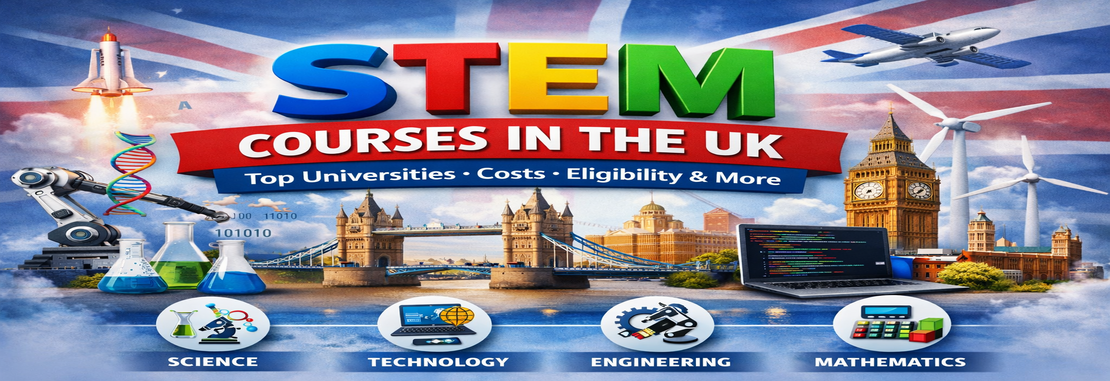
The United Kingdom remains one of the world’s most sought-after destinations for students aspiring to build careers in Science, Technology, Engineering, and Mathematics (STEM). With globally recognised universities, cutting-edge research facilities, and strong industry connections, the UK offers international students a powerful platform to excel academically and professionally.
This comprehensive guide covers popular STEM courses in the UK, top universities, costs, eligibility requirements, scholarships, career prospects, 2026 intake deadlines, visa timelines, and expert guidance for students planning to study in the UK.
What Are STEM Courses?
STEM stands for Science, Technology, Engineering, and Mathematics. These disciplines focus on analytical thinking, innovation, experimentation, and real-world problem-solving. STEM education combines theoretical knowledge with practical application through laboratories, research projects, simulations, and industry exposure.
- Science: Physics, Chemistry, Biology, Biomedical Science, Environmental Science
- Technology: Computer Science, Data Science, Artificial Intelligence, Cybersecurity
- Engineering: Mechanical, Civil, Electrical, Chemical, Aerospace Engineering
- Mathematics: Statistics, Actuarial Science, Applied and Computational Mathematics
Why Study STEM in the UK?
- Globally ranked universities with academic excellence
- Research-driven curriculum and innovation-focused learning
- Strong industry integration and placement opportunities
- High global employability and recognition
- Post-study work opportunities for international graduates
Popular STEM Courses in the UK
Science Courses
- Biology and Life Sciences
- Biomedical Sciences
- Biotechnology
- Physics
- Chemistry
- Environmental Science
- Genetics and Microbiology
Technology Courses
- Computer Science
- Information Technology
- Artificial Intelligence
- Data Science and Big Data Analytics
- Cybersecurity
- Software Engineering
- Cloud Computing
Engineering Courses
- Mechanical Engineering
- Civil Engineering
- Electrical and Electronic Engineering
- Chemical Engineering
- Aerospace Engineering
- Robotics and Mechatronics
- Renewable Energy Engineering
Mathematics Courses
- Pure Mathematics
- Applied Mathematics
- Statistics
- Actuarial Science
- Financial Mathematics
- Computational Mathematics
Top Universities in the UK for STEM
University of Oxford
Offers world-leading programs in Engineering, Computer Science, Mathematics, and Natural Sciences. Known for research excellence and interdisciplinary learning.
University of Cambridge
Renowned for Natural Sciences, Engineering, and Mathematics. Strong emphasis on innovation, research, and entrepreneurship.
Imperial College London
A STEM-focused university excelling in Engineering, Technology, Medicine, and Data Science.
University College London
Known for Computer Science, Engineering, and Mathematical Sciences with a global outlook.
University of Edinburgh
Highly respected for Informatics, AI, Physics, and Engineering programs.
University of Manchester
Strong reputation in Engineering, Materials Science, Computer Science, and Biomedical research.
University of Bristol
Offers top-tier programs in Engineering, Physics, and Computer Science.
University of Warwick
Excellent for Mathematics, Data Science, Computer Science, and Engineering.
University of Glasgow
Well-known for Engineering, Data Science, and Physical Sciences.
University of Bath
Recognised for engineering and applied science programs with strong industry links.
Eligibility Criteria for STEM Courses
Undergraduate Programs
- Completion of Class 12 or equivalent
- Strong academic background in Mathematics and Science
- Subject-specific prerequisites (Physics, Chemistry, Mathematics)
- English language proficiency (IELTS or equivalent)
Postgraduate Programs
- Relevant bachelor’s degree
- Good academic performance
- English language proficiency
- Statement of Purpose
- Letters of Recommendation
- Relevant work or research experience (if required)
Cost of Studying STEM in the UK
Tuition Fees (International Students)
| Level | Annual Tuition Cost |
|---|---|
| Undergraduate | £11,000 – £38,000 |
| Postgraduate | £15,000 – £35,000 |
Living Expenses
| Location | Annual Living Cost |
|---|---|
| London | £15,000 – £18,000 |
| Outside London | £10,000 – £14,000 |
Scholarships for STEM Students
- Government-funded scholarships
- University merit-based scholarships
- Departmental and research funding
- Postgraduate research grants
Career Opportunities After STEM in the UK
- Software Developer
- Data Scientist
- AI Engineer
- Mechanical or Civil Engineer
- Biomedical Scientist
- Cybersecurity Specialist
- Actuary and Research Analyst
Average Salary: £30,000 to £100,000+ per year depending on role and experience.
Study STEM in the UK with MDOEC
Choosing the right STEM course and university is a career-defining decision. From shortlisting universities and preparing strong applications to securing scholarships and navigating the UK student visa process, expert guidance makes all the difference.
MDOEC offers complete support for students planning to study STEM in the UK:
- Personalised course and university selection
- SOP, CV, and LOR guidance
- Scholarship and funding assistance
- End-to-end application management
- UK student visa support
- Pre-departure and post-arrival assistance
Start your UK STEM journey today.
Limited seats available for 2026 intakes.
Book a FREE counselling session with MDOEC and turn your study abroad dream into reality.
Frequently Asked Questions (FAQs): STEM Courses in the UK
1. What are STEM courses in the UK?
STEM courses in the UK refer to academic programs in Science, Technology, Engineering, and Mathematics. These courses focus on innovation, research, analytical thinking, and practical application, preparing students for high-demand global careers in technology, healthcare, engineering, data, and research sectors.
2. Which STEM courses are most in demand in the UK for 2026?
The most in-demand STEM courses in the UK for 2026 include:
-
Computer Science
-
Artificial Intelligence
-
Data Science & Analytics
-
Cybersecurity
-
Mechanical & Civil Engineering
-
Biomedical Sciences
-
Renewable Energy Engineering
-
Actuarial Science
These fields align strongly with UK skill shortage areas and employer demand.
3. What are the eligibility requirements for STEM courses in the UK?
Eligibility depends on the level of study:
-
Undergraduate: Class 12 completion with Mathematics and Science subjects, plus English language proficiency.
-
Postgraduate: Relevant bachelor’s degree, good academic performance, English language test scores, SOP, and LORs.
Some universities may also require work experience or subject-specific prerequisites.
4. How much does it cost to study STEM courses in the UK?
For international students:
-
Undergraduate STEM courses: £11,000 – £38,000 per year
-
Postgraduate STEM courses: £15,000 – £35,000 per year
Living expenses range between £10,000 – £18,000 annually, depending on location and lifestyle.
5. Are scholarships available for STEM students in the UK?
Yes. International STEM students can apply for:
-
Government-funded scholarships
-
University merit-based scholarships
-
Departmental funding
-
Research grants for postgraduate students
Scholarships may partially or fully cover tuition fees and, in some cases, living expenses.
6. What are the main intakes for STEM courses in the UK?
UK universities offer three intakes:
-
September 2026 (Main Intake): Best choice with maximum courses and scholarships
-
January 2026 Intake: Limited STEM course availability
-
May 2026 Intake: Very limited, mostly postgraduate programs
September intake is highly recommended for STEM applicants.
7. How long does the UK student visa process take for STEM students?
The UK student visa process usually takes:
-
3 weeks under standard processing after application
Students can apply up to 6 months before the course start date, once they receive their CAS from the university. Early application is strongly advised.
8. What career opportunities are available after completing a STEM degree in the UK?
STEM graduates can pursue careers such as:
-
Software Developer
-
Data Scientist
-
AI Engineer
-
Mechanical or Civil Engineer
-
Biomedical Scientist
-
Cybersecurity Analyst
-
Actuary or Research Analyst
Starting salaries typically range from £30,000 to £45,000, with experienced professionals earning £60,000 to £100,000+ annually.